







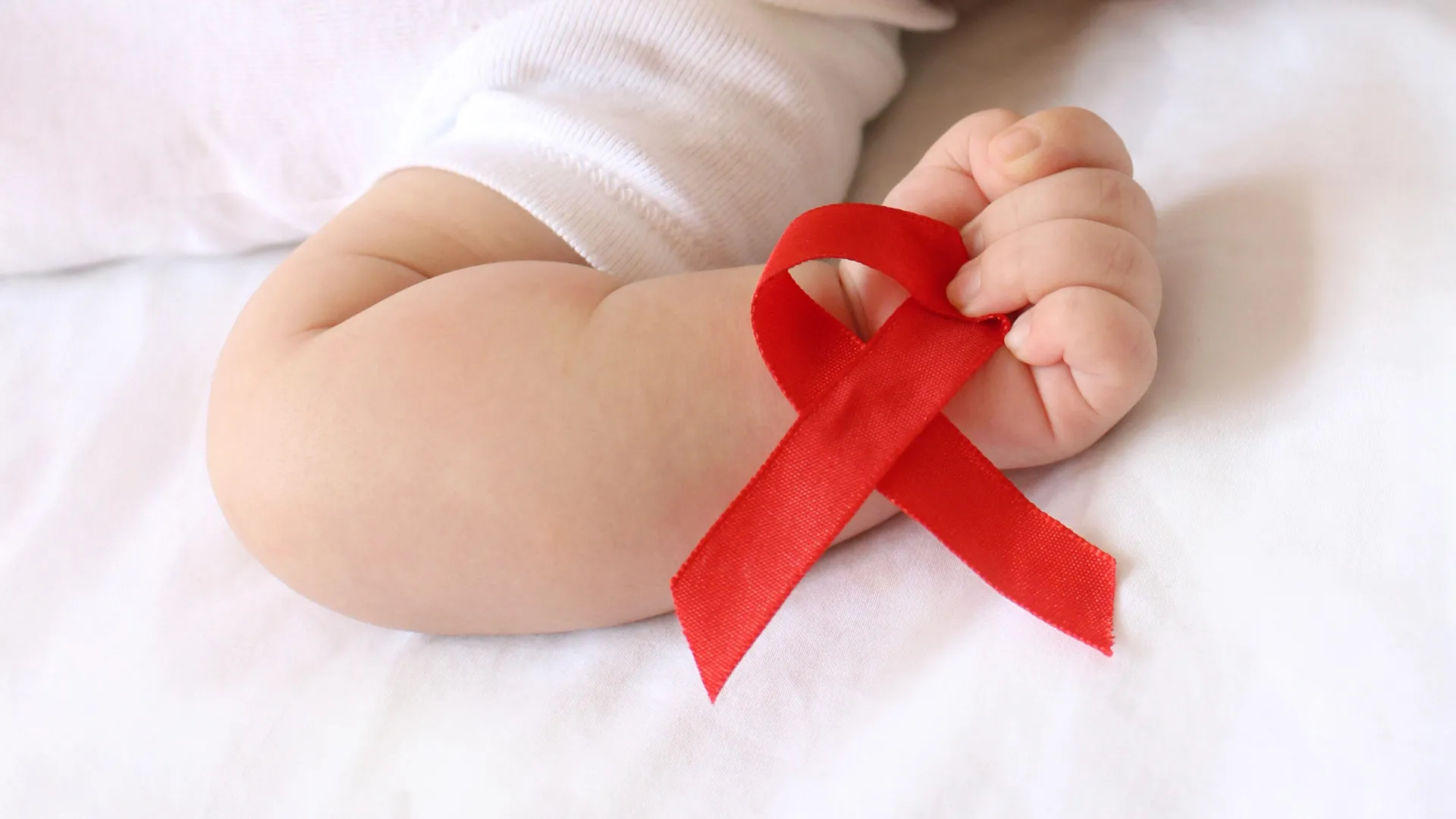
Every year, more than 120,000 newborns are born with HIV, a devastating statistic that highlights the ongoing global struggle against a virus that has claimed millions of lives since the start of the epidemic. For the 39 million people currently living with HIV worldwide, managing the infection has historically been a lifelong commitment—a regimen of daily antiretroviral therapy (ART) that suppresses the virus but rarely eliminates it.
However, a groundbreaking study led by researchers at Oregon Health & Science University (OHSU) has unveiled a radical new approach that could fundamentally shift the medical landscape. By administering a specialized combination of three distinct therapies to newborns within 72 hours of exposure, researchers successfully achieved what was once considered impossible: the permanent elimination of the virus in nonhuman primate models. The study, published in the journal Nature Microbiology, provides the first concrete evidence that a "functional cure" for early-stage HIV infection may be within reach.
The Mechanism: A Multi-Pronged Offensive
The success of this study lies in the synergy of three established medical interventions, none of which had previously proven effective in clearing the virus on their own. The researchers utilized:
- Standard Antiretroviral Therapy (ART): The backbone of modern HIV management, which works to inhibit the replication of the virus.
- Broadly Neutralizing Antibodies (bNAbs): Specialized proteins that identify and "corral" the virus, effectively reducing the amount of HIV circulating in the blood.
- Leronlimab: An experimental monoclonal antibody that prevents HIV from entering immune cells by blocking the CCR5 surface protein.
The researchers liken the combined effect to a sophisticated containment and neutralization strategy. If HIV infection is a fire, ART acts as the mechanism that turns off the "faucet" of viral replication. The neutralizing antibodies serve to mop up the spill, reducing the viral load, while leronlimab acts as a watertight seal on the "room," preventing the remaining virus from infiltrating healthy immune cells.
"For reasons we don’t understand, HIV really wants to use CCR5 receptors to infect cells," said co-lead author Jonah Sacha, Ph.D., professor and chief of pathobiology and immunology at OHSU’s Oregon National Primate Research Center. "By blocking access, it’s like you’ve kept fuel away from the fire."
A Chronology of Discovery
The path to this discovery was neither linear nor expected. For years, Dr. Sacha and his colleagues had been developing leronlimab, focusing on its ability to block the CCR5 receptor. While the drug showed promise in isolation, it was not a silver bullet.
The breakthrough moment occurred when Dr. Nancy Haigwood, a veteran virologist and immunologist, proposed that the limitation of previous trials was not the drugs themselves, but the lack of a combined, strategic approach. Dr. Haigwood, who has spent decades studying the complex interactions between HIV antibodies and the human immune system, posited that the virus was most vulnerable during the "priming" phase of initial infection.
Following this hypothesis, the research team—a massive collaboration involving scientists at both the Oregon and California national primate research centers—initiated a study using nonhuman primates. The primates were exposed to the virus, and the triple-therapy regimen was administered within a tight 72-hour window.
"We were astounded and overjoyed, actually," said Dr. Haigwood. "It’s a remarkable result."
The researchers noted that the efficacy of the treatment seemed to hinge on the rapid intervention. The first week of infection, they observed, is a period of intense, dynamic interaction between the virus and the immune system that scientists are only just beginning to understand. By intervening within the first three days, the team effectively "purged" the virus before it could establish a permanent reservoir in the host’s cells.
Supporting Data and Biological Plausibility
The findings carry significant weight because of the physiological parallels between nonhuman primates and humans. The use of primate models in this study provides a crucial bridge between laboratory experiments and human clinical application. Because primates share critical anatomical and immunological similarities with humans, the success of this trial suggests a high probability that the strategy could be replicated in clinical settings.
The study has also raised new questions regarding the "window of opportunity." Currently, the data confirms the efficacy of the treatment when administered within 72 hours. However, the research team is now urgently seeking to determine how much further this window can be extended. If the treatment remains effective after a week or even two weeks, the potential to save countless lives—particularly in regions with limited access to immediate neonatal care—would increase exponentially.
Official Responses and Ethical Implications
The scientific community has reacted to the news with cautious optimism. While the results in Nature Microbiology are statistically significant, the transition from primate models to human trials requires rigorous adherence to ethical standards and safety protocols.
Dr. Sacha has expressed a desire to move toward clinical trials with urgency. "The really exciting part is that it could go to clinical trials immediately to eliminate HIV infection in newborns," he stated. He suggested that the first phase of human trials would likely involve adults who have been recently exposed to the virus, allowing researchers to refine dosing and safety before moving to infant populations.
The study also underscores the critical need for global health equity. HIV remains a pandemic that kills approximately 600,000 people annually. Even with the advent of life-saving medications, many populations in the Global South struggle with access to affordable, daily treatments. A curative, short-term regimen—like the one proposed by the OHSU team—could represent a paradigm shift in global public health, moving away from long-term dependency on pharmaceutical supply chains toward a one-time, curative solution.
Implications for the Future of HIV Research
The implications of this study reach far beyond the immediate goal of curing newborns. By demonstrating that a combined therapy can eliminate a viral reservoir, the researchers have provided a roadmap for future HIV research.
1. Reframing the "Functional Cure"
For decades, the search for an HIV cure has been hampered by the virus’s ability to hide in latent reservoirs. This study suggests that if we can catch the virus early enough, we may be able to prevent those reservoirs from ever forming. This shifts the focus from "treating" the virus to "eliminating" it entirely.
2. Diversifying Treatment Strategies
The success of leronlimab in this combination suggests that monoclonal antibodies will play an increasingly vital role in future infectious disease research. By targeting the host’s entry points rather than just the virus itself, researchers may be able to develop treatments that are more resistant to viral mutation.
3. Impact on Public Health Policy
If these results are confirmed in human trials, public health infrastructure will need to be overhauled to accommodate early-intervention protocols. This would necessitate universal, rapid testing for newborns in high-risk areas to ensure that the three-day window is met.
Conclusion: A New Era of Hope
The research conducted at OHSU represents a landmark achievement in the fight against HIV. While the road to widespread human application is still paved with regulatory hurdles and clinical trial requirements, the data provides a compelling case for a new standard of care.
"There was no reason to think this would completely clear the virus," Dr. Sacha admitted. "It’s one of those things where you test it and, holy cow, it works and you’ve discovered something new."
As the scientific community prepares for the next phase of research, the focus will remain on the delicate balance of safety, efficacy, and accessibility. If the promise of this triple-therapy holds true, we may be witnessing the beginning of the end for one of the most persistent and lethal viruses in human history. For the 120,000 newborns who face an uncertain future each year, this research offers more than just hope—it offers the prospect of a life free from the constraints of HIV.
Funding and Acknowledgements
This groundbreaking research was supported by the National Institutes of Health (NIH), specifically through the Eunice Kennedy Shriver National Institute of Child Health and Human Development (NICHD) and the National Institute of Allergy and Infectious Diseases (NIAID). The study utilized resources from the Oregon and California National Primate Research Centers, with additional support from the Office of Research Infrastructure Programs (ORIP). The researchers emphasize that the findings reflect their own scientific endeavors and do not necessarily represent the official views of the NIH.