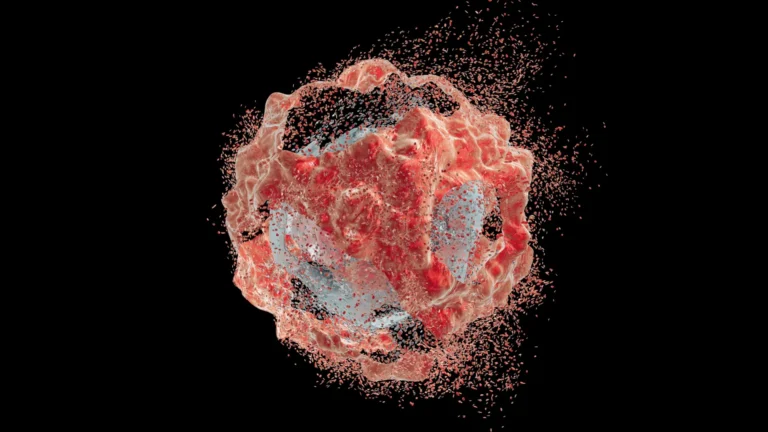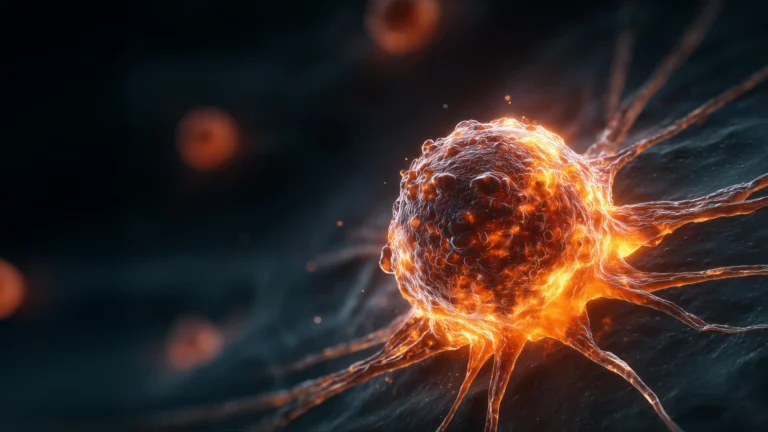




The landscape of oncology is undergoing a profound transformation. What was once a field dominated by systemic treatments with broad, often debilitating side effects is shifting toward a future defined by precision, specificity, and the body’s own biological defenses. At the heart of this revolution is cancer immunotherapy—a discipline that leverages the immune system to identify and eradicate malignant cells. However, the trajectory of these medical breakthroughs is not guaranteed; it depends entirely on the cultivation of the next generation of scientific pioneers.
Recognizing that tomorrow’s life-saving discoveries are rooted in the early-career efforts of today’s researchers, the Cancer Research Institute (CRI) has reaffirmed its role as a global pillar of scientific advancement. Through its long-standing fellowship programs, CRI is not merely providing funding; it is building the intellectual infrastructure necessary to turn the tide against cancer.
The Foundation of a Legacy: Dr. Lloyd J. Old’s Vision
The history of modern immunotherapy is inextricably linked to the vision of Dr. Lloyd J. Old, the founding scientific and medical director of the Cancer Research Institute. In 1971, when the field of tumor immunology was largely considered a fringe pursuit—often dismissed by the broader medical establishment—Dr. Old saw the latent potential of the immune system to recognize and destroy cancer.
Dr. Old understood that for the field to mature, it required more than just clinical trials; it required a pipeline of elite, rigorously trained investigators. He established the CRI postdoctoral fellowship program with a singular goal: to create a "nursery" for brilliant young minds to dedicate their careers to the complex biology of the immune system. His foresight laid the groundwork for a discipline that has since become the fourth pillar of cancer care, alongside surgery, chemotherapy, and radiation.
Decades later, that vision remains the guiding star of the CRI Irvington Postdoctoral Fellowship. It has evolved from a nascent experimental program into a prestigious global standard, having supported more than 1,600 scientists at 176 institutions across 30 U.S. states and 15 countries. These alumni now populate the faculties of the world’s leading research universities and the R&D departments of the most innovative biotech firms, proving the efficacy of Dr. Old’s commitment to early-career support.
The Evolution of Discovery: Integrating Artificial Intelligence
As the complexity of biological data grows, so too does the need for interdisciplinary expertise. The era of "wet lab" biology is increasingly intersecting with the era of "dry lab" computation. Understanding how immune cells interact with tumor microenvironments no longer requires just microscopes and reagents; it requires algorithms, bioinformatics, and the predictive power of artificial intelligence.
In 2022, responding to this paradigm shift, CRI launched the CRI Immuno-Informatics Postdoctoral Fellowship. This initiative was designed to bridge the widening gap between traditional immunology and computational science. By training researchers to harness the power of big data and machine learning, CRI is enabling a new class of scientists to decode the "language" of the immune system with unprecedented speed.
These fellows are at the forefront of a movement that treats cancer research as an information-processing challenge. By applying computational biology to the immense datasets generated by single-cell sequencing and clinical immunogenomics, these scientists can identify subtle patterns that were previously invisible, paving the way for personalized, data-driven immunotherapies.
Sustaining Innovation Amidst Global Uncertainty
Scientific research is a fragile ecosystem, highly sensitive to fluctuations in government funding. In recent years, the landscape for federal research support has been characterized by volatility and disruption, leaving many early-career scientists in a precarious position. When federal grants become harder to secure, the "valley of death"—the period between PhD completion and independent laboratory leadership—becomes even more treacherous.
CRI has stepped into this breach with a sense of urgency. With a total investment now approaching $200 million in early-career researchers, the institute acts as a critical stabilizer for the global research pipeline.
This year, in a deliberate move to counteract the chilling effect of diminished federal funding, CRI announced an additional $2.5 million commitment. This injection of capital will fund 10 additional postdoctoral fellowships, ensuring that promising projects in tumor immunology and cellular engineering do not wither on the vine due to lack of resources. This commitment reflects a core belief at CRI: that the cost of inaction—the delay of potentially life-saving treatments—far outweighs the cost of the investment.
The Fall 2025 and Spring 2026 Cohorts: A New Vanguard
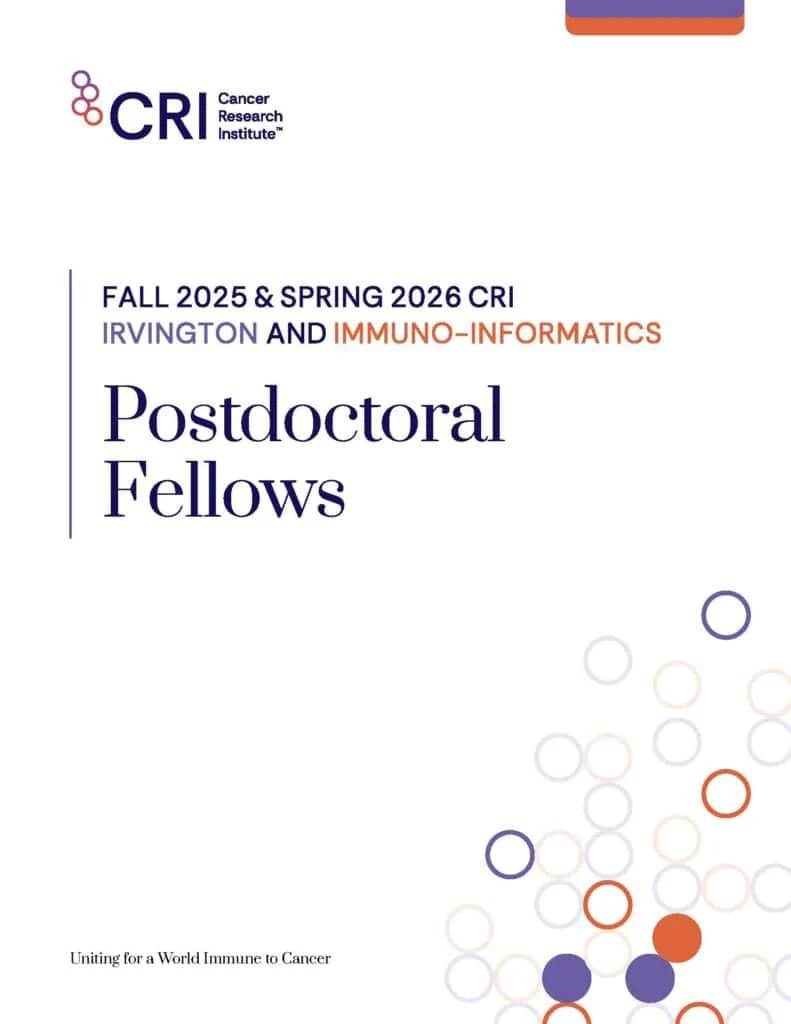
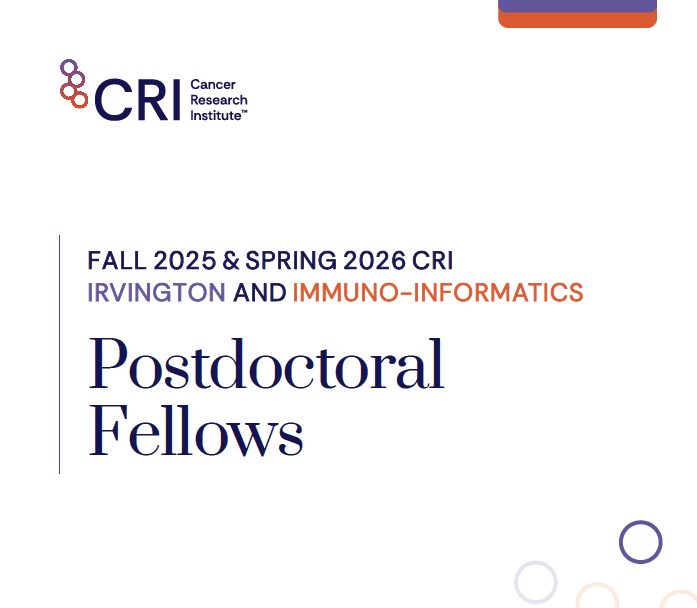
The introduction of the Fall 2025 and Spring 2026 classes of CRI Irvington and Immuno-Informatics Fellows marks a new chapter in the organization’s history. These scientists were selected not only for their technical proficiency but for their "bold thinking" and collaborative spirit.
The research topics currently being explored by these fellows represent the cutting edge of the field. They are working on:
- Tumor Immunology: Dissecting the mechanisms by which tumors evade immune detection.
- Cellular Engineering: Developing the next generation of CAR-T and TCR-T cell therapies that are safer and more effective for solid tumors.
- Computational Biology: Using AI models to predict how patients will respond to specific immunotherapy regimens, moving toward a "precision medicine" model.
- Emerging Frontiers: Exploring the intersection of the microbiome, metabolism, and systemic immune regulation in the context of cancer progression.
These fellows are the architects of the next generation of immunotherapy. By providing them with sustained, multi-year support at a pivotal stage of their careers, CRI empowers them to pursue high-risk, high-reward ideas that traditional grant mechanisms often overlook.
Implications: The Long-Term Impact on Cancer Care
The support of postdoctoral fellows is often viewed as an academic exercise, but its implications are deeply clinical and societal. The transition from an experimental therapy to a standard-of-care treatment often takes decades. The scientists CRI supports today are the individuals who will lead the Phase III clinical trials of 2035 and beyond.
Furthermore, the emphasis on cross-pollination—bringing together immunologists, mathematicians, and engineers—is accelerating the cycle of innovation. By fostering a collaborative global network, CRI is ensuring that breakthroughs made in a laboratory in Boston or Zurich are rapidly communicated to peers in Tokyo or San Francisco.
As we look toward a future where "cancer" is no longer a terminal diagnosis but a manageable condition, the role of these researchers becomes clearer. They are the ones who will ultimately answer the most difficult questions: Why do some tumors respond to immunotherapy while others remain resistant? How can we engineer cells that are more persistent and less toxic? How can we use AI to create bespoke vaccines for individual patients?
Conclusion: Building a World Immune to Cancer
The work of the Cancer Research Institute is a testament to the power of targeted, strategic philanthropy. By focusing on the individual—the human element of science—CRI ensures that the pursuit of a cure is carried out by the best and brightest minds, regardless of their institutional affiliation or the prevailing economic winds.
As we celebrate the Fall 2025 and Spring 2026 fellows, we are also celebrating a broader mission. We invite the global community to learn more about these scientists, to follow their progress, and to recognize their contributions to the collective effort. These individuals are not just writing papers; they are building a legacy of resilience and discovery. They are the reason we remain hopeful, and they are the primary architects of a world where cancer is a disease we can finally, and fully, control.
Through the persistent support of the CRI, these researchers will continue to challenge the status quo, pushing the boundaries of what is possible in the clinic and the laboratory. Their journey has only just begun, but the impact of their work will be felt for generations to come.