









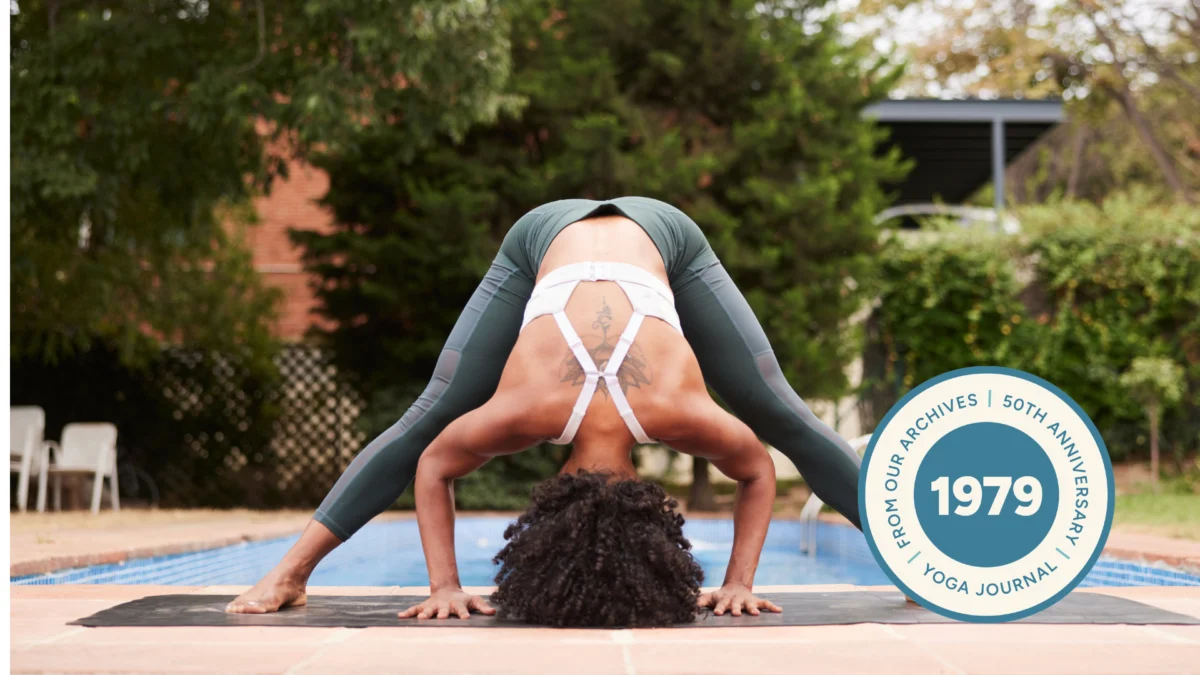
Originally published in the March-April 1979 issue of Yoga Journal, this archival exploration of Wide-Legged Standing Forward Fold remains a cornerstone of hatha yoga philosophy and biomechanical precision.
The Philosophy of Resistance: Understanding Dvesa
In the foundational texts of classical yoga, Patanjali—the sage credited with codifying the Yoga Sutras—delineates five fundamental impediments to mental equanimity, known as the klesas. Among these, dvesa (aversion) acts as a subtle but pervasive barrier to spiritual and physical growth. While often discussed in abstract, philosophical terms, dvesa finds a visceral expression within the hatha yoga practice, particularly in the realm of forward folds.
When a practitioner encounters the intense stretch of a Wide-Legged Standing Forward Fold (Prasarita Padottanasana), they are often met with an internal chorus of resistance. This physical tightening is not merely a muscular reaction; it is a manifestation of a deeper, mental reluctance to "surrender." As philosopher Mircea Eliade observed, asana serves as an archetypal, iconographic posture that freezes the bodymind into a state of "totalization." In this singular moment, the practitioner’s true nature is magnified. By observing our reactions to the challenge of a forward bend, we gain a clear reflection of our relationship with surrender, compliance, and control.
Chronology and Evolution of the Pose
Prasarita Padottanasana, whose name derives from the Sanskrit prasarita (extended) and pada (foot), has served as a foundational transition pose for decades. While categorized as a standing posture, its architectural utility spans from a bridge between standing and sitting to a preparation for complex inversions and deep backbends.
Historical Context
In the 1970s, as hatha yoga began to integrate more deeply into the Western consciousness, instructors like B.K.S. Iyengar emphasized the pose not as a static end-goal, but as a dynamic tool for spinal health. Historically, the pose was taught as a gateway for students who were not yet prepared for the physiological demands of Sirsasana (Headstand). Over the decades, the pedagogical focus has shifted from mere "stretching" to the concept of "functional alignment"—using the pose to train the spine to move into the body rather than slouching outward.
Supporting Data: Biomechanics and Spinal Integrity
The efficacy of Prasarita Padottanasana is rooted in the structural mechanics of the human spine and the interaction between the pelvis and the femur.
The Facet Joint Relationship
The human vertebral column relies on the facet joints—the surfaces where vertebrae meet—for stability. When the spine is held in a neutral, extended position, these facets are in a "congruent" or matched relationship, providing maximum structural support.
- The Problem: Modern sedentary lifestyles and improper movement patterns—such as bending forward to pick up heavy objects with a rounded back—cause the chest to collapse and the lumbar vertebrae to over-arch. This destabilizes the facet joints.
- The Solution: Prasarita Padottanasana serves as a corrective exercise. By forcing the practitioner to maintain a straight, extended spinal column, the pose prevents the vertebrae from curving upward and encourages the spine to draw inward. This is not only essential for spinal health but is the primary prerequisite for performing safe, effective backbends.
Hip and Thigh Mechanics
The pose functions as a sophisticated hip opener. It facilitates the movement of the concave surface of the pelvis over the convex head of the femur. As the practitioner descends, the inner and posterior thigh muscles (hamstrings and adductors) undergo a significant stretch. Conversely, the transition back to a standing position requires these same muscles to contract and stabilize, bridging the gap between passive flexibility and active strength.
Expert Perspectives and Pedagogical Insights
The practice of Prasarita Padottanasana is an exercise in "strength in the midst of surrender."
The Role of Breath
According to classical teachings, the breath serves as the bridge between the internal and external states. A primary rule of practice is that the inhalation represents the intake of energy and preparation, while the exhalation is the vehicle for surrender. In this pose, the breath must remain even and smooth. If the breath is jagged or labored, it serves as an indicator that the student is forcing the body beyond its current capacity, thereby reinforcing dvesa rather than releasing it.
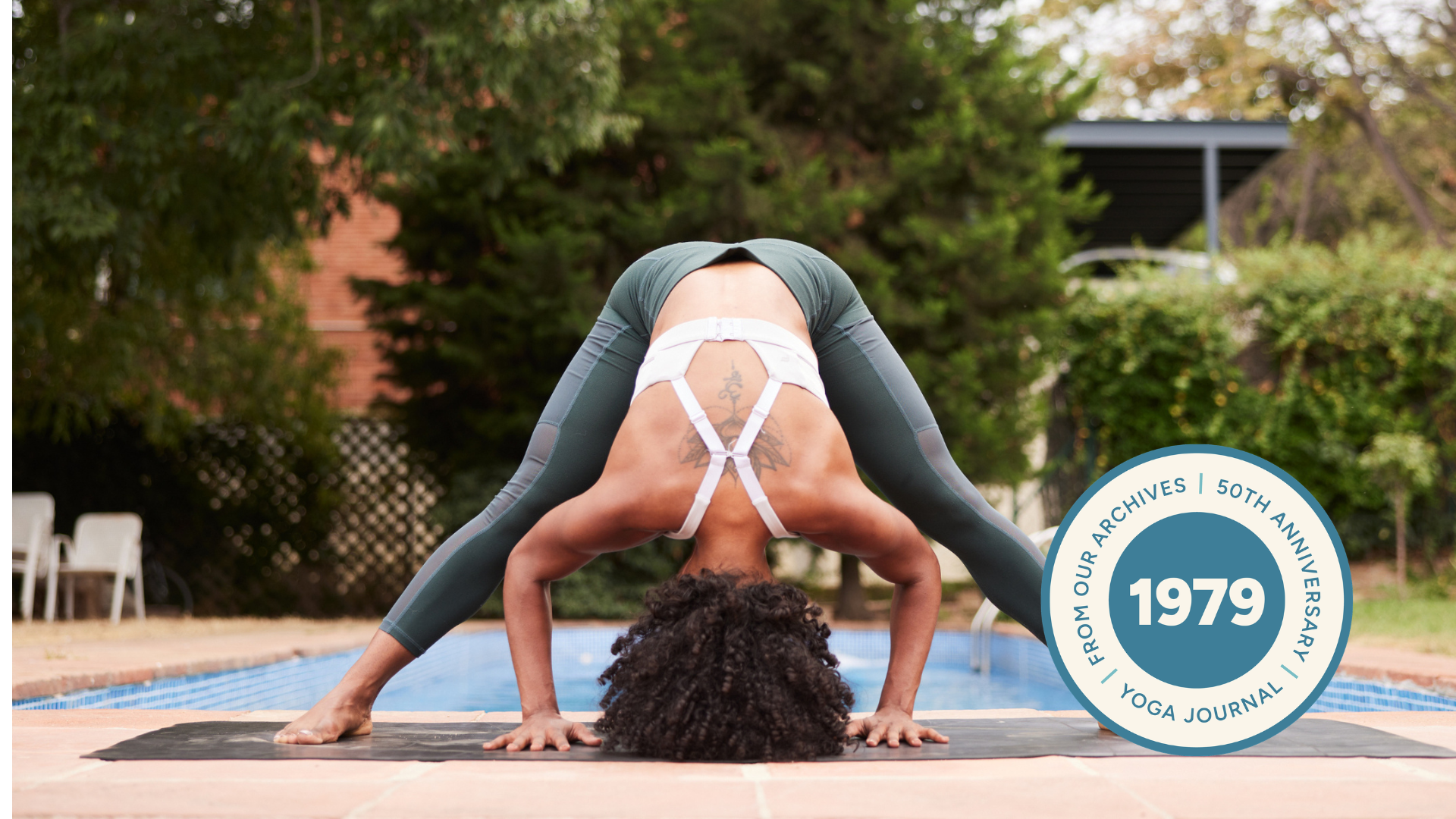
Common Pitfalls
Even seasoned practitioners often struggle with specific technical errors:
- Lumbar Exaggeration: Allowing the lower back to over-curve while entering or exiting the pose.
- Weight Distribution: Shifting the center of gravity to one side, causing an elevation of one buttock and creating uneven tension.
- Tension in the Foundation: The feet are the primary foundation. A common mistake is to "tense" the feet, which restricts the flow of awareness. Practitioners are encouraged to maintain a fluid, grounded connection to the floor.
Implications for the Modern Practitioner
The significance of Prasarita Padottanasana extends far beyond the mat, touching upon the spiritual concept of karma—the law of cause and effect.
Physical vs. Spiritual Karma
The physical discomfort experienced in the hamstrings during a deep forward fold can be viewed as "physical karma"—the result of prolonged sitting or repetitive movement patterns. Yoga does not suggest that the pose creates this discomfort; rather, it reveals it. By holding the pose, the practitioner is forced to observe the limitations of their own body.
In a spiritual sense, this practice mirrors how our behavioral choices create mental patterns. By experiencing the "discomfort" of the pose without reacting with defiance or frustration, the student learns to dissolve these limitations. This is the essence of the path: we do not move past our limitations by avoiding them, but by encountering them fully, breathing into them, and eventually letting them go.
Practical Tips for Progression
To cultivate a more sustainable practice, the use of props is not only acceptable but encouraged:
- Blocks or Books: If tight hamstrings prevent a straight back, placing hands on a firm surface allows the spine to remain neutral.
- Toe Alignment: Slightly turning the toes inward can reduce strain on the outer ankles and provide relief for those suffering from sciatic nerve irritation.
- Wall Support: Utilizing a wall as a guide helps ensure the back remains straight and evenly aligned, replicating the adjustment of a skilled teacher.
- Advanced Variations: As strength and flexibility increase, students may explore bringing the feet closer together or engaging the hands in namaste (prayer) behind the back to deepen the chest opening.
Conclusion: The Dynamic Stillness
Prasarita Padottanasana is more than a simple fold; it is a laboratory for the soul. It invites the student to drop the head in a gesture of reverence, mirroring the act of prayer. In this "dynamic stillness," we find the intersection of strength and vulnerability. By surrendering the powerful muscles of the legs and releasing the defiance held in the mind, we uncover a sense of exhilaration.
In the final analysis, the pose teaches us that freedom is not found in avoiding the stretch, but in meeting the intensity of the moment with breath, awareness, and the willingness to let go. Whether we are working to correct a lifetime of poor posture or seeking to balance the extroverted tendencies of our personality with the humility of a forward fold, Prasarita Padottanasana remains an invaluable tool for becoming free.
As we continue to navigate the demands of the modern world, the lessons of this 1979 archive remain as relevant as ever: seek the balance, honor the spine, and embrace the process of surrender.
The author acknowledges the profound influence of B.K.S. Iyengar and his seminal work, "Light on Yoga," which continues to serve as the definitive guide for students of the craft.