










By Gwendolyn Wu | Sept. 8, 2026
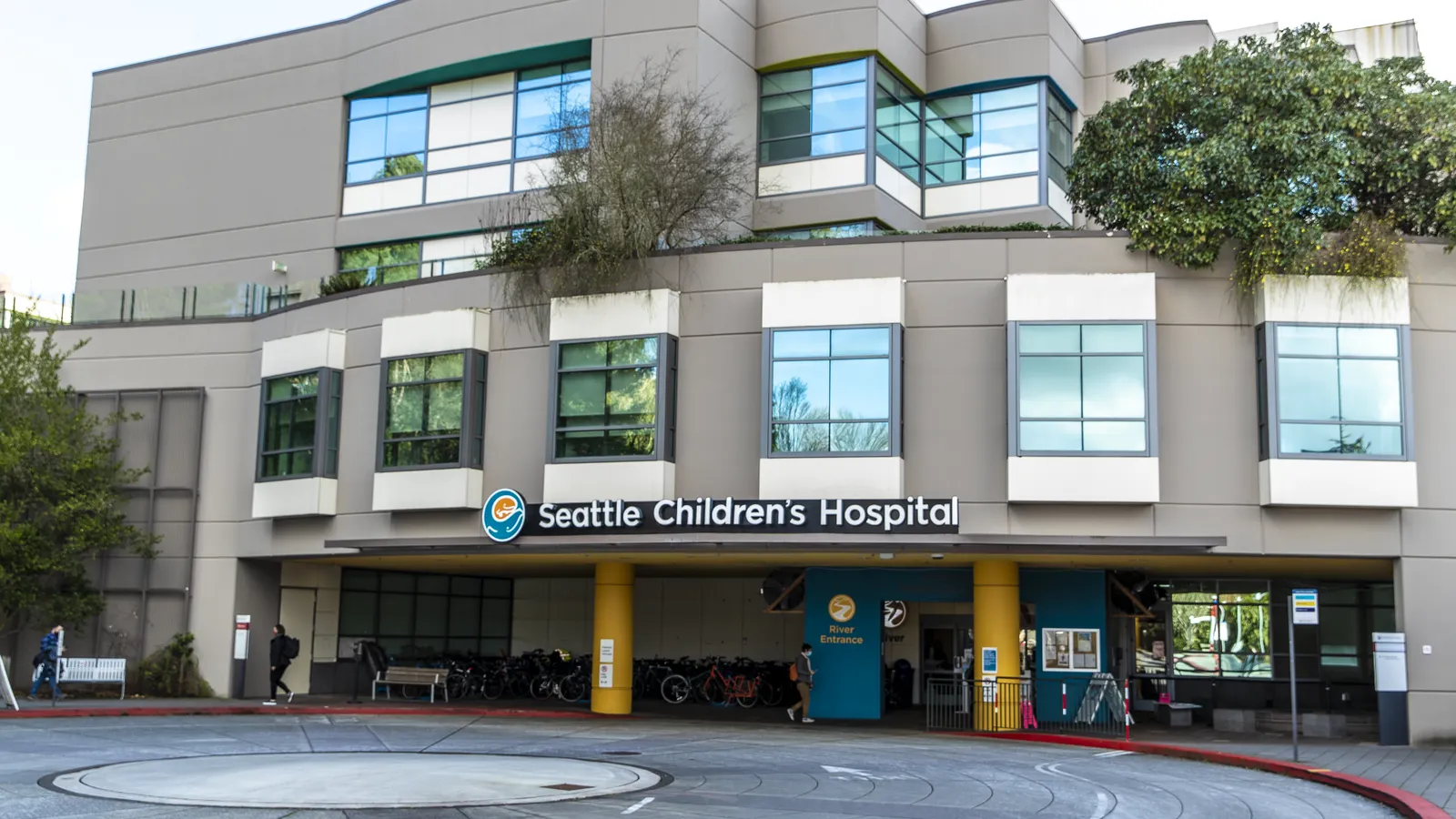
In the high-stakes world of biotechnology, where market potential often dictates R&D priorities, pediatric oncology has long been the "orphan" of investment. However, a Seattle-based startup is challenging that paradigm. BrainChild Bio, a clinical-stage company spun out of the pioneering research at Seattle Children’s Hospital, announced on Tuesday that it has successfully closed a $116 million venture financing round.
This significant infusion of capital marks a turning point for the biotech, providing the necessary runway to accelerate its mid-stage clinical trials for CAR-T therapies specifically designed to combat rare, lethal pediatric brain tumors. As the company advances its lead candidate, BCB-276, into Phase 2 testing, it is not only challenging the biological difficulty of treating brain cancer but also forcing a re-evaluation of the investment landscape for rare childhood diseases.
The Core Mission: Overcoming the "Brain Prejudice"
CAR-T cell therapy—a revolutionary approach where a patient’s own immune cells are genetically re-engineered to recognize and destroy cancer cells—has become a cornerstone of modern hematology. While its success in treating blood cancers like leukemia and lymphoma is well-documented, its application to solid tumors, particularly those shielded by the blood-brain barrier, has remained elusive.
"The prejudice is that the brain would be intolerant to having cells directly administered," says Michael Jensen, founder and Chief Scientific Officer of BrainChild Bio. For years, this "prejudice" acted as a psychological and scientific gatekeeper, dissuading large pharmaceutical players from entering the space. BrainChild Bio, however, was founded on the hypothesis that the blood-brain barrier, rather than being an insurmountable wall, could be leveraged as a tactical advantage.

By administering cells directly into the brain, the company aims to bypass the systemic toxicity that often plagues traditional CAR-T infusions. This precision-focused strategy is the hallmark of the company’s platform, which seeks to turn the brain’s unique physiological isolation into a localized "sandbox" for therapeutic activity.
Chronology: From Academic Labs to Clinical Reality
The trajectory of BrainChild Bio is a testament to the power of institutional support and long-term research commitment.
- Pre-2023: Years of foundational research led by Dr. Michael Jensen at Seattle Children’s Hospital focus on identifying antigens—specifically B7-H3—that are overexpressed in pediatric brain cancers.
- 2023: BrainChild Bio officially spins out of Seattle Children’s Hospital, securing initial intellectual property rights and establishing its leadership team with CEO Steven Brugger and CSO Michael Jensen.
- 2024-2025: The company moves its lead candidate, BCB-276, through early-stage safety trials, demonstrating that direct intracranial delivery is not only feasible but manageable from a toxicity perspective.
- September 2026: BrainChild announces its $116 million Series A financing round, led by a private family fund and foundation, with participation from Seattle Children’s and the Washington Research Foundation.
- 2026-2028: The company initiates Phase 2 testing for BCB-276, with a primary completion date for the clinical trial set for 2028. Simultaneously, the company moves its second candidate, BCB-214, toward its first human trials.
Scientific Innovation: The Mechanism of Action
The brilliance of BrainChild’s approach lies in its departure from standard CAR-T protocols. Most CAR-T therapies require "lymphodepletion"—a harsh chemotherapy regimen given prior to infusion to make room for the new cells. This process is grueling and carries significant risks for pediatric patients, whose bodies are already weakened by their illness.
Bypassing the Chemotherapy Hurdle
BCB-276 is designed to function without the need for pre-treatment conditioning. By targeting the B7-H3 protein—a marker that is highly expressed on the surface of diffuse intrinsic pontine glioma (DIPG) cells but largely absent in healthy brain tissue—the treatment can be administered repeatedly.
"The blood-brain barrier is our ally," Jensen explains. Because the therapeutic cells are contained within the central nervous system, they are less likely to trigger the systemic cytokine release syndrome (CRS) that has caused severe, sometimes fatal, side effects in other CAR-T treatments. This allows for a more favorable safety profile, which is critical when treating the most vulnerable population: children.

The Pipeline: BCB-276 and BCB-214
While BCB-276 is the current focus of the Phase 2 trials for DIPG, the company’s internal R&D engine is already looking toward the next frontier. BCB-214 is being developed to address the "immunosuppressive" microenvironment of glioblastoma. Unlike simpler CAR-T constructs, BCB-214 is engineered with multiple targeting capabilities, effectively creating a "multi-pronged" attack on tumor cells that might otherwise escape detection.
Financial and Market Implications
The $116 million raise is a significant outlier in the current biotech climate, particularly for a company focused on a rare disease. Pediatric oncology often suffers from a "market size" fallacy, where the small number of patients (approximately 300 new cases of DIPG per year in the U.S.) is used by venture capitalists to justify lower valuations.
CEO Steven Brugger is candid about these challenges. "Financing pediatric programs is and has always been more challenging," he acknowledges. "While I understand the business we’re in, it is still so very disappointing to me and [Jensen], and especially for these patients and their families."
The fact that BrainChild successfully closed this round suggests a shift in how investors value "impact-driven" biotech. By securing backing from the Washington Research Foundation and dedicated private family funds, BrainChild has bypassed the traditional, short-term-focused VC model, opting instead for partners who view the development of a potential cure as an investment in humanity.
Clinical Reality: The Human Cost of DIPG
To understand the urgency of BrainChild’s mission, one must look at the diagnosis of DIPG. A tumor located in the brain stem, it is effectively a death sentence. Current standard-of-care treatments—radiation and chemotherapy—are merely palliative. They offer a temporary reprieve, but the survival rate for DIPG remains abysmal, with most children succumbing to the disease within two years of diagnosis.

The current Phase 2 trial for BCB-276 offers a glimmer of hope where there was previously only darkness. By providing a clinical pathway that is both rigorous and potentially curative, BrainChild is providing families with something that has been in short supply: time and a tangible chance at survival.
Future Outlook: Beyond the Lab
As BrainChild Bio enters this next phase of development, the eyes of the oncology community will be fixed on its clinical data. If the results of the 2028 study confirm the efficacy seen in early testing, it could provide a roadmap for treating other, more common, but equally aggressive brain cancers.
The company’s success also raises broader questions for the biotech industry. Can a small, mission-driven startup successfully commercialize a treatment for a rare disease, or will the costs of manufacturing and distribution require a partnership with a major pharmaceutical conglomerate?
For now, the team at BrainChild remains focused on the patient. With the infusion of capital, they have the resources to scale their manufacturing, refine their cellular engineering, and move through the regulatory hurdles of the FDA. In the words of Jensen, the goal is not just to build a company, but to prove that the brain is not an unreachable territory for the next generation of medicine.
The path forward is fraught with the typical risks of clinical trials—patient recruitment, trial design, and regulatory scrutiny—but for the first time, the "prejudice" against brain-directed cell therapy is being replaced by data. And in the field of pediatric oncology, that is a change that cannot come soon enough.