











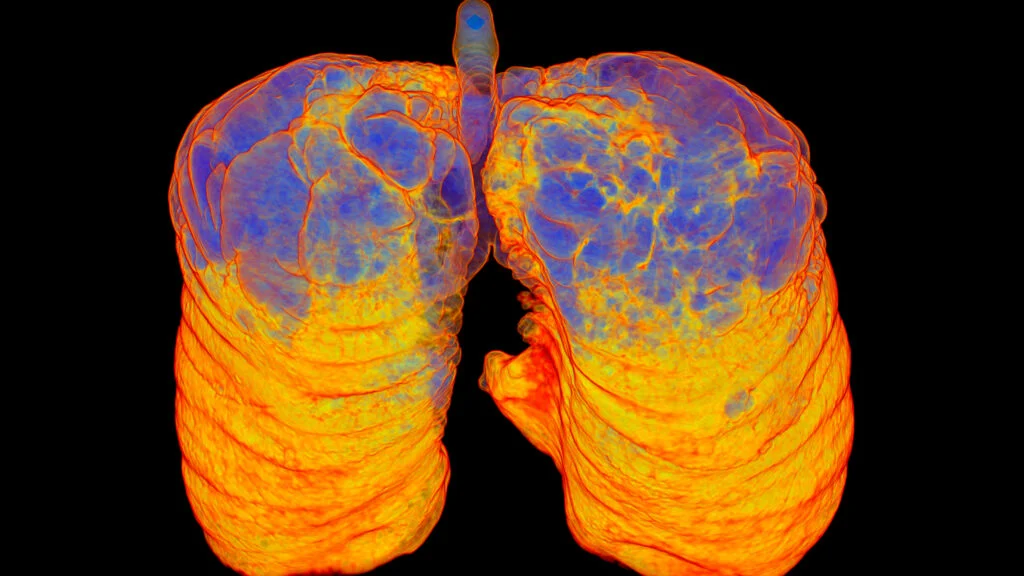
In a development that could reshape the therapeutic landscape for chronic obstructive pulmonary disease (COPD), AstraZeneca announced on Tuesday that its investigational injectable drug, tozorakimab, has achieved primary endpoints in two pivotal Phase 3 clinical trials. The data, unveiled at the European Respiratory Society’s annual congress in Barcelona and simultaneously published in the New England Journal of Medicine, suggests the drug significantly reduces the debilitating "flare-ups" that characterize the progression of the disease.
For AstraZeneca, the results provide a much-needed strategic victory. Following a series of high-profile clinical setbacks—most notably the recent failure of a heart disease candidate—the success of "tozo" restores confidence in the company’s R&D pipeline. With COPD currently standing as the third-leading cause of death worldwide, the potential market reach for this therapy extends well beyond a single respiratory condition, with analysts forecasting multibillion-dollar annual sales if the drug receives regulatory approval.
The Landscape of COPD: A Global Health Crisis
Chronic obstructive pulmonary disease is a progressive, irreversible condition that causes severe breathing difficulties. It is characterized by chronic inflammation of the airways and destruction of lung tissue, typically triggered by long-term exposure to tobacco smoke, air pollution, or occupational hazards.
For the millions suffering from the condition, the greatest danger lies in "exacerbations"—sudden, acute episodes of coughing, wheezing, and extreme breathlessness. These flare-ups often necessitate emergency hospital visits, carry a high mortality risk, and fundamentally accelerate the deterioration of lung function. Despite the availability of various bronchodilators and corticosteroids, the standard of care for many patients remains insufficient. The emergence of tozorakimab, a monoclonal antibody, represents a shift toward targeted biological therapy, aiming to address the underlying inflammatory pathways rather than merely managing symptoms.
Chronology of a Breakthrough
The journey to these Phase 3 results has been a multi-year effort in precision medicine.
- Early Development: AstraZeneca identified the target for tozorakimab as a critical mediator in the inflammatory cascade associated with respiratory distress. Pre-clinical models demonstrated that blocking this specific pathway could mitigate the airway remodeling that leads to chronic obstruction.
- Phase 1 and 2 Trials: Early-stage testing focused on safety and identifying the optimal dosing regimen. Data suggested a favorable pharmacokinetic profile for the injectable, which allowed for less frequent dosing than traditional daily inhalers.
- The Phase 3 Pivot: Emboldened by Phase 2 data, AstraZeneca launched the twin Phase 3 trials, designed to evaluate the drug’s efficacy in reducing the annual rate of moderate-to-severe COPD exacerbations in a diverse patient population.
- September 2026 Disclosure: The presentation at the European Respiratory Society’s conference in Barcelona marked the formal introduction of the Phase 3 data to the global medical community, confirming that the drug met its primary endpoints across both trials.
Supporting Data: By the Numbers
The clinical data provided by the Phase 3 trials is robust, offering a compelling narrative for clinical adoption. The headline figure—a 30% reduction in COPD exacerbations—is significant in a field where incremental gains are often the norm.
Key Metrics from the Trials:
- Exacerbation Reduction: Across a one-year period, patients receiving tozorakimab experienced 30% fewer exacerbations compared to those receiving a placebo. This reduction was observed regardless of the patient’s underlying disease severity or previous treatment history.
- Clinical Scope: Importantly, the trial population was broader than those included in studies for competing biologics. By including participants who would typically be ineligible for existing advanced treatments, AstraZeneca has effectively carved out a "first-line" biological option for a segment of the market that has been historically underserved.
- Safety Profile: The trials reported that tozorakimab was generally well-tolerated. The incidence of adverse events was comparable to the control group, a critical factor for long-term maintenance therapy in a fragile patient population.
The statistical significance of these results (p-values were well within the required thresholds for regulatory approval) provides a solid foundation for upcoming filings with the FDA, EMA, and other international regulatory bodies.
Official Responses and Industry Outlook
"This is a transformative moment for patients who have spent years navigating the cycle of hospitalizations and declining health," noted a lead investigator during the Barcelona symposium. "Tozorakimab provides a level of protection against exacerbations that we simply haven’t seen in this specific subset of the population before."
AstraZeneca’s leadership has been equally bullish. In a statement released Tuesday, the company emphasized that the success of the drug validates their "platform approach" to respiratory medicine. "We are committed to changing the standard of care," the company said. "Tozorakimab is not just an addition to our portfolio; it is the cornerstone of our future strategy to address the unmet needs of patients with chronic respiratory illnesses."

Wall Street analysts have echoed this optimism. While some cautioned that the drug would face a crowded field of existing respiratory treatments, the inclusion of "hard-to-treat" patients gives AstraZeneca a distinct competitive advantage. "If the label is as broad as the data suggests, we are looking at a multi-billion dollar asset," noted one healthcare sector analyst. "The key will be the pricing strategy and how effectively they can demonstrate the long-term cost savings to payers by reducing hospital admissions."
Implications: A New Era for Respiratory Care
The arrival of tozorakimab has profound implications for the pharmaceutical industry, public health, and the management of chronic disease.
1. Market Dynamics
AstraZeneca’s successful trial results place significant pressure on competitors who have dominated the respiratory space for the past decade. By moving into the "underserved" segment of the COPD market, the company is effectively forcing a re-evaluation of current treatment guidelines. Competitors will likely be forced to accelerate their own pipeline research or seek strategic partnerships to counter the efficacy advantage shown by "tozo."
2. Clinical Practice
For clinicians, the addition of a potent, once-in-a-while injectable could simplify the treatment burden for patients. Adherence to daily inhaler regimens is a notoriously difficult challenge in COPD care; a biologic that can be administered less frequently at a clinical site could dramatically improve health outcomes simply by ensuring consistent therapy.
3. Economic Impact
COPD is an enormous financial burden on healthcare systems. Frequent exacerbations are the primary driver of this cost, accounting for billions of dollars in emergency room visits and inpatient care annually. If tozorakimab can deliver on its promise of a 30% reduction in these events, it will likely be viewed by insurers and government healthcare providers as a "value-based" treatment, potentially smoothing the path for favorable reimbursement terms.
4. Beyond COPD
While the current success is focused on COPD, AstraZeneca is already looking toward expansion. The drug is currently being studied for its efficacy in asthma and other inflammatory lung conditions. If the mechanism of action remains consistent across these diseases, tozorakimab could become a platform drug—a "blockbuster" medication that addresses multiple chronic conditions, mirroring the success of other major biologics that have redefined entire therapeutic categories.
Conclusion: The Road Ahead
While the Phase 3 data is a major triumph, the next phase for AstraZeneca involves the arduous regulatory review process. The company must now translate these clinical findings into a comprehensive dossier for the FDA and other global regulators.
As the medical community digests the findings from Barcelona, the tone is one of cautious optimism. If the promise holds, tozorakimab will represent the most significant advancement in COPD treatment in a generation. For the millions of patients living with the constant threat of a life-altering flare-up, the news from AstraZeneca offers more than just clinical data—it offers the prospect of a more stable, manageable, and breathable future.
The company’s ability to bounce back from recent setbacks to deliver this result underscores the resilience of their research engine. With billions of dollars and countless patient lives at stake, the trajectory of "tozo" will be one of the most closely watched stories in the pharmaceutical world over the next eighteen months.