











Introduction
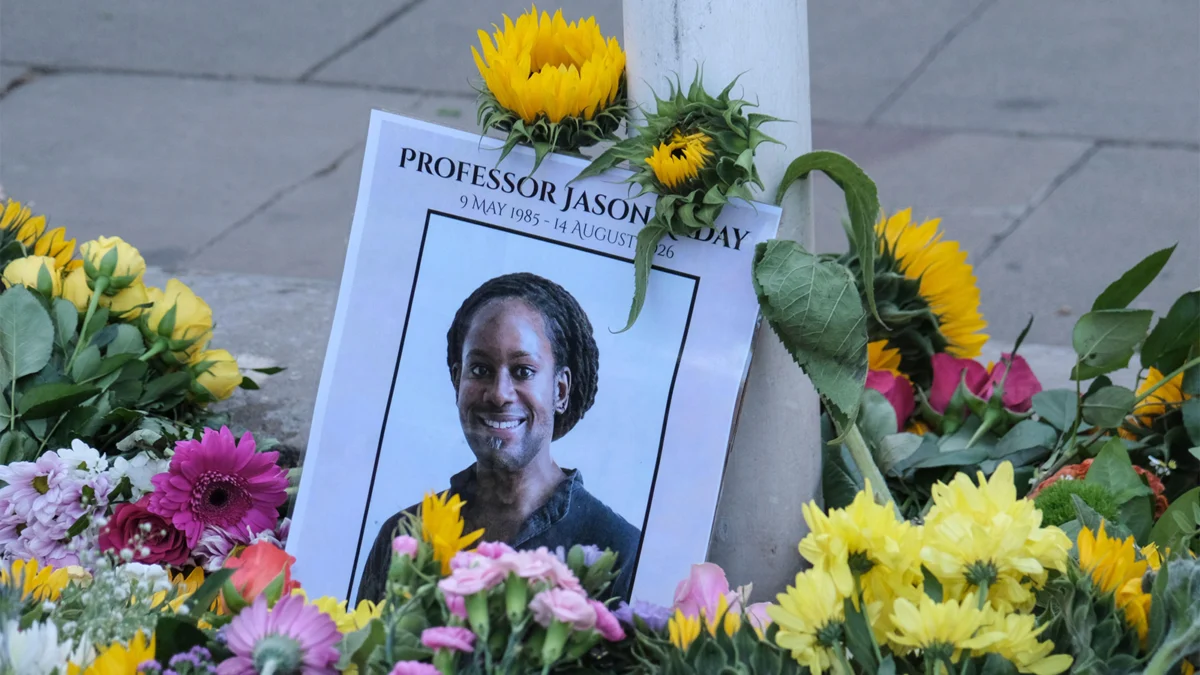
On August 14, 2026, the academic world was rocked by the news that Jason Arday—the youngest Black professor in the history of the University of Cambridge—had been found dead at the age of 41. His passing occurred just nine days after he resigned from his prestigious post, following a bruising, weeks-long public campaign that accused him of plagiarizing his PhD thesis and fabricating elements of his personal biography.
Arday’s story, which once served as a beacon of triumph over adversity, transformed overnight into a cautionary tale about the precariousness of Black achievement in elite institutions. His death has reignited a fierce, necessary debate regarding the structural realities faced by Black scholars and physicians. It forces a reckoning with a long-standing, unspoken "doctrine" of exceptionalism that promises safety in exchange for perfection—a promise that, as Arday’s experience suggests, may be fundamentally hollow.
A Chronology of a Rise and Fall
The Meteoric Rise
Three years prior to his death, Jason Arday was a celebrated figure in global academia. His narrative was one of profound resilience: a sociologist who reportedly did not speak until age 11 and did not learn to read or write until age 18. Through sheer force of will, he navigated the British education system to reach the pinnacle of the Ivory Tower at Cambridge. His appointment was widely hailed as a landmark moment for diversity, equity, and inclusion in a sector long dominated by traditional hierarchies.
The Allegations and Resignation
By the summer of 2026, the narrative shifted. Arday became the subject of intense media scrutiny. The accusations focused on his doctoral thesis, with critics alleging plagiarism and questioning the veracity of his life story. The ensuing public outcry was rapid and unrelenting. On August 5, 2026, facing mounting pressure and a "campaign of sustained abuse," according to his family, Arday resigned from his professorship. Nine days later, he was gone.
The Institutional Verdict
In the wake of his death, the investigation into his academic conduct provided a jarring contrast to the public fervor. Liverpool John Moores University, the institution that awarded Arday his doctorate, concluded its formal review of the plagiarism claims. The university did not uphold the allegations, characterizing the inconsistencies in his work as "honest and reasonable error" rather than academic misconduct. This finding, delivered after his departure and death, suggests that the public "trial" Arday endured may have been disproportionate to the actual findings of his peers.
The Weight of Being "The Only One"
Arday’s case is not an anomaly; it is a manifestation of a systemic pattern. For Black professionals in academia and medicine, the prevailing advice passed down through generations is: "You have to be twice as good to get half as much." This mantra is intended as a protective shell, a belief that if one’s credentials are unimpeachable, they will be shielded from the biases of the room.
However, as Arday’s life and death demonstrate, being "twice as good" is often not a shield—it is a spotlight. In spaces that view Black excellence as an invitation-only guest, the spotlight is rarely used to admire. Instead, it is used to scan for the slightest imperfection, a slip that can be magnified into a career-ending crisis. When there are so few Black faculty members in an institution, they are rarely allowed to simply be academics. They become symbols, case studies, and proxies for their entire race. Every action is scrutinized, and the burden of proving one’s worth is never truly lifted.
The Reality of Race in Academic Medicine
The patterns observed in sociology and the humanities are mirrored with alarming precision in academic medicine. Despite the push for diversity, the data remains stark:
- Workforce Representation: Black physicians constitute only 5.7% of the active U.S. physician workforce.
- Faculty Pipelines: Black faculty represent roughly 3.6% of full-time medical school faculty. The numbers dwindle as one moves up the ladder: Black women account for only 2.8% of female full professors, while Black men represent a mere 1.6% of their male counterparts.
- Disparities in Recognition: Research has shown that Black medical students are less likely to be elected to the prestigious Alpha Omega Alpha honor society, even when controlling for objective metrics like board scores and research output. They are also less likely to be described as "exceptional" in evaluations, often labeled merely as "competent."
Disciplinary Bias
Perhaps most damning is the data regarding professional discipline. Unpublished 2015 data from the Accreditation Council for Graduate Medical Education (ACGME) revealed that while Black residents made up 5% of the trainee population, they accounted for 20% of all residency dismissals.
While medicine demands rigorous standards to ensure patient safety, the enforcement of these standards is not race-neutral. Research integrity, credentialing, and peer review are essential, but the process often treats minor or perceived infractions differently depending on the demographic of the physician. Some receive quiet, corrective mentoring; others are treated as public examples of failing standards.
The Cost of Institutional "Settlements"
The cases of Aysha Khoury, MD, and Princess Dennar, MD, further illuminate this environment.
- Dr. Khoury, a founding faculty member at a medical school focused on health equity, was terminated after leading a student discussion on implicit bias.
- Dr. Dennar, the first Black woman to direct a residency program at Tulane, was removed from her position after being celebrated as a milestone hire.
Both women entered into settlements with their respective institutions after their departures. In both instances, no formal findings of wrongdoing were ever upheld. These cases reveal a chilling trend: institutions celebrate the recruitment of Black faculty as a public relations victory, only to push them out when their presence—or their advocacy—becomes inconvenient.
Implications: The Patient Burden
This turnover has real-world consequences for patient health. A cohort study of medical school faculty found that Black faculty stay at their institutions for a median of 7.78 years, compared to 9.91 years for white faculty.
When institutions burn through Black talent, they lose more than just employees; they lose the capacity to serve vulnerable populations. Research published in JAMA Network Open has consistently shown that counties with a higher proportion of Black primary care physicians see improved life expectancy for Black residents and a narrowing of the Black-white mortality gap. By failing to retain Black doctors, academic medical centers are failing the very communities that require the most care.
A Call for Systemic Change
The tragic loss of Jason Arday must serve as a turning point. We can no longer afford to treat diversity as a matter of optics. True reform requires a structural overhaul:
- Move from Mentorship to Sponsorship: Mentorship offers advice; sponsorship requires leaders to spend their own social and political capital to place Black colleagues in rooms where decisions are made.
- Acknowledge Invisible Labor: The burden of diversity committees, student mentoring, and systemic advocacy is real. This "invisible labor" must be formally recognized and weighted during promotion and tenure cycles.
- Transparent Data Tracking: Institutions must track and publish annual demographic data regarding who is referred for remediation, who is reported, and who receives informal corrections. Transparency is the antidote to selective enforcement.
- Presumption of Integrity: Before the public judgment begins, due process must be honored. Institutions must commit to standing by the colleagues they have recruited, ensuring that investigations are thorough, private, and fair, rather than bowing to public pressure at the first sign of controversy.
Conclusion
To the Black medical students and residents currently navigating the pressures of the "twice as good" doctrine: the advice you were raised on was meant to protect you, but it was built on a lie. Being twice as good will not save you, because your worth was never actually on trial. You do not need to earn your place through a state of constant, unsustainable perfection.
The tragedy of Jason Arday is not that he wasn’t "good enough." The tragedy is that he existed in a system designed to exploit his brilliance while waiting for him to stumble. We owe it to his memory, and to the future of our patients, to dismantle a system that forces our brightest minds to pay the ultimate price for the right to be in the room. You are already enough, and it is time for the academy to start acting like it.