










BOGALUSA, La. — In the early 20th century, Bogalusa was christened Louisiana’s “Magic City.” Its meteoric rise was fueled by the relentless hum of the Great Southern Lumber Company, which operated what was once the largest sawmill in the world. As the lumber boom faded, the city pivoted to paper, housing a massive mill that became the backbone of the local economy. Today, however, the magic has largely evaporated.
Bogalusa now serves as a sobering case study for the modern rural American landscape. With nearly 40% of its shrinking population living below the poverty line, the city’s narrow, quiet streets are shadowed by the industrial scent of the remaining paper mill. As manufacturing jobs have bled away, the local economy has been forced to undergo a painful, albeit necessary, structural shift toward the healthcare sector.
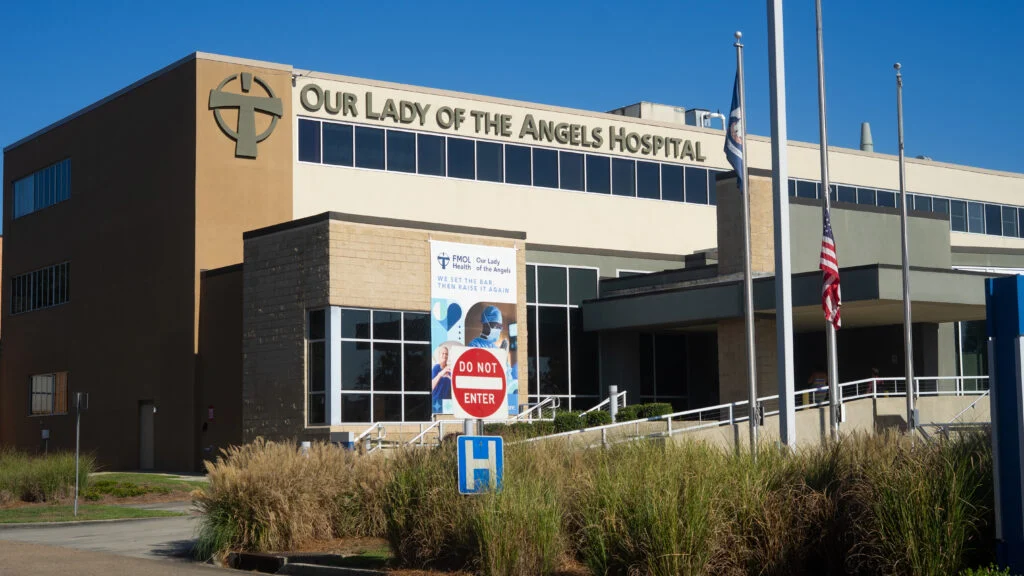
Yet, this shift is precarious. Across the country, rural hospitals are fighting for survival, squeezed by provider shortages, aging populations, and, most recently, the ripple effects of sweeping federal Medicaid cuts. In Bogalusa, the hospital—Our Lady of the Angels—stands as a defiant outlier, a facility that has managed to survive and even thrive, not through independence, but through the protection of a larger healthcare system.
A Chronology of Crisis: From Independence to Integration
The trajectory of rural healthcare in America has been marked by a slow, agonizing erosion of autonomy. The current state of affairs is the result of a multi-decade accumulation of financial pressures.
- The Early 2000s: Rural hospitals began feeling the first tremors of financial instability as demographic shifts saw younger, healthier populations move toward urban centers, leaving behind a sicker, older, and poorer patient base.
- 2014: A watershed moment for Bogalusa. Facing significant rollbacks in Louisiana’s state health spending, Our Lady of the Angels made the strategic decision to merge with the private Catholic system FMOL Health. This move provided the capital and administrative stability necessary to sustain services that would have otherwise shuttered.
- 2025: The passage of President Trump’s tax bill, which included significant reductions in federal Medicaid funding, served as an accelerant for an already volatile industry.
- 2026: A year of frantic restructuring. As federal shortfalls became a reality, the pace of mergers, acquisitions, and hospital closures hit a new intensity. From New York to Arkansas, health systems began looking to larger partners to stave off bankruptcy.
The Strategy of Safety: Why Systems are Merging
For smaller, struggling facilities, joining a larger network is increasingly viewed as the only path to survival. Brian Galofaro, the chief medical officer at Our Lady of the Angels, is blunt about the reality of the situation.
"There are a lot of rural hospitals out there that aren’t as blessed as us," Galofaro says. "The blessing is the backing of a larger health system."
This "blessing" manifests in tangible ways. For Our Lady of the Angels, the merger allowed for the expansion of critical services, including a labor and delivery unit, an intensive care unit (ICU), inpatient behavioral health beds, and a robust family medicine residency program. These are services that, in an independent, underfunded hospital, would likely have been the first to go.
Nationwide, the trend is accelerating. This summer alone, a cascade of deals made headlines:
- North Star Health Alliance (New York): After filing for bankruptcy, the system initiated plans to partner with Rochester Regional Health.
- Independence Health System (Pennsylvania): Entered into a definitive agreement to be acquired by the WVU Health system.
- Knox Community Hospital (Ohio): Announced its intent to join the Kettering Health system.
- Magnolia Regional Medical Center (Arkansas): Formally taken over by Baptist Health.
- Community Hospital of Stokes (North Carolina): Brought into the Novant Health fold as part of a transformative investment strategy.
For larger systems, these acquisitions are not merely charitable acts. They provide access to the 340B drug discount program, open new pipelines for residency training, and strengthen their community benefit profile, which is vital for maintaining tax-exempt status.
Supporting Data: The Rising Tide of Consolidation
The data confirms what many hospital administrators are feeling on the ground: the healthcare landscape is undergoing its most rapid consolidation in decades. According to Vizient, a health care performance improvement company, the number of deal announcements has been steadily increasing since the passage of the 2025 Medicaid cuts.
Greg Maddrey, president of Chartis, a consulting group that specializes in hospital strategy, notes that the public deals are only the tip of the iceberg. "For every deal that’s been announced, there are scores being talked about," Maddrey says. "There’s a lot going on under the surface. The single hospitals and small systems have to look at it because the financial pressures are simply too great to manage alone."

However, this strategy has a limit. Some regions are so economically depressed that even large systems are hesitant to intervene. In Maine, for instance, major health systems are already operating at capacity and struggling with their own financial headwinds. They are increasingly unwilling to absorb additional, high-risk, low-revenue facilities.
Chrissi Maguire, CEO of MDI Health in Maine, described the harsh reality of these negotiations. "They wouldn’t even look at me—because they’ve absorbed all the small hospitals that are suffering," Maguire says. "Larger systems can’t support these ongoing cuts, especially because of the payer mix in these smaller, rural communities." Despite this, MDI Health remains determined to maintain its 130-year history of independence.
Official Responses: A Skeptical Washington
As the consolidation trend gains momentum, the political winds in Washington have shifted. For years, policymakers viewed hospital mergers as a necessary evil to keep doors open. Now, however, there is a bipartisan consensus that consolidation is a primary driver of rising healthcare costs.
Recent studies provide ammunition for this skepticism. A study published in the Journal of the American Medical Association indicated that hospital prices rose by more than 10% following mergers. A bipartisan Senate review went further, finding that price increases of 20% or more were "not uncommon."
This has sparked legislative action. Senators Josh Hawley (R-Mo.) and Elizabeth Warren (D-Mass.) have introduced legislation aimed at breaking up "Big Medicine," while the Federal Trade Commission (FTC) has launched a dedicated health care task force to combat anticompetitive practices. This aligns with a growing populist sentiment within the GOP that views large hospital systems with the same suspicion once reserved for Big Tech or pharmaceutical giants.
State lawmakers are also stepping up, demanding more transparency. "States are becoming much more aggressive," says Maddrey. "They are demanding to know exactly what the systems are committing to in exchange for these mergers."
When traditional mergers are not an option, some hospitals are turning to private equity. However, this path is fraught with risk. The collapse of Steward Health Care—a chain that left communities in crisis—has become a cautionary tale. Senators Bill Cassidy (R-La.) and Bernie Sanders (I-Vt.) have issued rare joint statements calling for federal legislative solutions to prevent similar disasters in the future.
Implications: The Evolution of Care
If the current trend continues, the definition of a "hospital" will fundamentally change. To remain solvent, larger health systems are increasingly centralizing services. This means that while a local facility may stay open for routine care, patients may have to travel significant distances for specialized procedures like orthopedics or complex surgeries.
"We’re trying to be proactive and ahead of the curve using demographic demand projections," says Trampas Hutches, the Mountain Region president at MaineHealth. By concentrating specialized care in fewer, high-volume centers, health systems argue that quality actually improves because clinicians perform those specific procedures more frequently.
Simultaneously, the industry is shifting toward "ambulatory surgery centers," which are significantly cheaper to operate than traditional inpatient hospitals. Combined with the rise of "hospital-at-home" initiatives and expanded telehealth, the healthcare model of the 21st century is moving away from the "all-service" local hospital.
For towns like Bogalusa, the message is clear: the future of healthcare is not in the grand, multi-story buildings of the past, but in highly integrated, specialized networks. The challenge for policymakers will be ensuring that in this pursuit of efficiency, the most vulnerable patients are not left behind, forced to navigate a system that, while more stable, is increasingly distant from their front doors.