





Twenty-five years have passed since the morning of September 11, 2001, a day etched into the collective memory of the world. While history books rightly celebrate the heroism of the passengers aboard United Airlines Flight 93—who stormed the cockpit and forced the hijacked jet into a field in Shanksville, Pennsylvania—a parallel story of profound, quiet sacrifice unfolded in the skies over the nation’s capital.
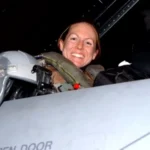
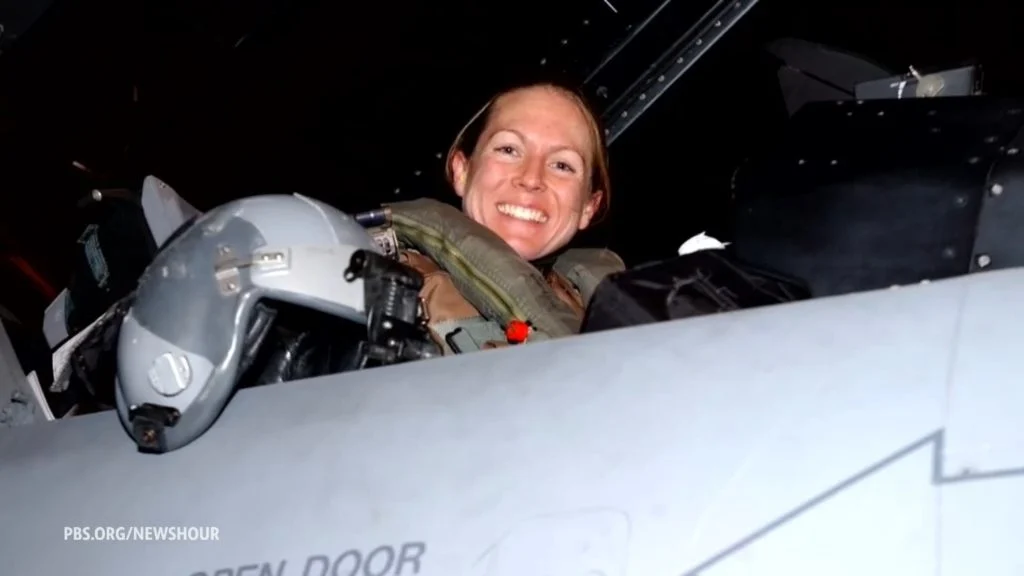
Before the passengers of Flight 93 took their stand, two pilots from the District of Columbia Air National Guard were ordered into the air with a mission so harrowing it remains one of the most chilling footnotes of the tragedy. They were tasked with an intercept mission for which they had no training, no weapons, and only one possible outcome: they were to ram their F-16 fighter jets into a hijacked airliner. Among them was Heather "Lucky" Penney, a young pilot whose commitment to her duty, her nation, and her family legacy defined the definition of courage in the face of an unprecedented national catastrophe.
The Morning of September 11: A Crystal Blue Dawn
The day began with a deceptive serenity. Heather Penney, then a pilot with the D.C. Air National Guard, recalls the morning as "crystal blue," a perfect day for aviation. As a trailblazer—the first female fighter pilot in the D.C. Air National Guard—Penney was living a dream that had been ignited in her childhood. The daughter of a Vietnam-era A-7 pilot, she had spent her youth listening to her father’s mission tapes, eventually joining the service as soon as Congress opened combat aviation to women.
The transition from peace to war happened in seconds. Tech Sergeant Dave Callahan entered the squadron room with the news that a plane had struck the World Trade Center. Initially, the assumption among the pilots was that it was a tragic accident involving a small civilian aircraft. When the second plane hit, the reality set in with brutal clarity: the United States was under attack.
By the time Penney and her wingman, then-Lieutenant Colonel Marc Sasseville, were alerted, the world had changed. The Twin Towers had fallen, and the Pentagon had been struck. Intelligence reports suggested that more hijacked aircraft were inbound toward Washington, D.C., with the nation’s capital functioning as the primary target.
Chronology of the Intercept Order
The scramble to respond on 9/11 was hampered by the fact that the nation was entirely unprepared for a domestic aerial assault. At the time, the North American Aerospace Defense Command (NORAD) was primarily focused on outward-facing threats from the Cold War era, not domestic hijacking scenarios.
1. The Scramble
As the Pentagon burned, the D.C. Air National Guard was the last line of defense. Brigadier General David Wherley, the wing commander, issued the order that would define the rest of Penney and Sasseville’s lives. He looked at his pilots and asked the defining question: "You have weapons-free flight lead control. Do you understand what I’m asking you to do?"
2. The Weaponless Intercept
The chilling reality of the request was that Penney and Sasseville’s F-16s were not armed. The missiles had not yet been loaded onto the jets. They were essentially flying, in Penney’s words, "slick." They had no way to shoot down a target, no way to neutralize a threat from a distance. The order meant one thing: they were to use their aircraft as guided missiles.
3. The Suicide Pact
Penney and Sasseville did not hesitate. They devised a grim, split-second plan. Sasseville would aim his jet at the cockpit of the hijacked airliner to neutralize the terrorists and destroy the flight controls. Penney would follow, striking the tail of the plane to aerodynamically destabilize it, forcing it into a terminal dive. They understood that both of their aircraft would be destroyed, and they would almost certainly perish in the impact.
"It would have been a suicide mission," Penney reflects. "And neither one of us hesitated. Everyone on the base, any individual who had ever raised their right hand, would have wanted to be in that two-ship to protect our nation. It was my job."
Supporting Data: A Nation Unprepared
The story of Heather Penney is not just one of individual heroism; it is a scathing indictment of the systemic failures that left the United States vulnerable in 2001.
- Systemic Underfunding: In the mid-1990s, the U.S. government significantly reduced the size of the Air Force. This drawdown created a "hollow force" that struggled to maintain readiness.
- Aging Inventory: The F-16s that Penney scrambled with on that day remain in service today. Decades later, many of the aircraft in the Air Force inventory are older than the pilots flying them, a point Penney emphasizes in her work with the Mitchell Institute for Aerospace Studies.
- The Chain of Command: On 9/11, the confusion between civilian air traffic control (the FAA) and the military (NORAD) resulted in precious minutes being lost. The fact that pilots were sent on a suicide mission is evidence of a desperate, last-ditch effort to compensate for a system that had no protocol for internal terrorist attacks.
Official Responses and Post-9/11 Reform
The events of 9/11 forced a total overhaul of the U.S. national security architecture. The creation of the Department of Homeland Security and the massive expansion of the TSA and NORAD’s domestic mandate were direct results of the failures exposed that day.
However, advocates like Penney argue that the focus must remain on the human element and the hardware. As the Director of Studies and Research at the Mitchell Institute, Penney utilizes her platform to warn against the dangers of a shrinking military. She argues that when a nation cuts its defense capacity too deeply, it forces the military to rely on "extraordinary" acts of sacrifice from its personnel, rather than sustainable, well-resourced defense strategies.
"I do what I do today at the Mitchell Institute so that I can advocate for what our airmen need so that they are not also sent on a suicide mission," she says.
Implications: The Legacy of Sacrifice
The tragedy of 9/11 was a mosaic of individual decisions made in the shadow of death. Penney’s father, John Penney, was a captain for United Airlines during the time of the attacks. When asked if it ever occurred to her that her father could have been piloting Flight 93, Penney’s response is stoic: "It never crossed my mind. But that would not have mattered. Those pilots were already dead. I had a job to do."
This cold, professional detachment is not a lack of emotion; it is the ultimate manifestation of service. Penney and the passengers of Flight 93 represent two different but equally profound forms of American courage. The passengers—ordinary citizens, nurses, accountants, and teachers—rose to the occasion, proving that heroism is an inherent human trait, not a military monopoly. The pilots, meanwhile, prepared to give their lives to prevent further carnage, accepting the necessity of their own destruction to save their capital.
Reflection on "Let’s Roll"
The phrase "Let’s roll," spoken by Todd Beamer on Flight 93, has become a mantra for American resilience. For Penney, the phrase serves as a reminder of the fragility of peace. "It proves to me that heroism isn’t something unique, that it exists inside every single one of us," she notes.
As the nation reflects on the 25th anniversary of 9/11, the story of Heather Penney serves as a bridge between the military’s duty to protect and the civilian’s duty to survive. It highlights that while equipment may fail, and systems may be caught off guard, the spirit of those tasked with the protection of the innocent remains the most vital asset in the national defense.
The mission that never was—the interception of a hijacked jet by a weaponless F-16—remains a powerful symbol. It is a reminder that on our darkest day, there were people waiting in the wings, ready to sacrifice everything, simply because it was their purpose. They were the shield of the nation, and though they did not have to make the ultimate sacrifice, the willingness to do so remains a testament to the character of those who wear the uniform.