








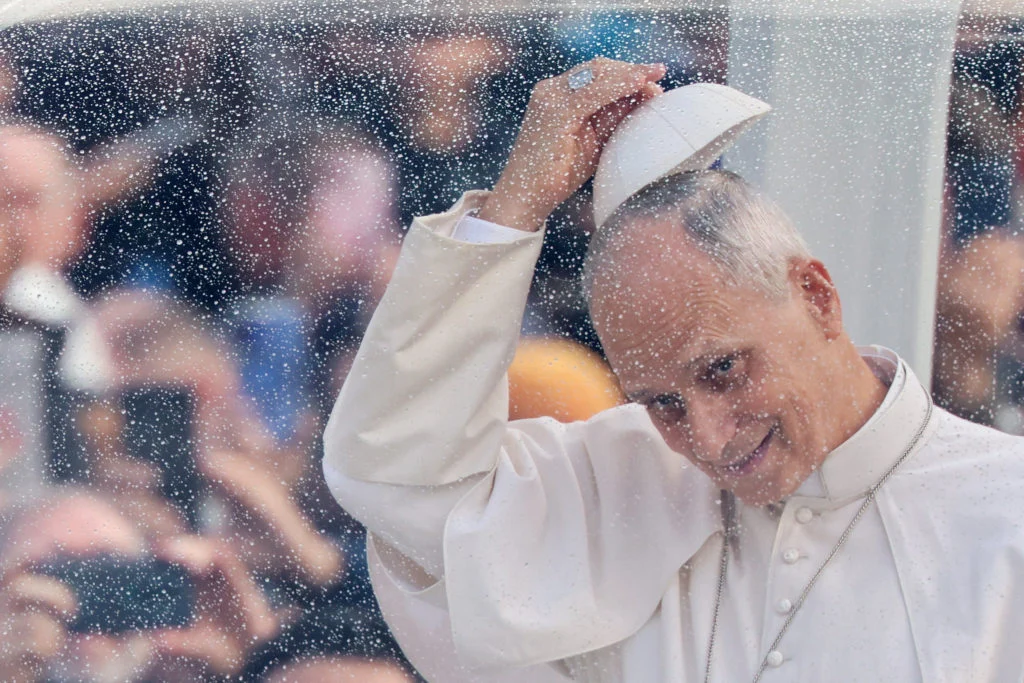
VATICAN CITY — In a development that has brought significant relief to the global Catholic community, the Vatican announced on Wednesday that Pope Leo XIV requires no further medical intervention following the successful surgical removal of a localized lung tumor. The news marks a pivotal turning point in the health of the 71-year-old pontiff, whose 17-month papacy has been defined by both his theological vigor and, more recently, his transparent approach to personal health crises.
Medical officials confirmed that comprehensive post-operative testing on tissue removed during last week’s procedure showed that the adenocarcinoma—a common form of non-small cell lung cancer—was entirely contained within the lower lobe of his right lung. With no evidence of metastatic spread or aggressive cellular markers, the Pope’s medical team has officially cleared him of the need for chemotherapy, radiation, or other oncology-based therapies.
The Chronology of a Medical Crisis
The rapid trajectory of Pope Leo’s recovery has been characterized by efficiency and unexpected transparency. The path to his current state of health began with what doctors termed an "incidental finding."
- Early October: During a routine abdominal examination unrelated to his respiratory health, physicians identified a suspicious nodule in the Pope’s right lung.
- October 11: Demonstrating a break from historical Vatican precedents regarding papal privacy, Pope Leo publicly disclosed the diagnosis to the faithful gathered in St. Peter’s Square, confirming he would undergo surgery.
- October 14: The Pope underwent a successful procedure at Rome’s Gemelli Hospital, led by chief thoracic surgeon Dr. Stefano Margaritora. The surgery involved the resection of the lower lobe of his right lung.
- October 17: Defying initial medical projections that anticipated a week-long recovery period, the Pope was discharged from the hospital just four days after his surgery.
- October 21: Following the analysis of the final tissue samples, the Vatican issued the formal statement declaring the Pope cancer-free and in no need of follow-up oncological treatment.
Medical Insights: The Efficacy of Early Detection
The clinical outcome for Pope Leo XIV underscores the life-saving potential of early medical intervention. Dr. Luigi Carbone, the Pope’s personal physician, working in tandem with Dr. Margaritora, emphasized that the decision to proceed with surgery was predicated on the early discovery of the nodule.
Adenocarcinoma of the lung is often aggressive, but when identified at an early stage—frequently before patients exhibit clinical symptoms such as persistent coughs or chest pain—surgical resection is often curative. Because the Pope’s tumor was caught during a routine scan for other issues, surgeons were able to operate while the disease was still localized.
"The pathology report is definitive," the doctors stated in a joint briefing. "The oncology assessment has confirmed that the disease was caught in its infancy. No adjuvant therapy is required, as the surgical excision was complete and the margins were clear."
Official Vatican Response and Public Appearances
Despite the intensity of the procedure, the Pope’s engagement with his duties has remained remarkably consistent. Even while recovering in his hospital suite, the Pontiff maintained his administrative responsibilities, including a high-level diplomatic call with Russian President Vladimir Putin to discuss ongoing international tensions.
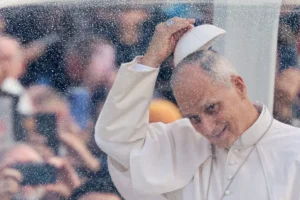
Since his return to the Vatican, the Pope has made two significant public appearances that have reassured the public of his vitality. On Sunday, he appeared at his traditional window overlooking St. Peter’s Square to offer his blessing. On Wednesday, he conducted his full weekly general audience, greeting thousands of pilgrims from across the globe. Observers noted that while he moved with deliberate care, his voice remained strong and his demeanor was consistent with his pre-surgical self.
The Vatican’s communication strategy throughout this period has been notably modern. By providing regular, detailed updates on the Pope’s condition, the Holy See has effectively quelled speculation and potential political instability that often follows the health struggles of world leaders.
Implications for the Papacy and Global Travel
The most immediate question following the news of the Pope’s recovery concerns his upcoming international itinerary. Before the diagnosis, the Vatican had finalized plans for an ambitious, multi-nation tour of South America, scheduled for November 6–17. The trip is slated to include stops in Uruguay, Argentina, and Peru.
The logistical demands of this tour are significant: the schedule involves a dozen flights, two helicopter transitions, and visits to regions characterized by high altitudes, which can place stress on the respiratory system.
However, Dr. Margaritora was unequivocal in his support for the mission. In an interview with Vatican News, the surgeon stated there was "no clinical reason" to prevent the travel. He noted that the Pope’s lung function is expected to adapt well to the physical demands of the trip, provided he continues his post-operative physical therapy and remains under observation.
For the Church, the resumption of this trip is symbolic. It signals a return to normalcy and underscores the Pope’s commitment to his pastoral agenda. The trip is viewed by political analysts as a critical effort to solidify diplomatic ties in the Southern Hemisphere, a region of growing strategic importance for the Vatican.
The Broader Context: A New Era of Transparency
The case of Pope Leo XIV represents a distinct shift in how the Vatican manages the "politics of health." Historically, the medical conditions of popes were guarded with intense secrecy, often leading to rumors and uncertainty during times of transition or infirmity.
By opting for a policy of transparency, Pope Leo has successfully reframed his surgery not as a moment of weakness, but as a demonstration of human vulnerability that resonates with a global audience. The "incidental finding" of his cancer has served as a public health prompt, with Vatican medical experts using the Pope’s case to educate the public on the importance of routine health screenings.
As the Pope prepares for his South American tour, the mood in Vatican City is one of cautious optimism. The threat of the malignancy has been neutralized, and the administration appears focused on moving forward with the Pope’s established agenda. The successful surgical outcome serves as a testament to both the advancements in modern thoracic medicine and the resilience of a leader who has navigated a major health crisis with the eyes of the world upon him.
For the faithful, the focus now shifts from the hospital to the upcoming papal travel, as the Church looks toward a future that, for the moment, seems stable and secure under Pope Leo’s continued guidance. The coming weeks of recovery and travel will be closely monitored, not only for the Pope’s physical well-being but for the continued momentum of his 17-month pontificate, which now enters a new phase of activity following a narrow brush with a potentially life-altering disease.