











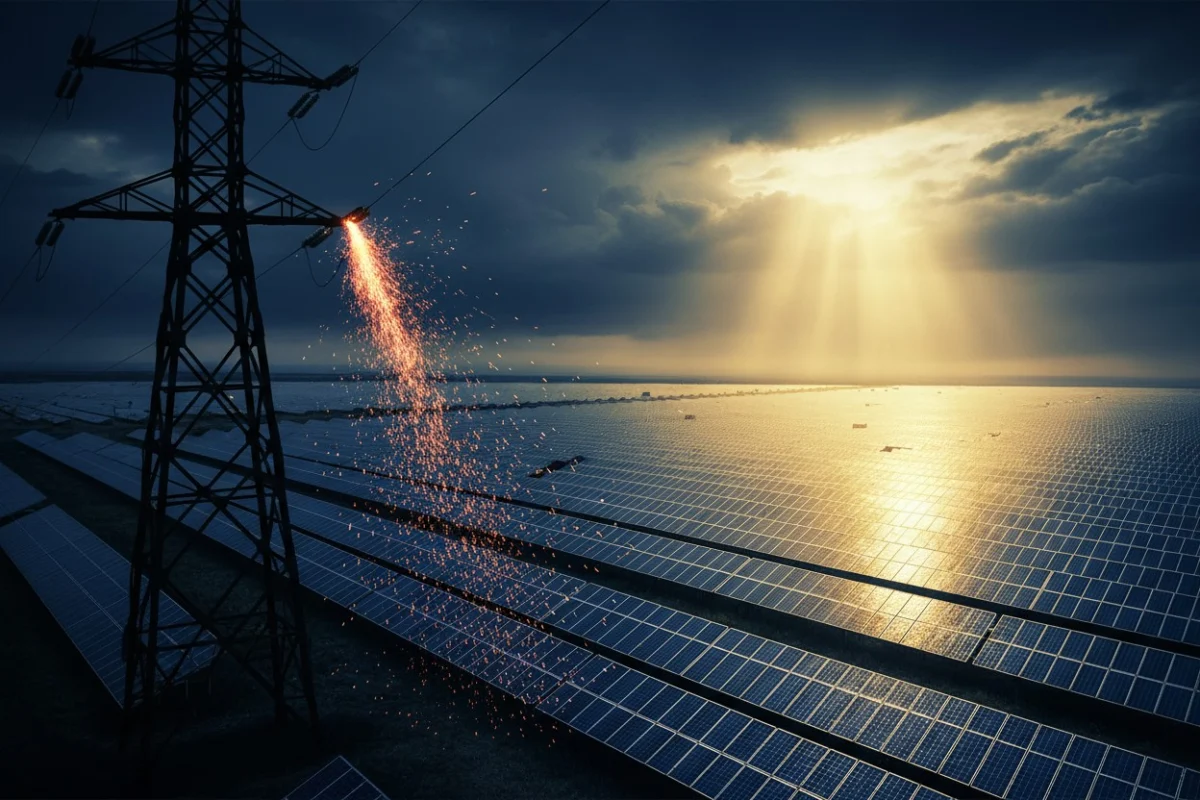
The landscape of American energy independence is undergoing a seismic shift. As of late 2026, the federal government has finalized a controversial Section 232 executive order that mandates a minimum import price for solar components and imposes a 15% tariff on polysilicon derivatives. Set to take full effect on December 4, 2026, this policy represents one of the most significant interventions in the renewable energy market in decades. While the administration frames the move as a necessary measure for national security and the protection of domestic manufacturing, critics argue it serves as a punitive tax on decentralized power, effectively pricing everyday citizens out of energy autonomy.
Main Facts: Decoding the Section 232 Order
The core of the administration’s directive lies in the establishment of a "wholesale price floor." Under the new regulatory framework, imported solar panels and essential photovoltaic components are restricted from entering the U.S. market below a baseline of 38 cents per watt. This is not merely a suggested price; it is a legally enforced minimum.
When the 15% tariff is applied atop this floor, the cost structure for solar distributors and installers changes overnight. Currently, market rates for high-efficiency bifacial panels—often sourced from global markets—sit in the range of 20 to 30 cents per watt. The transition to a 38-cent floor, bolstered by the tariff, effectively mandates a retail price hike that market analysts suggest will see hardware costs double or even triple by early 2027.
The administration’s argument rests on the "National Security" clause of the Trade Expansion Act of 1962. By citing Section 232, the White House has bypassed traditional legislative debate, arguing that reliance on foreign-manufactured solar technology constitutes a strategic vulnerability. The goal, according to official briefings, is to force the market to pivot toward domestic production by making imported alternatives prohibitively expensive.
A Chronology of the Policy Shift
The path to this tariff began long before the 2026 announcement. The trajectory can be traced through several key phases:
- Mid-2025: The administration initiates a comprehensive review of the solar supply chain, citing the "critical nature" of energy infrastructure in the face of rising AI-driven power demands.
- Early 2026: Domestic manufacturing lobbyists begin an aggressive campaign, arguing that foreign dumping of solar panels is suppressing U.S. industry growth.
- August 2026: Preliminary discussions regarding a "price floor" leak to major financial outlets, causing immediate volatility in solar installation stocks and a surge in pre-tariff inventory hoarding.
- October 2026: The Section 232 order is signed. It outlines a phased implementation, with full enforcement beginning December 4, 2026.
- December 4, 2026 (Forthcoming): The effective date of the new tariff and price floor structure. Customs and Border Protection (CBP) is tasked with enforcing the new valuation, with non-compliant shipments facing seizure or massive penalty fees.
Supporting Data: The Grid in Crisis
The urgency of this policy shift arrives at a time when the American electrical grid is facing unprecedented strain. According to recent reports from the Department of Energy, the eastern power grid is experiencing record levels of instability. The Southwest Power Pool (SPP) has been granted emergency powers to manage capacity, a clear indicator that the aging infrastructure is struggling to keep pace with modern demand.
The primary driver of this strain? The rapid expansion of artificial intelligence data centers. These facilities are consuming electricity at a rate that traditional utility providers had not forecasted. In several states, industrial-scale server farms are now competing directly with residential sectors for base-load power. This competition has led to an increase in rolling blackouts and a warning from grid operators that capacity limits are no longer a theoretical concern—they are a daily reality.
Data indicates that as utility rates climb to pay for grid hardening, the return on investment for residential solar was supposed to be the "great equalizer" for American families. However, the new tariffs strike exactly at the moment when solar and battery storage systems have become the only viable hedge against rising utility costs and grid unreliability. By forcing the price of solar technology upward, the government is effectively tethering homeowners to a failing centralized utility model.
Official Responses and Industry Skepticism
The response from the renewable energy sector has been largely condemnatory. The Solar Energy Industries Association (SEIA) and other trade groups have issued statements warning that the policy will stifle installation growth and potentially result in the loss of thousands of "downstream" jobs—those in installation, design, and local electrical contracting—in a misguided attempt to protect a small number of upstream manufacturing jobs.
"By artificially inflating the cost of the hardware, the government is essentially taxing the consumer’s desire for resilience," said an industry analyst who requested anonymity. "You cannot build a robust, decentralized energy network if the building blocks are kept behind a tariff wall."
Conversely, the administration remains firm. In recent press conferences, officials have reiterated that energy dominance requires a "made-in-America" supply chain. They argue that if the U.S. remains dependent on foreign components, a future geopolitical conflict could result in an embargo that would leave the nation without the means to repair its solar infrastructure.
Implications for the American Consumer
The implications for the average citizen are stark. For those who view energy independence as a cornerstone of modern self-reliance, the cost of entry is rising rapidly.
1. The Death of the Budget-Friendly System
The "DIY" solar market, which allowed middle-class families to build incremental systems, is facing a total reset. Systems that could have been assembled for a few thousand dollars may now cost double, forcing many to either abandon their projects or take on debt to finance them.
2. The Rise of the "Utility Monopoly" Model
With solar becoming less accessible, the average consumer will have little choice but to rely entirely on utility-provided power. This creates a captive market where the consumer has no leverage. When the grid fluctuates or prices spike, the household is at the mercy of the provider, with no internal capacity to "island" their home from the grid.
3. The "Stock-Out" Effect
As the December deadline approaches, supply chain experts warn of a "bullwhip effect." Retailers are already seeing inventory depletion as contractors and preppers alike scramble to purchase panels before the tariff-induced price hikes hit the shelf. This hoarding behavior is further driving up costs even before the official enforcement date, as current stock becomes a high-value commodity.
Strategic Preparation: Securing Energy Sovereignty
For those who see the writing on the wall, the window to act is closing. If you are seeking to secure an off-grid or hybrid power system, professionals in the sector suggest the following approach:
- Secure Hardware Immediately: Rather than waiting for potential price drops that likely won’t materialize, focus on securing components now. Pallet-level purchases are becoming the standard for those serious about independence.
- Prioritize Battery Storage: Solar panels are only half of the equation. If the grid goes down, your panels are useless without storage. Lithium Iron Phosphate (LiFePO4) batteries remain the industry standard for reliability. Securing your storage capacity is now as critical as securing the panels themselves.
- System Integration: Focus on building a modular system. By utilizing charge controllers and inverters that are compatible with various panel configurations, you ensure that your system remains adaptable if you need to add components later, even at higher market prices.
Conclusion: The Path Forward
The debate over the Section 232 tariffs is ultimately a debate about the nature of power. Is the American home a castle, capable of sustaining itself, or is it merely a node in a state-monitored utility network?
While the administration claims the tariff is a tactical move in a global economic war, the collateral damage is the freedom of the individual to opt out of a failing, centralized system. As the cost of the transition to renewable autonomy rises, the value of the energy we generate for ourselves becomes even greater. The struggle for energy independence is no longer just a financial decision; it is an act of civic and personal resilience in an era defined by uncertainty. Those who act now to secure their own power sources are not just buying solar panels—they are investing in the most fundamental requirement of a free and sovereign life: the ability to keep the lights on, regardless of the policies coming out of Washington.