









As the calendar turned to a new month, the international community faced a confluence of crises ranging from escalating military tensions in the Middle East and Eastern Europe to high-stakes legal proceedings and a seismic shift in the corporate landscape of Silicon Valley. From the U.S.-led strikes in Iran to the somber return to school in war-torn Kyiv, these events highlight a world characterized by deep-seated geopolitical instability and domestic upheaval.
I. Middle East: The Strait of Hormuz Standoff
The Military Exchange
The United States military conducted a series of precision strikes against targets within Iran today, a move described by Pentagon officials as a direct response to a string of attempted attacks against commercial vessels transiting the Strait of Hormuz, as well as threats posed to U.S. service members stationed in the region. The escalation marks a volatile pivot in an already fragile maritime security environment. Iranian state media promptly reported that the nation had retaliated with its own strikes, though specific details regarding damage or casualties remain unconfirmed.
The Diplomatic Paradox
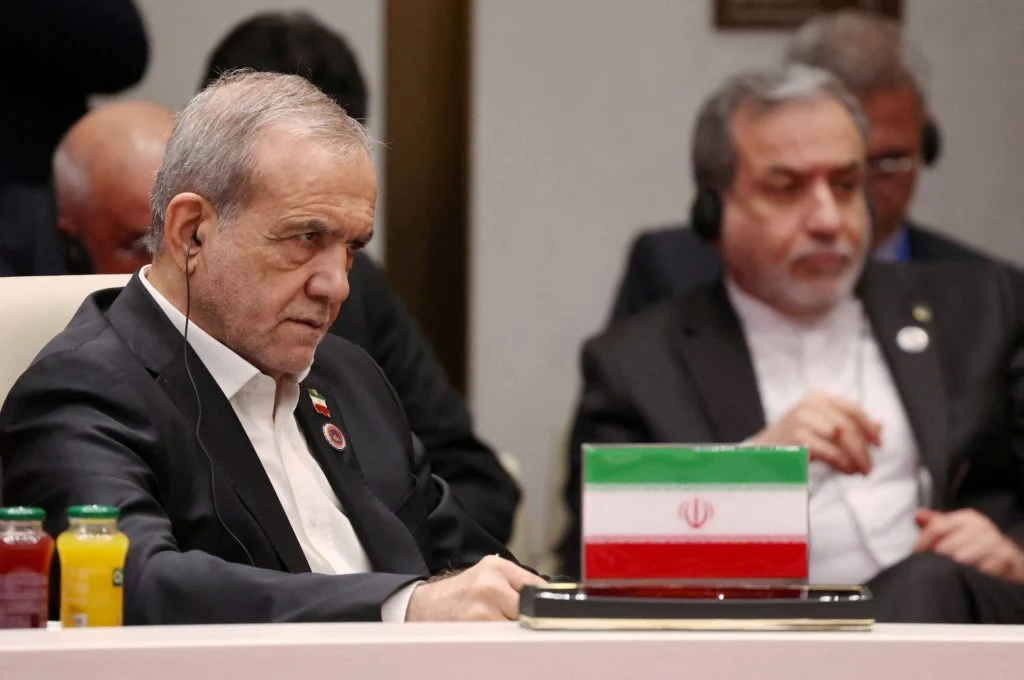
The kinetic military action occurred in stark contrast to recent diplomatic posturing. Only hours before the exchange of fire, Iranian President Masoud Pezeshkian, attending a summit alongside key allies Russia and China, suggested a willingness to return to a cease-fire agreement previously negotiated with Washington earlier this summer.
Speaking through an interpreter, Pezeshkian adopted a conciliatory tone: "I state clearly that if the United States returns to its commitments in the memorandum of understanding, the Islamic Republic of Iran will immediately reciprocate." However, in subsequent meetings with the Russian delegation, the Iranian leader struck a more defiant posture, insisting that his nation possesses the resilience to withstand what he termed "unjust American sanctions."
Economic Asphyxiation and the Strait’s Future
U.S. Treasury Secretary Scott Bessent was swift to dismiss the prospect of immediate diplomatic relief, signaling instead that the administration intends to intensify its economic campaign. "We are going to economically asphyxiate this regime," Bessent stated. "My job is to make sure that they want to have a deal."
Bessent further articulated a long-term U.S. strategy to minimize the strategic importance of the Strait of Hormuz. By incentivizing the development of alternate oil shipping routes and logistical infrastructure, the U.S. aims to decouple global energy markets from the chokepoint. "In two years," Bessent predicted, "the strait will be rendered a worthless piece of water."
II. Domestic Legal and Environmental Crisis
The Lindsay Clancy Trial
In Massachusetts, the murder trial of Lindsay Clancy has reached a critical juncture. The jury entered its fourth day of deliberations, signaling to Judge William Sullivan that they were experiencing significant difficulty in reaching a unanimous verdict. Judge Sullivan, citing the exhaustive nature of the proceedings—which involved over 80 witnesses and 300 pieces of evidence—ordered the jury to continue their efforts.
Clancy, who remains expressionless throughout the courtroom proceedings, is charged with the 2023 strangulation death of her three children. While the defense does not contest the facts of the killing, they argue that the defendant was suffering from severe postpartum psychosis, a condition that they contend stripped her of criminal responsibility.
Flash Floods at the Grand Canyon
The tragedy in the Grand Canyon has deepened as search-and-rescue teams continue their efforts to locate a missing hiker. The operation, already hampered by the vast and rugged terrain, now faces the additional threat of severe weather conditions. Authorities confirmed the identities of two victims who perished in the flash floods over the weekend: 46-year-old John Giusti and 42-year-old Brent Rosenkranz. While approximately 80 people have been successfully rescued since the event, the ongoing search underscores the lethal risks posed by sudden environmental shifts in the region.
III. The Shadow of War in Ukraine and Sabotage in Europe
Kyiv’s Under-Fire Education
In Ukraine, the start of the school year—traditionally a day of celebration—was marred by the reality of total war. Kyiv has endured six consecutive days of Russian aerial bombardment. As children returned to classrooms, air raid sirens forced students, teachers, and parents into underground shelters.
President Volodymyr Zelenskyy visited a local school, condemning the Russian strikes as "despicable." The psychological toll on the youth is profound; school principal Roman Feshchuk noted that children born during the conflict have no frame of reference for peace. "For them, this is their reality," Feshchuk remarked, highlighting the long-term trauma being inflicted on a generation of Ukrainians.
Sabotage Allegations in Germany
European security fears spiked following an attempted attack at Germany’s Leipzig Airport. Authorities discovered drones rigged with explosives, including one positioned near a Ukrainian aircraft. The German foreign minister condemned the act as a "dangerous" escalation and announced immediate countermeasures, including the expulsion of Russian diplomatic staff and more stringent entry requirements for Russian nationals. The Russian embassy in Berlin has rejected the claims as "absurd and unsubstantiated."
IV. Public Health and Public Safety
The CDC and Measles Mortality Dispute
The Centers for Disease Control and Prevention (CDC) is currently embroiled in a bureaucratic and political firestorm regarding the death toll of a recent measles outbreak in Pennsylvania. At the center of the dispute is whether two recent deaths should be officially categorized as measles fatalities. While state officials initially reported the deaths as related to the outbreak, the new CDC director, Dr. Erica Schwartz, has ordered a stay on adding these cases to the federal count, pending a review of whether the virus was the primary cause of death. This internal review highlights a broader conflict between Health Secretary Robert F. Kennedy Jr. and Pennsylvania Governor Josh Shapiro regarding federal-state data reporting protocols.
Violence in Times Square
New York City is reeling from a random, unprovoked stabbing incident in Times Square. A 49-year-old woman with a documented history of mental health issues engaged in a standoff with police before being fatally shot. The suspect had attacked two bystanders, including 32-year-old Erin Piacenti, a vice president at Bank of America, who tragically succumbed to her injuries at the hospital. Police Commissioner officials have characterized the event as a tragic and isolated incident of urban violence.
V. The Corporate Transition at Apple
A New Era for Tech
After 15 years under the stewardship of Tim Cook, Apple officially transitioned to new leadership today. John Ternus has assumed the role of Chief Executive Officer, inheriting a company at the apex of its financial power but facing immense pressure to navigate the rapidly evolving landscape of Artificial Intelligence.
The markets reacted with cautious optimism to the leadership change; Apple shares rose more than 2.5% during the session. However, the broader financial outlook remained grim. The Dow Jones Industrial Average shed more than 400 points, while both the S&P 500 and the Nasdaq retreated, as investors expressed concern over the start of a new, volatile trading month.
Implications of the Shift
Ternus’s appointment is viewed by industry analysts as a strategic move to focus on hardware integration and next-generation A.I. capabilities. As the tech industry faces mounting regulatory scrutiny and supply chain pressures, Ternus’s ability to maintain Apple’s dominance will be the defining narrative for the company in the coming decade.
Conclusion
The events of the past 24 hours serve as a stark reminder of the interconnected nature of global stability. Whether through the direct military involvement of the U.S. in the Middle East, the endurance of civilians in Ukraine, or the structural changes occurring in the world’s most valuable companies, the world remains in a state of high-stakes flux. As legal systems in the U.S. struggle to find closure and public health agencies navigate political friction, the coming weeks will likely test the resilience of both governmental and corporate institutions.