











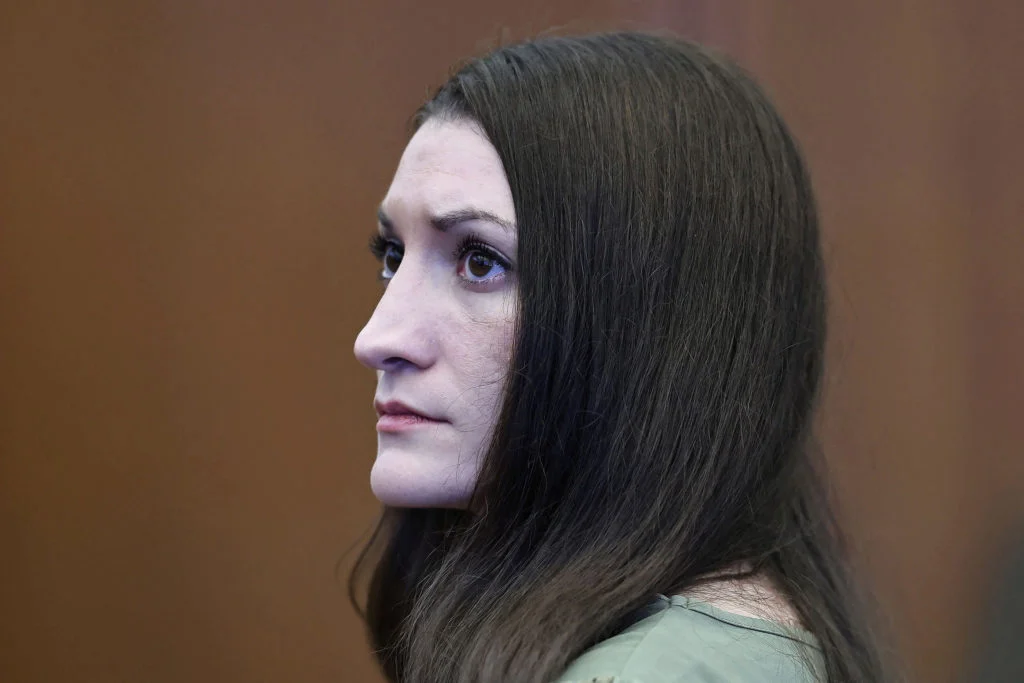
The legal proceedings surrounding Lindsay Clancy, a 36-year-old former labor and delivery nurse who stands accused of the 2023 strangulation deaths of her three young children, have culminated in a profound judicial impasse. Following a grueling 21-day trial, the jury tasked with determining Clancy’s criminal responsibility failed to reach a unanimous verdict, resulting in a mistrial declared by Judge William Sullivan.
The trial, which captivated and polarized the public, hinged on a singular, harrowing question: Was Clancy a cold-blooded killer, or was she a victim of a catastrophic psychological break caused by postpartum psychosis? As the legal community waits to see if prosecutors will seek a retrial, recent insights from the jury room have shed light on the intense internal conflict that prevented a resolution.
Main Facts: A Case Defined by Mental Health and Tragedy
The prosecution’s case against Lindsay Clancy was built on the premise of premeditation. Prosecutors argued that on January 24, 2023, Clancy orchestrated a plan to remove her husband from the home, sending him on errands to pick up medicine and dinner, thereby creating the window of opportunity needed to strangle 5-year-old Cora, 3-year-old Dawson, and 8-month-old Callan using exercise bands.
The defense, led by attorney Kevin Reddington, did not dispute that Clancy committed the acts. Instead, they mounted a comprehensive defense based on the clinical reality of postpartum psychosis—a rare, severe mental health condition characterized by delusions, hallucinations, and a complete detachment from reality, often triggered by the physiological and psychological stressors of childbirth. Reddington argued that Clancy’s mind had effectively collapsed, rendering her incapable of understanding the wrongfulness of her actions.
The courtroom atmosphere remained heavy throughout the trial, particularly when jurors were played the harrowing 911 call placed by Clancy’s husband upon discovering the crime scene. For the jury, this recording served as a visceral reminder of the human cost of the case, leaving many in tears during deliberations.
Chronology of a Disrupted Trial
The path to the mistrial was paved with seven days of agonizing deliberations. According to foreperson Ronni Carlson and other jurors who recently broke their silence in a televised interview with NBC10, the process was fraught with tension from the outset.
- January 2023: The incident occurs, triggering an immediate and nationwide conversation regarding maternal mental health.
- Trial Commencement: Over three weeks of testimony, the court hears from family members describing a rapid decline in Clancy’s mental state in the months leading up to the tragedy.
- The Deliberation Phase: For seven days, jurors navigated complex legal instructions regarding the threshold for "not guilty by reason of insanity."
- The Impasse: Jurors sent three separate notes to Judge Sullivan indicating they were unable to reach a unanimous decision.
- The Final Collapse: Despite a moment where it appeared the group had reached consensus, a lone holdout juror shifted the outcome, ultimately leading to the declaration of a mistrial.
The Holdout: A Conflict of Conscience and Procedure
The most striking revelation from the post-trial interviews is the proximity the jury reached to a final verdict. Foreperson Ronni Carlson recounted a moment of high emotion when it appeared the entire panel was leaning toward an acquittal.
"He admitted he had reasonable doubt," Carlson said, describing the holdout juror. "I started filling out the forms, I was so excited. I wrote my signature on each one. And then he said, ‘But I’m still not going to say that she’s not guilty by reason of insanity.’"
This inconsistency—acknowledging reasonable doubt while refusing to apply the legal standard for insanity—left the other jurors frustrated and exhausted. Juror Paula Devlin characterized the holdout as "arrogant," noting that he seemed unwilling to engage with the perspectives of his peers or the weight of the evidence presented.
Defense attorney Kevin Reddington did not mince words following the mistrial, suggesting that the jury had been "robbed" of a verdict by a single individual’s personal agenda. "They were robbed by one man… who stole seven weeks of the life of these other jurors that were so attentive, so beautiful, so wonderful," Reddington stated.
Supporting Data: Evidence of a Loving Mother
A central pillar of the defense’s argument was the portrayal of Clancy’s character prior to her psychological collapse. Throughout the 21 days of testimony, the jury was presented with evidence that stood in stark contrast to the violence of the crime.
Juror Ronni Carlson emphasized that the evidence overwhelmingly pointed to a woman who deeply loved her children. By reviewing Clancy’s personal journals and listening to testimony from her mother-in-law, the jury saw a portrait of a "nurturing and loving mother."
"So she had to have snapped, and not known what she was doing," Carlson concluded. "To me, it was proof that she didn’t know what she was doing."
Conversely, the prosecution maintained that the meticulous nature of the acts—specifically the timing and the removal of her husband—suggested a level of cognitive function that precludes an insanity defense. This friction between the clinical evidence of postpartum psychosis and the clinical evidence of the act’s execution created the deep division that ultimately led to the mistrial.
Official Responses and Judicial Oversight
Throughout the deliberation process, Judge William Sullivan played an active role in attempting to facilitate a resolution. Upon receiving the initial notes from the jury regarding their deadlock, the Judge repeatedly re-read instructions on the definition of reasonable doubt and the legal criteria for criminal responsibility.
However, the deadlock persisted. The judge’s questioning of the jurors and his instructions to "keep trying" reflect the gravity of the case. By the time the mistrial was declared, it was clear that no amount of further instruction could bridge the gap between the jurors’ perceptions of the evidence.
The prosecution team has remained relatively reserved following the mistrial, though their stance throughout the trial was one of firm adherence to the legal requirements of murder. Juror Kellie Farina noted that she found the prosecution’s approach to be "cold" and lacking in compassion, an observation that underscores the emotional toll the trial took on those tasked with delivering justice.
Implications: The Future of the Clancy Case
The implications of the mistrial are significant, both for the judicial system and the public understanding of maternal mental health.
- The Possibility of Retrial: The most immediate question is whether the state will pursue a second trial. Should they choose to proceed, the prosecution will have to decide whether to adjust their strategy or re-present the same evidence.
- The Legal Definition of Insanity: The case has once again brought the "insanity defense" under the microscope. The difficulty the jury faced in applying the standard to a case of postpartum psychosis highlights a potential disconnect between modern medical understandings of mental illness and the legal standards for criminal culpability.
- Public Discourse on Postpartum Psychosis: Regardless of the eventual legal outcome, the trial has fundamentally altered the public’s awareness of postpartum psychosis. By airing the details of Clancy’s decline, the trial has spurred a broader conversation about the need for better screening, support, and recognition of severe maternal mental health crises.
- The Fate of the Defendant: If eventually acquitted, Clancy would likely be confined to a secure mental health facility. The law mandates that such individuals remain under state supervision until a clinical evaluation confirms they are no longer a danger to the public. If convicted in a potential retrial, she faces a life sentence in prison.
As the legal system recalibrates, the tragedy of the Clancy family continues to serve as a haunting reminder of the fragility of the human mind. For now, the "not guilty by reason of insanity" verdict remains elusive, suspended in the space between clinical diagnosis and the cold, hard requirements of the courtroom. The jurors, scarred by the experience and the weight of the testimonies, have left the courthouse, but the questions raised by the trial of Lindsay Clancy remain, echoing through the halls of justice and the public conscience alike.