








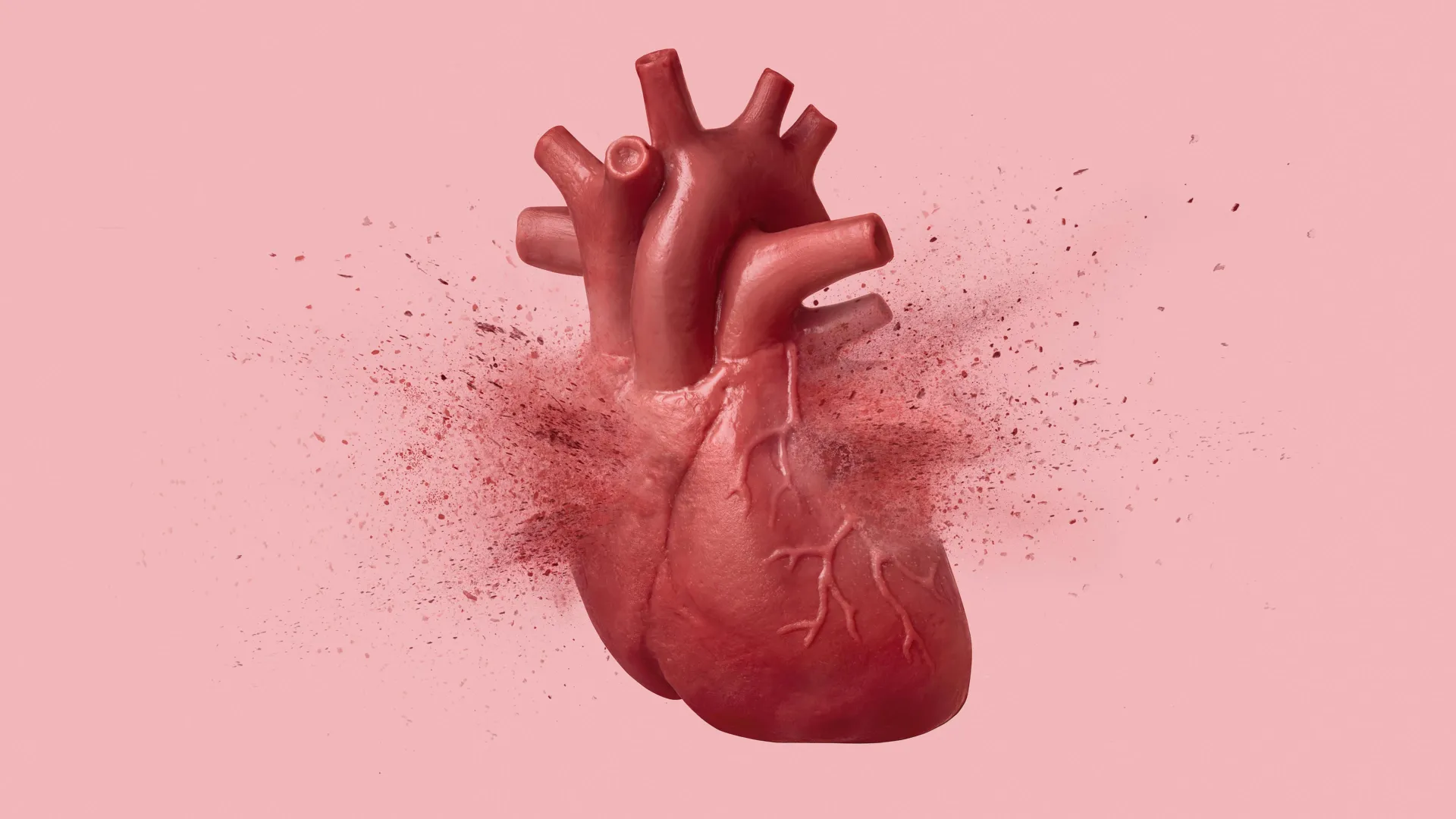
In the high-pressure environment of an emergency department, clinicians are often faced with a critical, time-sensitive puzzle. A patient arrives clutching their chest, their electrocardiogram (ECG) shows alarming irregularities, and blood tests reveal the presence of cardiac enzymes—classic indicators of a myocardial infarction, or heart attack. In standard clinical protocols, the clock begins to tick immediately toward invasive cardiac catheterization to clear blocked arteries.
However, for approximately 2 percent of these patients, the diagnosis is not a standard heart attack at all, but Takotsubo syndrome (TTS), also known as "broken heart syndrome." This condition, which predominantly affects postmenopausal women, is triggered by acute physical or emotional stress. Because it mimics a heart attack so closely, patients are frequently subjected to invasive, often unnecessary procedures. A groundbreaking international study published in the European Heart Journal has now introduced the "BioTAK score," a diagnostic tool powered by artificial intelligence that promises to distinguish TTS from heart attacks with remarkable precision long before a catheter is threaded through the patient’s vasculature.
The Diagnostic Challenge: Why Takotsubo Syndrome is a "Great Mimicker"
Takotsubo syndrome is a transient heart condition characterized by the sudden, temporary weakening of the heart’s muscular walls. While the symptoms—chest pain, shortness of breath, and abnormal cardiac biomarkers—are indistinguishable from those of an acute coronary syndrome (ACS), the underlying pathology is fundamentally different.
In a typical heart attack, the primary culprit is a blocked coronary artery, usually caused by the rupture of an atherosclerotic plaque. In contrast, Takotsubo syndrome typically occurs in the absence of such blockages. The heart’s left ventricle temporarily changes shape, often resembling a traditional Japanese octopus trap (a "takotsubo"), from which the condition derives its name.
The difficulty in differentiation creates a significant clinical burden. Because the medical community prioritizes the "time is muscle" mantra for heart attacks, physicians must assume the worst-case scenario. This necessitates invasive cardiac catheterization to visualize the coronary arteries. If the procedure reveals clear arteries, the patient is then diagnosed with TTS. While life-saving when an actual blockage is present, catheterization carries inherent risks, including bleeding, vascular injury, and the psychological burden of a major invasive procedure on a patient who may be suffering from a stress-induced, rather than obstructive, event.
Chronology of the Breakthrough
The development of the BioTAK score was the result of a multi-year, rigorous international collaboration involving leading research centers, including the University of Zurich, the University of Greifswald, the University of Oxford, and Imperial College London.
Phase 1: Data Aggregation (2010–2022)
The foundation of the study was built upon the InterTAK Registry, established in 2010. As one of the world’s largest repositories of data regarding Takotsubo syndrome, it provided the researchers with access to prospective cohorts of thousands of patients. By combining this with the SPUM-ACS Registry—which tracks acute coronary syndrome patients—researchers created a comprehensive dataset of over 3,600 patients, allowing for a direct, high-fidelity comparison between the two conditions.
Phase 2: AI-Driven Feature Selection
Researchers did not merely guess which biological markers might be relevant. Instead, they employed artificial intelligence and machine learning algorithms to sift through massive amounts of clinical data. The AI identified a specific combination of blood biomarkers—proteins that reflect the physiological state of the heart and the systemic stress response—that consistently differed between TTS patients and those suffering from traditional heart attacks.
Phase 3: Validation (2023–2024)
Once the BioTAK score was formulated, it was subjected to an independent validation group of nearly 1,800 patients. The result was a resounding success: the score correctly classified nearly 90 percent of participants. This validation confirmed that the model was not merely "overfitted" to the initial data but possessed true predictive power across diverse patient populations.
Supporting Data: The Biological Pattern of Stress
The brilliance of the BioTAK score lies in its ability to translate complex molecular signaling into a binary diagnostic outcome. The score integrates biological sex with specific blood biomarkers that capture distinct pathophysiological pathways.
The Brain-Heart Axis
One of the most significant findings in the research is the validation of the "brain-heart axis." The BioTAK score identifies proteins involved in the activation of neuropeptides. These peptides are essential regulators of the autonomic nervous system, vascular tone, and the body’s internal response to anxiety and acute stress. This confirms that TTS is not merely a cardiac event, but a systemic response where the brain’s perception of stress triggers a profound, localized cardiac reaction.
Plaque Stability vs. Vascular Dysfunction
The inclusion of a biomarker associated with the stability of atherosclerotic plaques provides a crucial differentiator. In classic heart attacks, plaque rupture is the central event. The BioTAK score, by measuring the absence or different regulation of these stability markers, helps clinicians rule out the classic atherosclerotic pathway, pointing instead toward a transient, neuro-hormonally driven cardiac dysfunction.
Official Responses and Expert Perspectives
The research team behind the BioTAK score emphasizes that the tool is intended to be an aid to clinical judgment, not a replacement for traditional standard-of-care procedures.
"Our study shows that a simple combination of blood biomarkers and biological sex can identify these patients with remarkable accuracy even before cardiac catheterization," noted Dr. Florian A. Wenzl, co-first author from the University of Zurich and the University of Oxford. His colleague, co-first author Victor Schweiger of University Hospital Zurich, added that the beauty of the system is twofold: "At the same time, the biomarkers provide insights into the biological processes that distinguish Takotsubo syndrome from a classic heart attack."
Dr. Thomas Lüscher, co-last author from the National Heart and Lung Institute at Imperial College London, highlighted the utility of the tool in a clinical setting. "By capturing signaling pathways related to stress responses, cardiac dysfunction, and plaque stability, the BioTAK score translates complex disease mechanisms into a practical diagnostic tool."
Perhaps most importantly, the clinical application is being positioned as a surgical gatekeeper. Dr. Christian Templin, director of the Department of Internal Medicine B at the University Medical Center Greifswald and founder of the InterTAK Registry, stated: "The BioTAK score is not a substitute for cardiac catheterization when it is medically necessary. However, it could help guide diagnostic procedures more effectively and avoid unnecessary invasive tests in selected patients."
Implications for Emergency Medicine and Future Care
The implications of this breakthrough are far-reaching, particularly for the efficiency and safety of emergency cardiac care.
Enhancing Patient Safety
By reducing the number of unnecessary invasive catheterizations, the BioTAK score could prevent complications related to the procedure, such as arterial damage or contrast-induced nephropathy. This is especially vital for the demographic most affected by TTS—postmenopausal women—who may have other co-morbidities that increase the risk of invasive procedures.
Refining Diagnostic Pathways
Currently, the diagnostic pathway for suspected ACS is rigid. The BioTAK score offers a more nuanced approach. If a patient presents with symptoms that strongly suggest TTS according to the score, clinicians might opt for non-invasive imaging, such as cardiac MRI, as a first-line alternative to invasive catheterization, provided the patient is hemodynamically stable.
A New Window into Disease Biology
Beyond the immediate diagnostic utility, the BioTAK score opens a new window into the study of the brain-heart connection. By identifying the biomarkers that differentiate the stress-induced cardiac response of Takotsubo from the obstructive response of a heart attack, scientists may be able to develop targeted therapies. If the condition is driven by specific neuropeptide signaling, could pharmacotherapy be used to dampen this response in high-risk patients?
Next Steps in Clinical Translation
The researchers are already planning the next phase of their work: integrating the BioTAK score into routine clinical workflows. Future studies will aim to measure whether the implementation of this score actually reduces the time-to-diagnosis, lowers healthcare costs, and improves patient outcomes in real-world emergency settings.
As medicine moves toward a future defined by "precision cardiology," the BioTAK score stands as a beacon of progress. It transforms the way we perceive the "broken heart," moving it from a diagnosis of exclusion—found only after an invasive, stressful search—to a condition that can be recognized with the precision of data-driven science. While the journey from a registry study to a bedside reality is long, the BioTAK score represents a significant leap forward in ensuring that patients receive the right treatment, for the right condition, at the right time.