






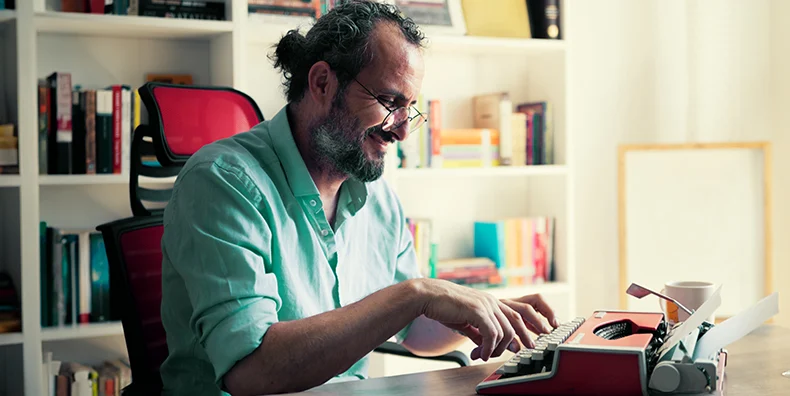
In the quiet corners of bookstores and the hushed aftermath of literary readings, a recurring dialogue takes place. It is a conversation between an award-winning novelist and the parents of young, aspiring artists. The subject is almost always the same: a brilliant son or daughter has been diagnosed with bipolar disorder but is refusing medication. The reason cited is a pervasive cultural myth—the fear that chemical stabilization will extinguish the "divine spark" of their creativity.
However, for the novelist at the center of these discussions, who has lived with a bipolar diagnosis for over two decades, this fear is not only misplaced but potentially destructive. His testimony, rooted in a career that includes four highly acclaimed novels written entirely while on a medication regimen, challenges the long-standing romanticization of the "tortured artist." His argument is clear: untreated mania does not produce art; it produces chaos. To create lasting work, the artist needs the very stability that medication provides.
Main Facts: Deconstructing the Myth of the Manic Masterpiece
The central tension in the treatment of bipolar disorder among creative professionals is the distinction between "energy" and "output." The novelist argues that the state of full-blown mania is fundamentally incompatible with the discipline required for professional artistic creation. While mania provides a "chaotic torrent" of thoughts, these thoughts are often disconnected, ego-driven, and ultimately unintelligible to anyone but the sufferer.
The Reality of Manic Output
Contrary to the cinematic depiction of the manic genius painting a masterpiece in a single, feverish night, the reality of the condition is often a "gibberish" of ideas. The novelist notes that during his own manic episodes, the sense of self-importance is inflated, leading to an "unrestrained, egocentric babble" rather than structured narrative or coherent imagery.
The Success of Stabilization
Since beginning treatment nearly twenty years ago, the author has published four novels. This professional track record serves as empirical evidence that medication does not "dull" the mind. Instead, it provides the cognitive floor necessary to perform the labor of writing—a process that requires memory, focus, and the ability to edit one’s own work with a critical, objective eye.
The Role of Medication
The primary function of mood stabilizers like Lithium is not to erase personality or dampen the imagination, but to mitigate the extreme "highs" and "lows" that interrupt the creative process. The author emphasizes that while he has faced periods of "writer’s block" or produced poor-quality drafts while on medication, these are standard challenges faced by all writers, regardless of their mental health status.
Chronology: From Untreated Chaos to Disciplined Creation
The journey from the "wilds" of untreated bipolar disorder to a stabilized professional life follows a specific trajectory that many artists find relatable.
The Illusion of Hypomania
In the early stages of the disorder, or in cases of Bipolar II, individuals often experience hypomania—a milder form of mania. This state is frequently mistaken for pure inspiration. It is characterized by an "electric, undirected energy" and a flow of ideas that feels effortless. For a young artist, this can feel like a superpower. However, the author notes that this state is deceptive; while it feels like inspiration, it rarely results in work that possesses the structural integrity to be recognized as "lasting art."
The Collision with Full-Blower Mania
As the disorder progresses without intervention, hypomania often gives way to full-blown mania. At this stage, the "flow" becomes a flood. The ability to distinguish between a brilliant insight and a nonsensical whim vanishes. For the novelist, this was the point where the "specialness" of the condition was revealed to be a burden rather than a gift. The "inner whirlwind" becomes an obstacle to the very thing the artist desires most: to be understood by an audience.
The Transition to Treatment
The decision to seek treatment is often born out of the realization that the illness is "hurting the people I love" and sabotaging the work itself. For the novelist, the last two decades have been a process of constant monitoring and adjustment. Working with medical professionals to find the "right dosage" is described as a collaborative effort to ensure the patient can function with a minimum of disruption while retaining their core intellectual faculties.
Supporting Data: The Science of Creativity and Mood Stabilization
Psychological research and neurological data provide a framework for understanding why the novelist’s experience is the rule rather than the exception.
The "U-Shaped" Relationship
Studies on the link between bipolar disorder and creativity often suggest a "U-shaped" or "inverted-U" relationship. While people with a genetic predisposition to bipolar disorder (and those with milder symptoms) often score higher on measures of creativity, those with severe, untreated symptoms show a marked decline in creative productivity. The "sweet spot" for creativity appears to be a state of heightened sensitivity combined with the executive function required to execute an idea—a combination that is often only possible through stabilization.
Cognitive Preservation on Lithium
A common fear among patients is that Lithium, a gold-standard treatment for bipolar, causes "cognitive dulling." However, recent longitudinal studies suggest that when properly managed, Lithium may actually have neuroprotective effects. The "emotional flatness" some patients report is often a side effect of a dosage that needs adjustment, rather than an inherent quality of the medication. The novelist’s experience of writing four books supports the idea that complex cognitive tasks remain entirely possible—and perhaps even more sustainable—under a stable medicinal regimen.
Official Responses: Clinical Perspectives on "The Tortured Artist"
Psychiatrists and mental health advocates have long fought the "tortured artist" trope, which they view as a dangerous barrier to care.
Addressing Emotional Blunting
Clinical experts agree with the novelist’s assessment: if a patient feels "slowed down" or "emotionally numb," it is a clinical sign that the treatment plan needs to be refined, not abandoned. The goal of modern psychiatry in treating artists is "functional recovery"—ensuring the patient can return to their work. Doctors emphasize that "stability" is not synonymous with "stagnation."
The "Badge of Specialness"
There is a significant psychological component to why young artists resist medication. The novelist identifies a cultural trend where mental health conditions are carried like a "badge of specialness" that separates the artist from "ordinary" people. Clinicians often encounter this resistance and work to reframe treatment not as a loss of identity, but as a preservation of the "soul" or the "true self" that exists beneath the symptoms of the illness.
Implications: Sustainable Creativity and the Utility of Art
The novelist’s perspective carries profound implications for how society views the relationship between mental health and the arts.
The Ethics of Suffering
The idea that an artist must suffer to be "authentic" is a remnant of 19th-century Romanticism that has little basis in the reality of high-level professional output. By refuting this, the novelist advocates for a more humane and sustainable model of creativity. He suggests that the "power to generate something new" comes from a place deep within the soul—a place that medication cannot reach, but that bipolar disorder can obscure.
From "Special" to "Useful"
Perhaps the most striking part of the novelist’s argument is the rejection of the artist’s "superiority." He notes that when bipolar is controlled, the artist remains "special and gifted," but no more so than any other human being. The shift from wanting to be "better" than others to wanting to be "useful" to them marks a significant maturity in the creative process. In this view, art is a service, and to serve, the artist must be healthy.
A Call to the Next Generation
The message to young artists is one of empowerment: Your creativity is an inherent part of who you are, not a byproduct of your illness. By choosing stability, you are not choosing "ordinariness"; you are choosing the ability to actually finish the work you were meant to create. As the novelist concludes, the goal is to create with "intelligence," utilizing all mental faculties—including imagination, intuition, and the discipline to see a project through to its end.
In the end, the novelist’s career stands as a testament to a vital truth: The medicine doesn’t take away the gift; it protects the person who carries it.