











By Elise Reuter
Published September 10, 2026
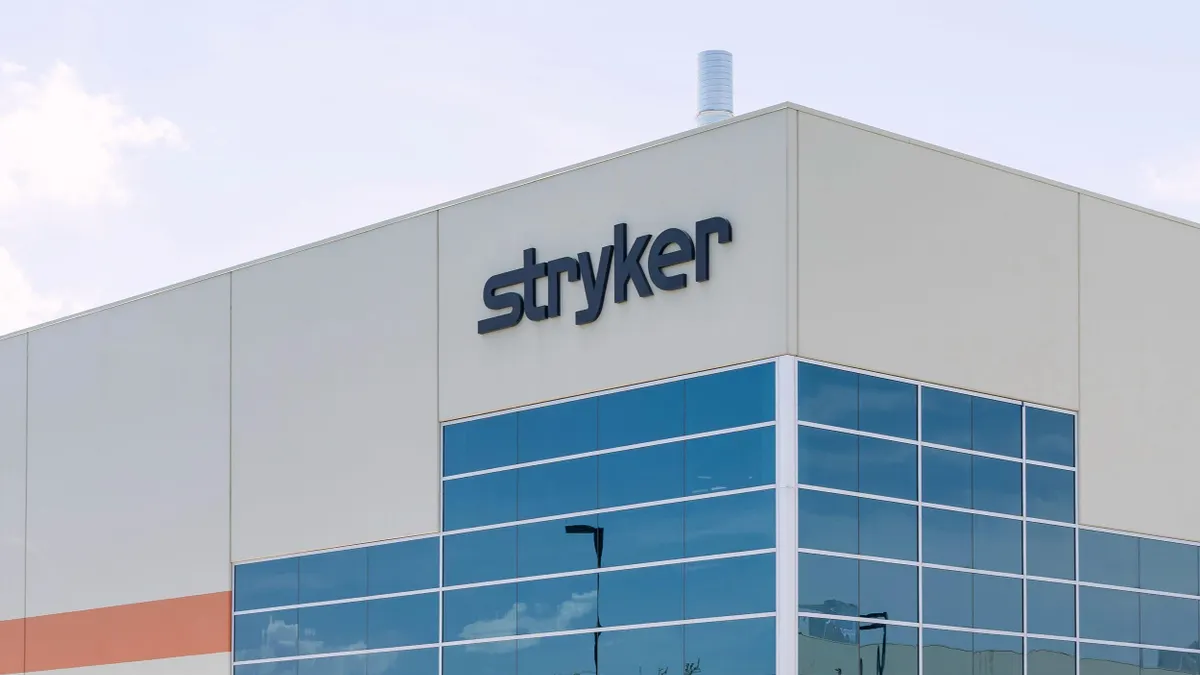
Stryker Corporation, a global leader in medical technology, finds itself navigating a complex landscape of post-cyberattack recovery and fluctuating consumer demand. During a recent appearance at a major healthcare conference, Chief Financial Officer Preston Wells provided a candid assessment of the company’s current operational standing, highlighting lingering supply chain challenges in its peripheral vascular segment and an unexpected softening in its hip reconstruction business.
Despite these hurdles, the company maintains its current financial guidance, bolstered by robust demand for its capital equipment portfolio. However, the update has cast a spotlight on the delicate interplay between industrial recovery and the macroeconomic pressures currently influencing patient behavior in the elective surgery market.
Main Facts: A Dual-Front Challenge
The core of the current situation for Stryker involves a two-pronged challenge: one internal, related to manufacturing capacity, and one external, related to the broader economic environment.
In its peripheral vascular division, Stryker is still battling the downstream effects of a significant cyberattack that occurred previously. The incident disrupted manufacturing processes, and according to Wells, the company is still struggling to return this specific segment to full operational capacity. The resulting inventory constraints have forced management to prioritize supply for existing, high-volume customers, limiting the company’s ability to capture new market share in the peripheral vascular space.
Simultaneously, the company’s orthopedics business—specifically hip replacements—has encountered a slower-than-expected sales trajectory. Unlike the supply-constrained vascular business, the hip segment’s challenges are tied to a mix of regional market trends and a growing, albeit anecdotal, trend of patients deferring elective procedures due to financial anxieties.
Chronology: The Path to the Current Impasse
The Pre-Crisis Baseline
Leading up to the current fiscal quarter, Stryker had been experiencing strong momentum across its business units. Following the resolution of initial cyber-security threats, the company had expected a steady normalization of its supply chain, particularly in its high-tech vascular components.
The Cyberattack Aftermath (Mid-2026)
While the cyberattack was contained, the "process-related challenges" mentioned by CFO Wells suggest that the restoration of digital manufacturing workflows was not as seamless as initially anticipated. While other divisions recovered relatively quickly, the peripheral vascular business—which requires high-precision manufacturing—proved to be the most resilient to rapid restoration.
Summer Softness (Q3 2026)
As the third quarter progressed, internal metrics began to signal a divergence between capital equipment demand (which surged) and orthopedic procedures (which cooled). By late August and early September, internal audits confirmed that hip replacement volume was falling below internal benchmarks, both in the United States and across key European markets.
Supporting Data and Market Analysis
Inventory Constraints
The manufacturing issues in the peripheral vascular segment are not merely bureaucratic; they are operational realities. Wells emphasized that inventory levels remain below the "optimal" threshold. While the company has implemented a triage system to ensure that top-tier hospital systems remain operational, this prioritization effectively caps growth. Until the process-related bottlenecks are fully cleared, the vascular division remains in a state of managed stagnation.

The Orthopedic Dip
The orthopedic market, traditionally a steady performer for Stryker, has shown uncharacteristic volatility. Data points contributing to this trend include:
- European Market Saturation: A general cooling of the joint replacement sector in Europe has acted as a drag on global performance.
- Seasonal Volatility: In the U.S., typical summer seasonality—often associated with vacation cycles—was amplified this year, leading to a more pronounced dip in procedure volume than in previous years.
- Capital Equipment Resilience: Serving as a vital counterbalance, the company’s capital equipment division has seen a surge in orders. Backorders for these high-value systems remain strong, signaling that while hospitals may be cautious about elective procedure volume, they remain committed to long-term infrastructure investment.
Official Responses and Strategic Pivot
During his presentation, Preston Wells struck a tone of measured urgency. Addressing the supply chain issues, he noted, "It’s something that we’re working to get rectified as soon as possible." He clarified that the company is not currently facing a lack of demand in vascular medicine, but rather a lack of capacity to fulfill it.
Regarding the hip business, the company’s response has been one of observation rather than immediate restructuring. Stryker’s leadership team is carefully monitoring the "consumer challenge," which they believe is driven by a psychological shift in the patient population. Wells specifically pointed to the absence of a hip impactor product in their current lineup as a secondary, yet notable, competitive disadvantage that the company is aiming to address in future cycles.
Implications: The Consumer and the Macro Environment
Perhaps the most significant revelation from the update is the insight into patient behavior. For years, the medtech industry has been shielded from direct consumer economic pressure due to the nature of insurance and the medical necessity of procedures. However, the current environment suggests a shift.
The "Deferral" Phenomenon
Wells highlighted that patients are increasingly sensitive to the out-of-pocket costs associated with elective surgeries. As insurance deductibles rise and inflation impacts disposable income, the barrier to entry for elective procedures has effectively lowered the total addressable market in the short term. Patients are not necessarily canceling their procedures permanently, but they are "deferring" them to more financially convenient times.

Sentiment Over Policy
When asked by analysts if the loss of Affordable Care Act (ACA) subsidies was a primary driver for this decline, Wells offered a nuanced view. He suggested that systemic policy changes are currently secondary to "consumer sentiment." People are nervous—not just about the price tag, but about the opportunity cost of recovery. Concerns regarding job security and the ability to take time off for post-operative rehabilitation are creating a "fear-based" slowdown in elective orthopedic care.
Strategic Outlook
Stryker has opted to hold its financial guidance steady, a move that indicates confidence in its ability to manage these headwinds through the remainder of the fiscal year. The company is betting on two things:
- Manufacturing Resolution: The gradual, if slow, return to full production in the vascular segment.
- Capital Equipment Backlog: The belief that the strong demand for capital equipment will continue to offset the temporary softness in patient-facing orthopedic procedures.
Conclusion: A Test of Operational Agility
Stryker’s current situation serves as a microcosm for the broader medtech sector in 2026. The transition from a post-pandemic growth boom to a period of macroeconomic recalibration is testing the operational agility of even the largest firms.
The company remains in a position of strength, particularly given its diversified portfolio and the strong demand for its capital goods. However, the path forward requires a delicate balancing act. Leadership must continue to untangle the complex manufacturing knots left by the cyber-incident while simultaneously preparing for a patient base that is increasingly wary of the financial and personal costs of elective intervention.
As the industry looks toward the final quarter of the year, all eyes will be on whether Stryker can return its vascular division to full capacity and whether the "consumer challenge" in orthopedics proves to be a temporary summer slump or the start of a more permanent change in the elective surgery landscape. For now, the company remains focused on its core: serving its most critical customers and maintaining the high-tech, high-quality standard that has long defined its market position.