











EDITOR’S NOTE: This story includes discussion of suicide. If you or someone you know needs help, the national suicide and crisis lifeline in the U.S. is available by calling or texting 988.
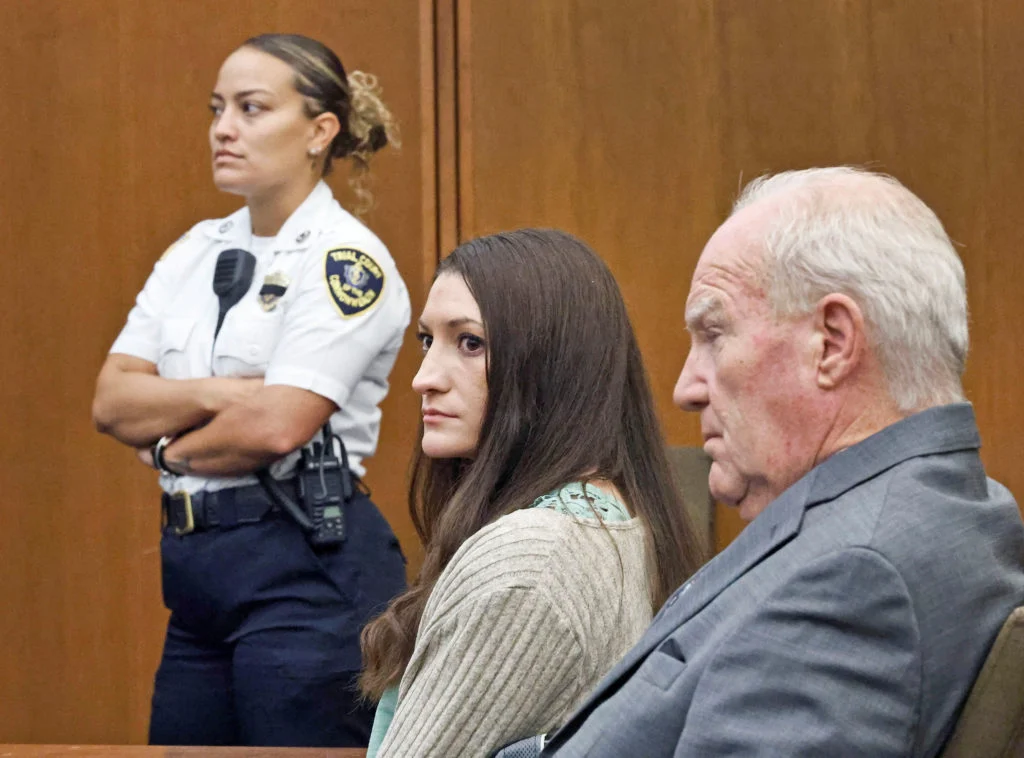
PLYMOUTH, Mass. — The high-stakes murder trial of Lindsay Clancy, the Massachusetts mother accused of killing her three young children, reached a fever pitch on Thursday as the jury concluded its sixth day of deliberations without a verdict. The proceedings, which have captivated the nation and ignited a fierce debate over postpartum mental health, were marked by an unprecedented level of tension inside the Plymouth County courthouse.
As the jury remains deadlocked, the prospect of a mistrial looms large. Late Thursday, the court was thrust into a procedural crisis after the jury foreperson submitted a note alleging that at least one member of the panel is refusing to adhere to the judge’s instructions regarding the legal standard of "reasonable doubt."
The Core Conflict: Criminal Responsibility vs. Mental Health
The trial centers on the tragic events of January 2023, when 36-year-old Lindsay Clancy, a former labor and delivery nurse, strangled her children—5-year-old Cora, 3-year-old Dawson, and 8-month-old Callan—in their Duxbury home.
Clancy’s defense team, led by attorney Kevin Reddington, has anchored its case in the argument that Clancy was suffering from severe postpartum psychosis at the time of the killings. They maintain she lacked the capacity to form criminal intent, essentially serving as a victim of a broken mental health system. Conversely, prosecutors argue that while Clancy was struggling, she was fully aware of her actions, characterizing the killings as a calculated act of violence.
The jury is tasked with the harrowing decision of determining whether she is criminally responsible, guilty of lesser charges, or not guilty by reason of mental disease or defect.
A Chronology of the Impasse
The deliberation process has been long and arduous, spanning six days of intense analysis of the evidence.
- Earlier in the week: The jury notified Judge William F. Sullivan twice that they were at an impasse, unable to reach a unanimous decision.
- Wednesday: Judge Sullivan issued a "dynamite charge," a legal instruction designed to encourage a deadlocked jury to reconsider their positions without abandoning their core convictions, in an effort to avoid a mistrial.
- Thursday Morning: The jury returned for a sixth day, appearing somber and detached as they filed into the courtroom.
- Thursday Afternoon: The situation escalated when the foreperson’s note explicitly accused a holdout juror of ignoring the court’s instructions on reasonable doubt.
- Thursday Evening: Judge Sullivan denied a request from the defense to remove the juror, opting instead to remind the entire panel of their legal obligations before excusing them for the night.
The Legal Tug-of-War: The Dispute Over the Juror
The atmosphere in the courtroom turned electric when the defense moved to have the alleged "holdout" juror removed. Reddington argued that the juror’s refusal to follow the law regarding reasonable doubt was a violation of the oath taken by the panel.
"The court has an instruction from the foreperson… saying there is one juror who refuses to listen to the law," Reddington stated, his voice rising in frustration. He warned that if the situation remained unresolved, it would be a "real shame" to force a mistrial based on the refusal of a single individual to follow the court’s guidance.
However, Judge Sullivan remained cautious, emphasizing the delicate nature of jury deliberations. "I don’t feel it is proper for me to side with one side or the other of the deliberations," Sullivan noted. "I don’t feel it’s appropriate for me to say I agree with one juror or 11."
The judge instructed the jurors to remain steadfast in their duty to apply the law as presented, specifically clarifying that proof beyond a reasonable doubt does not require proof beyond all possible doubt. The courtroom audience audibly gasped as the judge finished his instructions, underscoring the gravity of the potential outcome.
Public Sentiment and Social Implications
The trial has drawn a polarized public, with supporters of the defense rallying outside the courthouse wearing pink, while others advocate for strict legal accountability.
Jeanne DeSanto, a trial watcher who traveled to the courthouse, noted a shift in public opinion. "I first assumed she was a horrible person," she admitted. "But watching the trial changed my view. It’s women’s health, it’s systemic. It’s way bigger than just one person."
Conversely, some local residents remain steadfast in their belief that justice must be served for the victims. Rhonda Gonsalves, who attended the trial wearing white to honor the children, stated firmly, "She murdered three children. There has to be accountability."
The case has also drawn significant attention from those who have experienced postpartum mental health struggles. Emily Collins, 64, a former social worker who experienced postpartum depression decades ago, expressed that the trial highlights the isolation many mothers feel. "This was all I wanted—being a wife and mother. So I was like, what is happening to me? It’s very scary," Collins said. She argued that the criminal justice system is ill-equipped to handle the nuances of postpartum psychosis.
Potential Outcomes and Legal Precedent
If the jury remains deadlocked, a mistrial is the most likely outcome. In such a scenario, the status of the case would revert to its pre-trial state: Clancy would remain under the jurisdiction of the state, likely confined to a psychiatric facility while prosecutors weigh their next move.
Legal experts suggest that a mistrial would put immense pressure on both sides to negotiate. "Any time the threat of a retrial with murder one hanging over the client is re-interjected, defense lawyers will, at the very least, explore whether or not there’s any interest in a resolution," said Brad Bailey, a Boston defense attorney not involved in the case.
However, the prosecution must also weigh the emotional and financial toll of a second trial, especially given the public interest and the sensitive nature of the testimony.
Clinical Context: The Reality of Postpartum Psychosis
The trial has forced a national conversation about postpartum psychosis, a rare but severe mental health emergency occurring in approximately 1 to 2 per 1,000 births. Experts note that it often presents with a loss of touch with reality, delusions, and auditory hallucinations.
While the vast majority of mothers suffering from the condition do not harm their children, the severity of this case has highlighted the critical need for better screening and communication between obstetricians, mental health providers, and families. The defense has argued that the system failed Lindsay Clancy, while the prosecution remains focused on the individual’s choices.
Looking Ahead: Friday Morning
As the courthouse doors closed on Thursday, all eyes turned to Friday morning at 9:00 a.m. Judge Sullivan is expected to conduct further inquiries into the jury’s state of mind.
Reddington has requested that these discussions be held in open court rather than in private sidebars, arguing that the transparency of the process is vital. As the jury prepares for another day of deliberation, the nation waits to see whether they will reach a consensus or if this high-profile case will end in a mistrial, leaving a community and a family in search of closure.
The trial continues to be a somber reminder of the intersections between law, mental health, and the profound tragedy of a family irrevocably broken.