For as long as human beings have walked the earth, the mental image of a savory meal or a cold, refreshing drink has served as a powerful evolutionary driver. This cognitive bridge—the ability to visualize a reward and subsequently act to obtain it—is a fundamental survival mechanism. It ensures that we seek out the calories, hydration, and social nourishment required to sustain life. However, in the modern world, this ancient circuitry frequently misfires. For millions, the preoccupation with rewarding stimuli has spiraled into a global crisis of substance overuse, ranging from clinical obesity to debilitating alcohol and drug dependence.
For decades, the mechanisms behind these cravings remained an enigma. Now, an unlikely catalyst—a new class of weight-loss medications—is providing neuroscientists with the key to unlocking how the brain governs desire.
The GLP-1 Revolution: Beyond Blood Sugar
The medical landscape was transformed by the arrival of glucagon-like peptide-1 (GLP-1) receptor agonists. Drugs such as Ozempic and Wegovy were originally engineered to treat type 2 diabetes by mimicking the GLP-1 hormone, which stimulates insulin release, slows gastric emptying, and induces a profound sense of satiety.
The weight-loss results were immediate and staggering, often mirroring the outcomes typically associated with invasive bariatric surgery. Yet, as these medications gained widespread popularity, clinicians and patients began to report an unexpected "side effect": a dampened desire for alcohol, nicotine, and even hard drugs.
Human clinical data now corroborates what patients have been describing: GLP-1 agonists significantly reduce alcohol consumption. Preclinical studies in animal models have further reinforced this, showing that these drugs can curb the compulsive intake of cocaine, amphetamines, and opioids. This paradigm shift has forced a total re-evaluation of the brain’s reward system, suggesting that the same pathways that regulate hunger might be the master switches for addictive behavior.
A Chronology of Discovery: From "Septal Rage" to Modern Neuroscience
The quest to understand reward circuitry has a long and complex history. Since the 1970s, researchers have been mapping the link between vivid mental imagery and drug abuse, attempting to isolate the exact moment a thought transitions into a craving.
For years, the focus was almost exclusively on the ventral tegmental area (VTA) and the nucleus accumbens (NAc). These regions are the engines of dopamine production—the "feel-good" neurotransmitters that reinforce behavior. However, there was a persistent problem with this model: these areas lack a significant density of GLP-1 receptors. If the drugs were reducing cravings, they had to be acting somewhere else.
This led scientists to look "upstream," toward a structure known as the lateral septum. The history of this region is storied. In 1953, behavioral researchers Joseph Brady and Walle Nauta famously coined the term "septal rage." They discovered that when the lateral septum was damaged, animals exhibited heightened aggression; conversely, direct stimulation of the area quelled that aggression. While early studies focused on emotional regulation, recent high-resolution mapping has reframed the lateral septum as a central hub in a sophisticated neural network, bridging the gap between memory, location, and desire.
The Architecture of Desire: The Lateral Septum
To understand why the lateral septum is the "smoking gun" of addiction, one must look at its relationship with the hippocampus—the brain’s librarian for episodic memory. The hippocampus is where we store the "where and when" of our lives, utilizing "place cells" to map our physical location and our progression through time.
This spatial and temporal data is fed directly into the lateral septum. Crucially, researchers have recently identified that the lateral septum also contains place cells, but with a critical twist: these cells respond specifically to rewards. They essentially cross-reference the "where and when" of the hippocampus with a "what is good here" assessment.
The lateral septum then communicates this refined information to the dopamine-producing regions in the VTA and NAc. In essence, while the VTA/NAc produces the "high," the lateral septum produces the "anticipation." It is the region where we consciously process the desire for a reward.
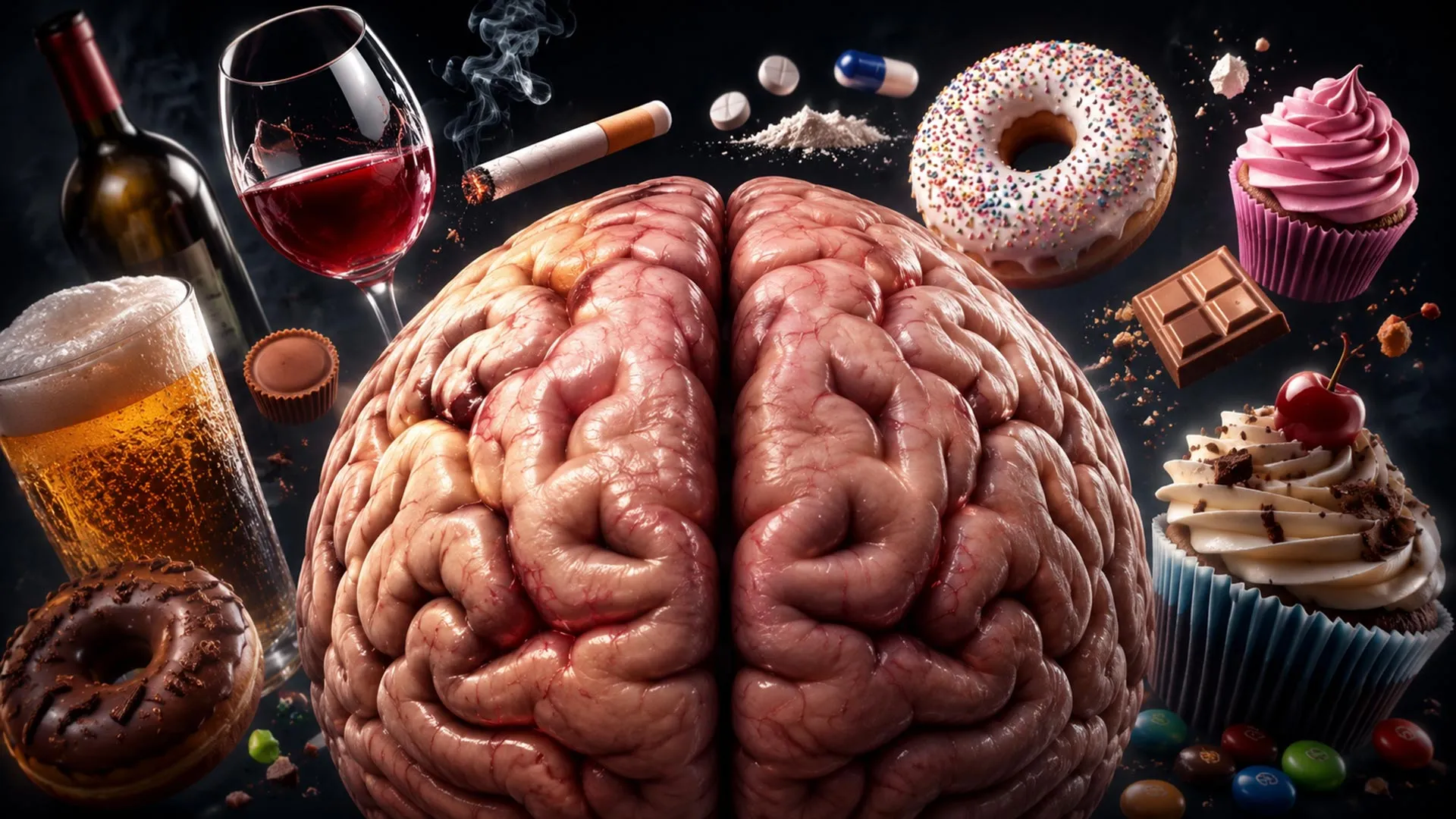
The final piece of the puzzle is the density of receptors. The lateral septum is absolutely saturated with GLP-1 receptors. Emerging evidence suggests that when GLP-1 drugs bind to these receptors, they act as a "volume knob," turning down the intensity of the signals that the lateral septum sends to the reward centers. By modulating this upstream communication, the drugs prevent the brain from fully "locking in" on a craving.
Supporting Data and Preclinical Evidence
The strength of this hypothesis lies in the mounting body of evidence across multiple disciplines.
- Reduced Food Consumption: Research has shown that activating GLP-1 receptors directly within the lateral septum significantly reduces caloric intake in murine models.
- Alcohol and Addiction: Studies published earlier this year confirm that the same mechanism applies to alcohol, with drugs successfully blunting the neurobiological drive to consume.
- Neural Interruption: Laboratory findings have demonstrated that GLP-1 agonists effectively dampen the specific neural activity within the lateral septum that facilitates communication with other reward-seeking regions.
By disrupting this dialogue, the medication effectively breaks the feedback loop that drives the cycle of addiction, providing the brain with a "circuit breaker" against obsessive behavior.
Official Perspectives and Clinical Implications
The pharmaceutical and medical communities are currently navigating the implications of these findings. While the FDA has not yet formally approved GLP-1 agonists as a treatment for addiction, the off-label use and ongoing clinical trials are generating intense excitement.
The implications for public health are seismic. If a single class of medication can address not just obesity, but also the broader spectrum of substance use disorders—including alcohol and tobacco—it would represent one of the most significant breakthroughs in neuropsychiatry in a century.
However, experts caution that this is not a "magic pill." Addiction is a multifaceted biopsychosocial disorder. While GLP-1 agonists may address the biological "craving" signal, they do not resolve the psychological, trauma-based, or environmental factors that often underlie dependency. Clinical protocols will likely need to integrate these pharmacological tools with cognitive behavioral therapy and robust social support systems.
The Path Forward: A New Era in Neuroscience
We are currently witnessing a shift in the philosophy of addiction treatment. For decades, the field was dominated by a focus on the "downstream" consequences of dopamine—the chemical rush that follows consumption. By shifting our attention "upstream" to the lateral septum, we are moving from a reactive model of addiction to a proactive one.
The lateral septum is not just a region of the brain; it is the laboratory of human desire. By understanding how this area processes the "what, where, and when" of our cravings, we have gained a profound insight into the human condition.
The next few years will be critical as researchers continue to refine our understanding of the GLP-1 pathway. Ongoing trials will determine the long-term efficacy and safety of using these drugs for non-diabetic, non-obese populations struggling with addiction. As the data accumulates, the medical community remains cautiously optimistic. We may finally be on the verge of treating the root cause of the "malfunction" that has plagued humanity since we first learned to associate a stimulus with a reward.
Ultimately, the goal is not to eliminate the human capacity for enjoyment, but to restore the balance in a brain that has become trapped in an endless loop of craving and consumption. Through the lens of the lateral septum, we are finally seeing the brain as it truly is: a complex, rewirable, and, with the right intervention, a treatable system.