











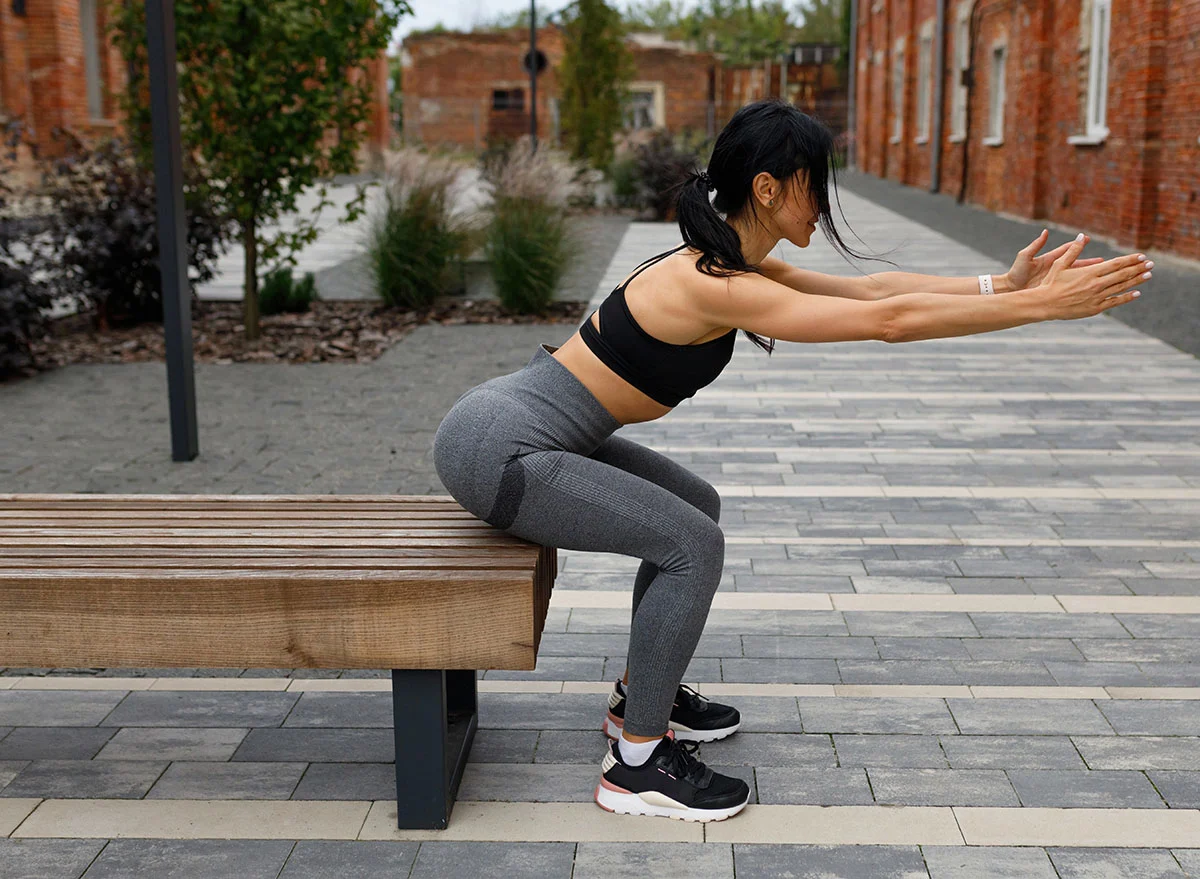
In the landscape of geriatric health and functional fitness, few movements are as fundamental—or as telling—as the act of rising from a chair. While modern fitness culture often emphasizes high-intensity interval training or heavy barbell lifting, experts argue that the most critical metric for long-term health, particularly for those over 60, is the simple "sit-to-stand."
Often referred to as a "chair squat," this movement is the cornerstone of daily independence. It is not merely an exercise; it is a diagnostic tool that reveals the state of your lower body strength, core stability, and balance. As we age, the ability to transition from a seated position to standing without assistance becomes a primary predictor of fall risk and overall physical autonomy.
The Core Metric: Understanding the 30-Second Test
The 30-second sit-to-stand test has gained prominence among physical therapists and fitness professionals as a reliable, non-invasive assessment of functional capacity. The protocol is straightforward: an individual sits on the edge of a sturdy chair with feet flat on the floor, crosses their arms over their chest, and performs as many full repetitions as possible within a 30-second window.
The "Gold Standard" Benchmarks
For adults over 60, achieving 12 clean, unassisted repetitions within the 30-second timeframe is widely considered the threshold for an "ideal" level of functional strength. This pace—roughly one repetition every 2.5 seconds—demonstrates that the individual possesses sufficient power to lift their body weight and enough muscular control to lower themselves safely.
It is vital to distinguish between total volume and capacity. Completing 12 reps over the course of an hour is a trivial task for most, but compressing those 12 reps into 30 seconds requires a baseline of muscular endurance and neuromuscular efficiency. Falling below this threshold often signals a need to focus on lower-body strength training to prevent the onset of frailty.

Chronology of Muscle Loss: The "Use It or Lose It" Reality
To understand why this test is so critical, one must look at the physiological changes occurring after age 40. The body begins a natural, progressive decline in muscle mass, quality, and function—a condition known as sarcopenia.
- Age 40–50: The initial onset of muscle atrophy begins. While subtle, if left unaddressed, this loss compounds over the next two decades.
- Age 50–60: The "acceleration phase" of sarcopenia often takes hold. Coordination and power—the ability to move muscles quickly—begin to decline faster than raw strength.
- Age 60 and Beyond: This is the critical juncture where functional movement patterns, like the sit-to-stand, begin to dictate quality of life. If the quadriceps and glutes have not been adequately challenged, the neural pathways that signal these muscles to fire during a stumble become sluggish.
The 30-second test serves as a wake-up call. If you find your performance dipping below the 12-rep mark, you are likely experiencing the early stages of the "frailty cascade," where mobility limitations begin to restrict daily activities.
Supporting Data: Why Function Triggers Longevity
The correlation between sit-to-stand performance and health outcomes is backed by extensive research. A study published in Nature highlights the sit-to-stand movement as a key clinical indicator for reducing fall risk. Falls are the leading cause of injury-related death and hospitalization among older adults, often triggering a cycle of immobility that leads to secondary health complications.
The Physiology of the Movement
When you perform a sit-to-stand, you are engaging a complex kinetic chain:
- Quadriceps: These are the primary engines for straightening the knees.
- Gluteal Muscles: These provide the explosive power needed to extend the hips.
- Core Musculature: The abdominals and obliques stabilize the torso, preventing the "collapse" of the spine during the transition.
- Ankles and Feet: These provide the foundation for balance, requiring refined proprioception to keep the weight centered.
When these systems work in harmony, you maintain the "robustness" required to navigate stairs, enter and exit vehicles, and perform household tasks without reliance on canes or walkers.
Clinical Perspectives and Expert Insights
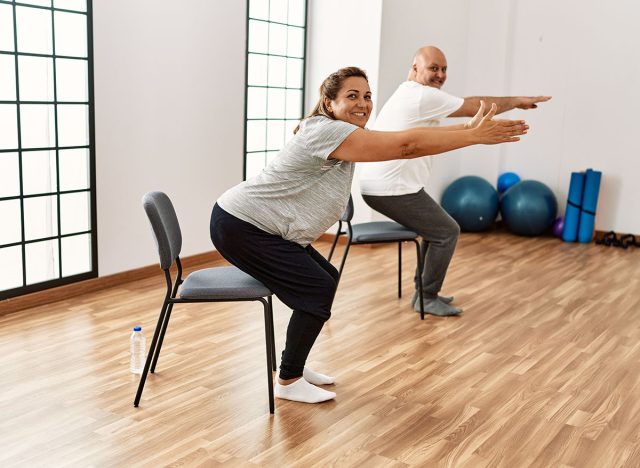
Fitness professionals emphasize that the test is just as much about how you move as it is about how many you do. A common error observed in clinical settings is the "collapse"—where the individual drops into the chair with gravity rather than lowering with muscular control.
"Form is the safety net of this movement," explains Tyler Read, a certified personal trainer with 15 years of experience in functional fitness. "If you are collapsing onto the seat, you aren’t training your muscles; you are risking your joints. The goal is to control the descent for two to three seconds. This eccentric phase—the lowering—is where much of the strength-building actually occurs."
Expert consensus suggests that if an individual cannot complete 12 reps, they should not view it as a failure, but as a roadmap for programming. The body is remarkably adaptive; even at 60, 70, or 80 years of age, the neuromuscular system can be retrained to regain lost power.
Implications for Daily Quality of Life
The implications of failing this test go far beyond the gym. A lack of sit-to-stand power translates to:
- Reduced Confidence: An subconscious fear of "getting stuck" in a low seat or on the floor.
- Loss of Independence: Increased reliance on others for basic transfers, such as getting out of a car or rising from a sofa.
- Increased Metabolic Burden: Muscle tissue is metabolically active. By failing to maintain this strength, the body’s resting metabolic rate slows, which can contribute to weight gain and insulin resistance.
Conversely, passing the test—or improving your score through training—is linked to a higher sense of self-efficacy. When an individual realizes they can move their own body through space with speed and control, the psychological barrier to exercise often dissolves.

How to Improve: A Path Forward
If you find yourself struggling to hit the 12-rep goal, do not despair. The body responds to consistent, progressive load. Here is how you can systematically improve your performance:
1. Daily Practice
Do not wait for a dedicated gym session. Integrate the sit-to-stand into your daily life. Every time you stand up from your desk, your dining chair, or your couch, do it with intent. Focus on keeping your chest up and pushing through your heels rather than using your hands to push off your knees.
2. Modify the Height
If a standard chair is too difficult, use a slightly higher stool or place a firm cushion on the seat. The higher the starting point, the less "range" you have to travel, which reduces the immediate demand on the quads while still training the neural patterns.
3. Progressive Resistance
Once 12 reps become easy, you must increase the challenge. Hold a light dumbbell or a small household weight against your chest. This increases the load on your muscles without requiring complex equipment. Ensure that the weight does not pull your posture forward; the goal is to maintain an upright, regal spine.
4. Isolate the Glutes
If your hips are the weak link, incorporate hip bridges (lying on your back and lifting your hips toward the ceiling). This strengthens the posterior chain, which will make the "stand" portion of the sit-to-stand significantly more explosive.
5. Transition to Free-Standing
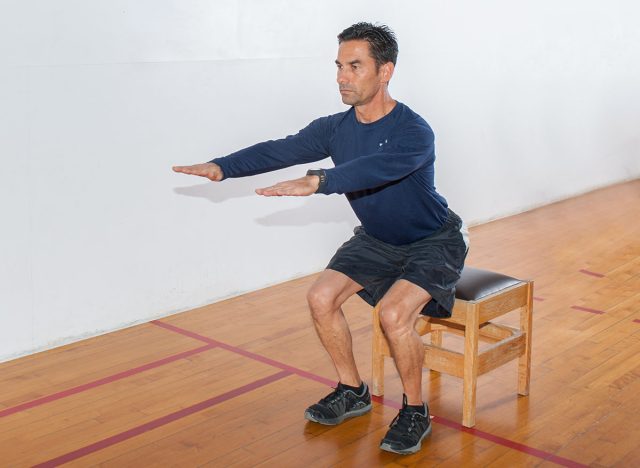
The ultimate goal is the free-standing air squat. Before attempting this, ensure you have a wall or a sturdy kitchen counter nearby for safety. As you grow more confident, you can move away from the furniture support.
Conclusion: A Simple Investment in the Future
The 30-second sit-to-stand test is a small, 30-second window into your future health. It is an honest, objective measurement of the strength you need to live life on your own terms. By prioritizing this movement, you are not just chasing a number; you are investing in the stability, balance, and independence that define a high quality of life after 60.
Take the test today. Whether you hit 5 reps or 15, use the data to inform your movement habits. The strength to stand is the strength to keep going.