










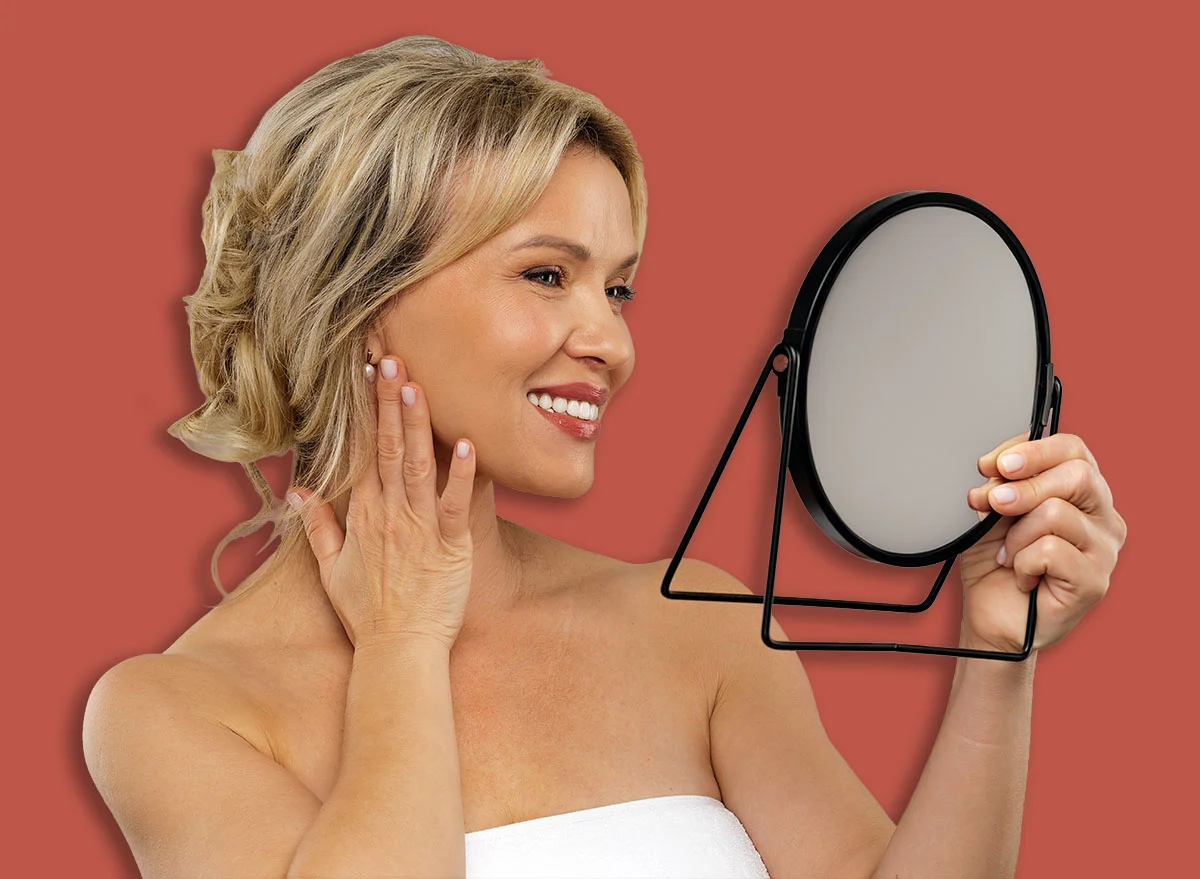
For many men and women entering their sixth decade, the mirror can sometimes feel like an adversary. A common point of frustration, frequently discussed in private consultations, is the gradual softening of the jawline and the emergence of a "wattle"—that persistent fold of skin beneath the chin. While the beauty industry often pivots toward invasive cosmetic procedures or expensive topical creams, seasoned fitness professionals suggest a more fundamental, structural approach: addressing the underlying biomechanics of the neck and the posture of the head.
Michael Betts, a veteran personal trainer with nearly four decades of experience and the Director of TRAINFITNESS, the UK’s premier provider of personal training education, argues that the secret to a firmer appearance isn’t found in a bottle, but in five minutes of daily, targeted movement.
The Anatomy of the Aging Jawline
To understand why the jawline loses its definition, one must look at the biological reality of aging. After 60, the skin undergoes a natural decline in collagen and elastin, the two proteins responsible for structural integrity and "snap-back." When these proteins diminish, skin loses its ability to remain taut against the underlying bone structure.

However, skin laxity is only half the story. "Clients often blame their skin, but the neck’s appearance is significantly dictated by fat redistribution under the chin and the weakening of the platysma—the thin, broad muscle that covers the front and sides of the neck," Betts explains. Furthermore, the modern epidemic of "tech neck"—the habit of hunching over smartphones and laptops—pushes the head into a forward-leaning posture. This forward carriage not only creates the illusion of a heavier, less defined jawline but also physically contributes to the slackness of the neck muscles.
The Reality Check: What Exercise Can and Cannot Do
In an era where "face yoga" and various facial-toning apps promise miraculous transformations, it is vital to maintain professional transparency. Exercise cannot "spot-reduce" fat in the neck any more than it can melt belly fat from specific abdominal exercises. Furthermore, no amount of muscle contraction will physically tighten skin that has lost its elasticity.
"I am always honest with my clients," says Betts. "Exercise improves the posture and the muscle tone that shapes the neck, but it will not replicate the results of a facelift. If you are looking for surgical perfection, you will be disappointed. However, if you are looking to reclaim a more upright, sharp, and youthful neck profile through biomechanical correction, these exercises are the gold standard."

The Science of Daily Consistency
The efficacy of these movements lies not in the time of day they are performed, but in the adherence to a routine. By tethering these exercises to an existing "habit stack"—such as brushing one’s teeth—individuals are significantly more likely to maintain the consistency required to see physiological changes.
1. The Chin Tuck (Neck Retraction)
The Chin Tuck is the cornerstone of improved head carriage. By reversing the forward-head posture caused by screen time, this move restores the natural alignment of the cervical spine.
- How to execute: Sit or stand with your spine tall. Keeping your eyes fixed on a point at eye level, gently draw your chin straight back as if creating a "double chin." Ensure you are not nodding or tilting your head; the movement should be purely horizontal.
- The Benefit: This strengthens the deep cervical flexors, which support the weight of the head and pull the slackened front neck tissue back into alignment.
- Sets and Reps: Perform 10 repetitions, holding each for 3 to 5 seconds.
2. The Chin-to-Ceiling Platysma Press
The platysma is a wide, superficial muscle that frequently weakens with age, leading to the loss of a crisp jawline.

- How to execute: Tilt your head back slowly until you feel a gentle stretch in the front of your neck. Press your tongue against the roof of your mouth while keeping your lips closed. You should feel the muscles of the front neck contract.
- The Benefit: This movement isolates and engages the platysma. By creating resistance, you build tone in a muscle that often remains under-utilized in daily life.
- Sets and Reps: Aim for 8 to 10 repetitions, holding the contraction for 5 seconds each.
3. Isometric Resisted Neck Holds
Isometric training—where muscles are engaged without movement—is exceptionally safe and effective for the cervical region, as it minimizes the risk of strain.
- How to execute: Place your hand against the side of your head. Gently push your head into your hand while providing equal resistance with your hand so that the head does not move. Hold for 5 seconds. Repeat on the other side and the front.
- The Benefit: This stabilizes the neck’s supporting musculature, reinforcing the postural benefits achieved in the chin tuck.
- Sets and Reps: 3 holds in each direction, 5 seconds each.
Chronology of Results: What to Expect
While these moves are simple, they are not instantaneous. For those adopting this routine, the journey typically follows a predictable timeline:
- Weeks 1–2 (Postural Shift): The most immediate change is usually a reduction in the "slack" look. By correcting forward-head posture, the skin of the neck is naturally pulled tauter across the frame.
- Weeks 6–12 (Muscular Toning): Building actual muscle tone in the neck is a slower process. After about a month and a half, users typically notice a gradual sharpening of the jawline as the platysma becomes more conditioned.
- Long-term Maintenance: After three months, the focus shifts from "building" to "maintaining." Because these muscles are used to support the head all day, they respond well to daily, light-load maintenance.
Implications for Longevity and Confidence
Beyond the aesthetic benefits, these exercises address a functional issue: spinal health. A head held in a constant forward-slumped position places immense pressure on the cervical spine, often leading to chronic tension headaches and neck pain. By correcting this through targeted exercise, individuals over 60 are not just "looking better"—they are improving their structural longevity.

Furthermore, the psychological impact of feeling "put together" cannot be understated. As Betts notes, many clients avoid being photographed because they are unhappy with their profile. By empowering them with simple, evidence-based tools, the goal is to shift their focus away from perceived flaws and toward a sense of control and confidence.
Expert Consensus and Future Outlook
The fitness industry is increasingly moving toward "functional aging"—the idea that exercise should not only build aesthetic muscle but also support the body’s ability to remain upright, mobile, and pain-free. While the debate regarding "face yoga" continues due to limited, high-quality clinical trials, the medical consensus on postural training is robust. Physical therapists have long used neck retraction and isometric holds to treat neck dysfunction; applying these methods for aesthetic purposes is a natural, healthy extension of established physical therapy protocols.
As we look toward a future where longevity is increasingly prioritized, the shift toward these low-impact, high-reward morning routines reflects a growing trend: the desire for simple, sustainable, and scientifically sound methods to age gracefully. By spending just five minutes in front of the bathroom mirror each morning, you aren’t just engaging in a grooming ritual; you are actively investing in the structural integrity of your profile.