











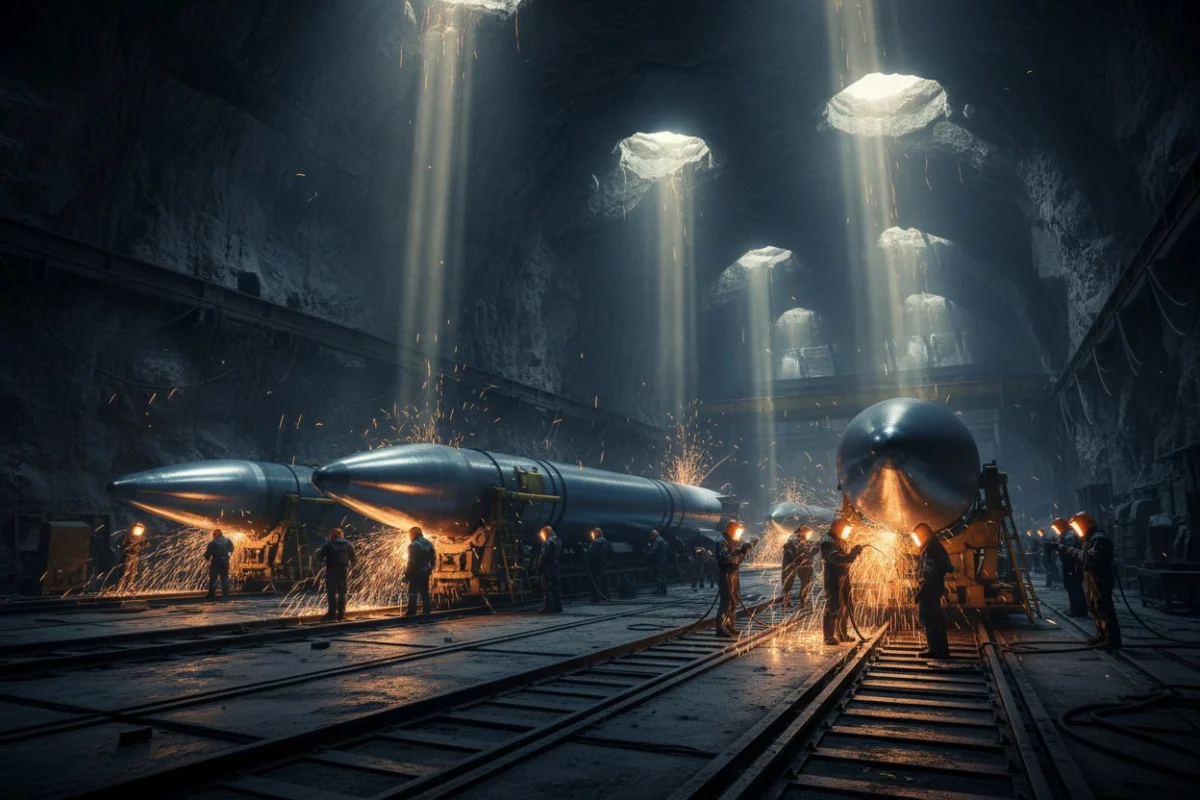
As the six-month mark of the intense military conflict between the United States and Iran passes, a growing divide has emerged between the White House’s public declarations of victory and the reality on the ground. A recent report from the Wall Street Journal, citing U.S. and Middle Eastern officials, reveals that Iran has successfully resumed the production of ballistic missiles. By leveraging deep-underground facilities and stockpiled components, Tehran has managed to circumvent the extensive aerial bombardment campaign that Washington claimed had dismantled the nation’s offensive capabilities.
This development challenges the narrative consistently pushed by the Trump administration throughout 2026. Despite thousands of combat sorties and the systematic targeting of industrial infrastructure, Iran’s military-industrial complex appears to be in a state of active recovery, raising critical questions about the efficacy of airpower alone in neutralizing entrenched, non-state-aligned military threats.
The Strategic Disconnect: Claims vs. Reality
Throughout the spring and summer of 2026, President Donald Trump repeatedly signaled that Iran’s ability to project power via ballistic missiles had been effectively neutered. On March 9, 2026, the President claimed that the U.S. had destroyed the vast majority of Iran’s launch platforms, asserting that "only 20% remain." By early June, the administration’s rhetoric hardened, with the President suggesting that "most of the missile manufacturing areas have been knocked out," leaving the regime with perhaps only 21 to 22 percent of its original inventory.
However, intelligence assessments now indicate that these optimistic figures failed to account for the depth and resilience of Iran’s subterranean military network. The Wall Street Journal report suggests that even during the peak of the U.S. bombing raids, Iranian technicians continued to operate, shifting production to hardened underground sites. Key among these is the Khojir facility in southeastern Iran, where satellite imagery and intelligence reports have identified renewed activity, including the construction of secondary, hidden assembly points designed specifically to evade future detection and destruction.
A Chronology of the Conflict (Feb–Aug 2026)
The conflict began in earnest on February 28, 2026, when a massive wave of U.S. and Israeli airstrikes targeted Iranian military infrastructure. Over the following six months, the theater of operations expanded significantly.
- Initial Phase (Feb–March 2026): U.S. Central Command launched over 8,000 combat sorties, striking more than 7,800 targets. The primary goal was the immediate degradation of Iran’s missile launch capability and naval assets.
- The Mid-War Shift (April–May 2026): While the frequency of Iranian missile launches dropped—falling from roughly 80 missiles on the first day of the war to a sustained 10–20 per day—the intensity of the conflict did not wane. During this period, Iranian forces targeted U.S. and regional military installations in Jordan, Kuwait, the UAE, and Saudi Arabia.
- The Bahrain Crisis (June 2026): The conflict reached a critical juncture when Iranian forces struck the U.S. Navy’s regional headquarters in Bahrain. Acting Secretary of the Navy Hung Cao characterized the damage as severe, noting that the base was "blown to hell," forcing the U.S. to re-evaluate its entire naval command structure in the Middle East.
- Recovery and Replenishment (July–August 2026): As the conflict plateaued, reports of Iran’s industrial recovery began to surface. Intelligence confirmed that despite the destruction of key industrial facilities, Iran was successfully utilizing existing component stockpiles to continue production, while the U.S. faced its own supply chain hurdles, prompting a $22.9 billion contract with Raytheon to replenish the depleted Tomahawk cruise missile inventory.
Supporting Data: The Logistics of Attrition
The inability to fully suppress Iran’s missile output is rooted in the fundamental nature of the conflict. Military analysts point to three primary factors that have allowed Iran to maintain its offensive capacity:
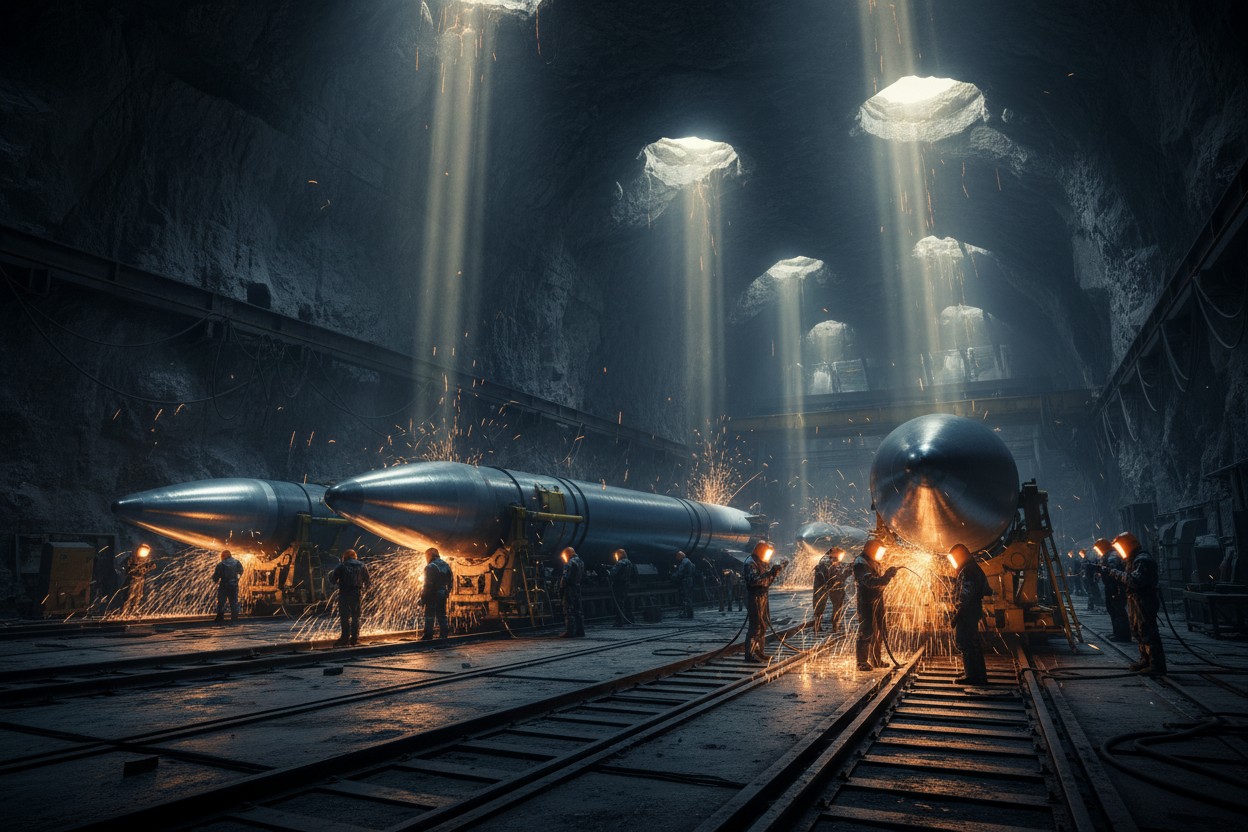
- Subterranean Resilience: Iran has spent decades developing a "fortress" architecture. By moving missile assembly into deep, hardened underground tunnels, they have created a "target-rich" environment that is nearly impossible to clear with conventional airstrikes alone.
- Modular Assembly: The report indicates that Iran is currently focusing on assembling liquid-propellant missiles—which require fueling prior to launch—and solid-propellant missiles, which can be kept in a "ready-to-fire" state. By relying on stockpiled parts, Iran has bypassed the immediate need for raw material imports, which were previously curtailed by the U.S.-led naval blockade.
- The "Iron Dome" Economic Burden: The cost of the war has not been borne by Iran alone. The necessity of maintaining high-end missile defense systems across the Middle East has become an astronomical fiscal challenge. The Congressional Budget Office (CBO) recently estimated that implementing a robust "Iron Dome for America" missile defense system would cost approximately $1.2 trillion over two decades, illustrating the massive economic scale required to counter Iran’s asymmetric missile strategy.
Official Responses and the "Existential" Narrative
Tehran has utilized the conflict to bolster its domestic narrative, framing the war as an existential struggle for survival. Brig. Gen. Alireza Elhami, commander of the Khatam al-Anbiya Joint Air Defense Headquarters, stated that Iranian-made equipment had been rigorously tested during the conflict and was now being mass-produced for deployment across the country.
"All of our weapons today are domestic," added Mohammad Reza Naqdi, Senior Advisor to the IRGC Commander-in-Chief. Naqdi’s assertion that "production exceeds usage" serves as a direct rebuttal to the White House’s claims that Iran’s arsenal was nearing total depletion.
From the U.S. perspective, the administration remains focused on its original, albeit shifting, objectives: neutralizing the nuclear program, ending missile production, and breaking the regime’s ties to regional proxies. However, intelligence officials privately acknowledge that the goal of removing the regime’s core institutions has proven far more difficult than initially projected, as the Iranian leadership has shown a willingness to endure massive industrial damage to preserve its strategic deterrent.
Implications for Global Security
The failure of the U.S. bombing campaign to definitively halt Iran’s missile production carries significant implications for future regional stability. First, it demonstrates the limits of conventional airpower when pitted against a nation that has fully integrated its military infrastructure into its geography.
Second, the war has exposed the vulnerabilities of U.S. installations in the Gulf. With major bases in Bahrain, Kuwait, and the UAE suffering damage, the U.S. military is forced to contend with a new reality: the regional power balance has been permanently altered. The depletion of U.S. munitions—specifically the firing of nearly one-third of the pre-war Tomahawk inventory—has necessitated a long-term shift toward industrial mobilization, ensuring that the conflict’s economic impact will be felt for years to come.
Ultimately, the Wall Street Journal report serves as a sobering reality check. As the conflict enters its next phase, the disconnect between political rhetoric and the tactical situation on the ground suggests that while the U.S. may have successfully degraded Iran’s military capacity, it has not achieved the decisive victory that was promised. Iran, by prioritizing the survival of its missile program above all else, has ensured that it remains a formidable, if damaged, power in the Middle East. Whether this results in a negotiated settlement or a protracted, low-intensity war remains the central question for the coming months.