








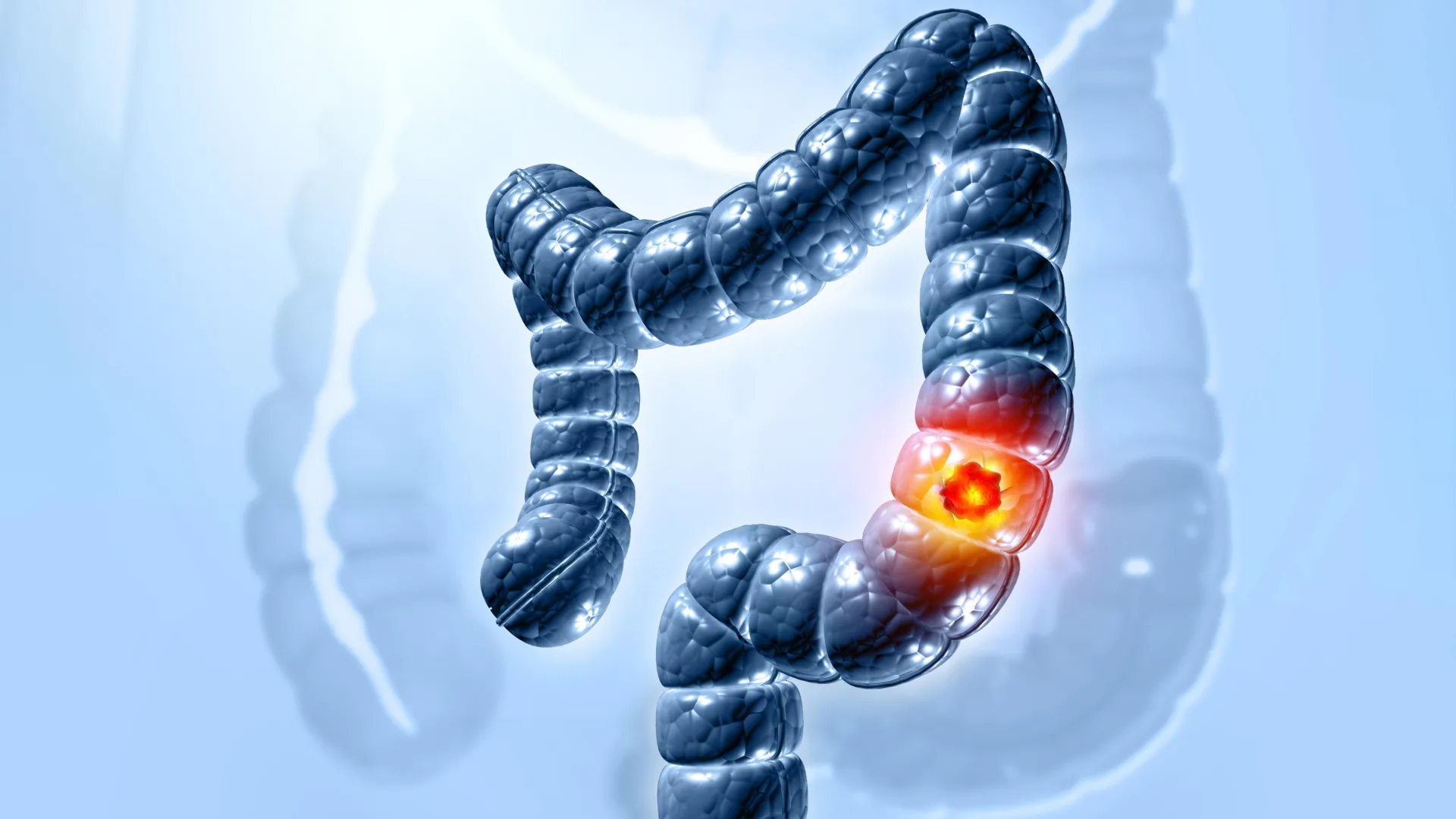
For over 15 years, gastroenterologists and oncologists have been haunted by a microscopic mystery: how does the Bacteroides fragilis toxin (BFT) bypass the body’s sophisticated defenses to wreak havoc on the human colon? This bacterium, present in the gut microbiome of approximately 20% of the healthy population, is generally benign. However, in certain strains, it secretes a potent toxin that acts as a catalyst for chronic inflammation and, ultimately, colorectal cancer.
A multi-institutional team led by researchers at the Johns Hopkins Kimmel Cancer Center and the Bloomberg~Kimmel Institute for Cancer Immunotherapy has finally cracked the code. By identifying the specific "gateway" protein that the toxin uses to dock onto colon cells, the researchers have not only solved a long-standing scientific puzzle but have also unveiled a promising therapeutic strategy to intercept the toxin before it can inflict damage. Their findings were published in the journal Nature.
The Mechanism of Destruction: A Two-Step Assault
To understand the significance of this discovery, one must first understand the destructive nature of BFT. Previous research conducted by the laboratory of Dr. Cynthia Sears, a senior author on the new study and a professor of medicine at Johns Hopkins, established that BFT promotes tumor growth by cleaving E-cadherin. E-cadherin is a vital protein that acts as the "glue" holding colon cells together, maintaining the integrity of the intestinal barrier.
When BFT destroys this barrier, it triggers chronic inflammation, creating an environment ripe for cancerous mutations. Yet, for years, the mechanism remained incomplete. Laboratory experiments consistently showed that BFT did not bind directly to E-cadherin. It was clear that an intermediary—a receptor—was facilitating the toxin’s access. Identifying that receptor became the "holy grail" of the field.
Chronology of a Scientific Breakthrough
The path to this discovery was neither linear nor simple. It required a decade and a half of inquiry and the convergence of cutting-edge genetic screening technology with international collaboration.
Phase 1: The Genomic Search
The breakthrough began with a systematic, genomewide CRISPR screen. Led by Maxwell White, an M.D./Ph.D. candidate in the Sears lab, in collaboration with Dr. Matthew Waldor’s laboratory at Harvard Medical School, the team set out to find which genes were essential for the toxin to successfully attack colon cells. By systematically disabling individual genes within colon epithelial cells, the researchers sought to find a cell line that, when mutated, would become "invisible" or resistant to the toxin.
The result was striking: when the gene responsible for the protein claudin-4 was deleted, BFT was rendered powerless. It could no longer latch onto the cells, and the protective E-cadherin remained safely intact.
Phase 2: Structural Verification
Upon identifying claudin-4 as the culprit, the researchers faced a degree of professional skepticism. Many in the field had hypothesized that the receptor would be a G-coupled protein receptor—a common signaling mechanism. Claudin-4, however, belongs to a different family of proteins entirely. To confirm the validity of the interaction, the Johns Hopkins team partnered with structural biologists F. Xavier Gomis-Rüth and Ulrich Eckhard at the Molecular Biology Institute of Barcelona.
Using advanced biophysical techniques, the team confirmed that BFT and claudin-4 form a tightly bound, one-to-one molecular complex. This provided the first definitive physical evidence that the toxin must "dock" at claudin-4 before it can proceed to destroy the colon’s cellular architecture.
Phase 3: In Vivo Testing
The final step in the research process involved testing these findings in living systems. Collaborating with Dr. Min Dong’s laboratory at Harvard Medical School, the researchers utilized mouse models to observe the toxin’s behavior. They engineered a "molecular decoy"—a soluble, synthetic version of claudin-4. When introduced into the system, the decoy acted as a sponge, sequestering the BFT and preventing it from ever reaching the actual colon cells. The results were clear: the mice treated with the decoy remained protected from BFT-induced damage, effectively halting the cascade of inflammation that leads to tissue degradation.
Supporting Data: Why Claudin-4 is Unique
The discovery of claudin-4 as the receptor for BFT is medically significant for several reasons. In most toxin-pathogen interactions, protease toxins bind directly to the proteins they are destined to cleave. The BFT-claudin-4 interaction is a rare exception in the biological world, functioning as a "two-step" mechanism.
The CRISPR screen provided high-confidence data, with claudin-4 appearing as the "clear, resounding top hit." The rigor of the study was further bolstered by the cross-continental collaboration, which utilized both laboratory-grown cell cultures and live animal models to ensure that the findings were not artifacts of a specific experimental setup. Despite the use of sophisticated AI modeling tools like AlphaFold, the exact structural fit of the toxin-receptor complex remains a subject of ongoing investigation, as current software could not fully map the precise geometry of this interaction.
Official Perspectives: Implications for Future Medicine
The implications of this discovery are vast, ranging from preventative diagnostics to novel therapeutic interventions.
"We’ve made several attempts over time to identify the receptor, so this is an exciting moment," said Dr. Cynthia Sears. "Understanding how bacterial toxins work can open doors to new approaches for detection and therapy for associated diseases, including diarrhea, colorectal cancer, and bloodstream infections."
The development of the "molecular decoy" serves as a proof-of-concept for a new class of treatments. Maxwell White noted that the current decoy model is a starting point, not an endpoint. "This approach could be iterated upon with small molecules or other biologics that have better pharmacological properties," White explained. By shifting the focus from treating the consequences of inflammation to neutralizing the toxin at the point of entry, researchers may be able to significantly lower the risk of tumor formation in individuals carrying high-risk Bacteroides fragilis strains.
The Path Forward: Unanswered Questions
While the discovery of the claudin-4 receptor is a monumental achievement, the scientific community is already looking toward the next set of challenges.
- Structural Mapping: The team is currently working to resolve the atomic-level structure of the BFT-claudin-4 complex. Even with modern AI, the complexity of this interface requires further experimental crystallization.
- Clinical Translation: Transitioning from a mouse model to human clinical trials will require years of safety and efficacy testing. The team is currently evaluating which biologics or small molecules might best serve as human-safe therapeutic agents.
- Preventative Screening: Given that 20% of the population carries this bacterium, the discovery raises questions about whether screening for high-risk BFT-producing strains could become a standard part of colorectal cancer preventative care.
Conclusion
The identification of the claudin-4 receptor marks a transformative moment in oncology and microbiology. By closing a 15-year gap in our understanding of Bacteroides fragilis, researchers have illuminated a clear path toward disrupting a major driver of colorectal cancer. While the road to a clinical treatment is long, the success of the molecular decoy in mouse models offers a beacon of hope. For the millions of individuals whose gut microbiome balance determines their long-term health, this discovery represents a critical advancement in our ability to defend the human colon against the silent, persistent threats hiding within.
Additional contributors to this research included Jason Chen, Shaoguang Wu, Abby L. Geis, and Jessica Queen at Johns Hopkins, alongside Hailong Zhang, Karthik Hullahalli, and Jie Zhang at Harvard Medical School. Financial support was provided by the Bloomberg~Kimmel Institute for Cancer Immunotherapy, the National Institutes of Health, Janssen Research and Development, Cancer Research UK, and the Howard Hughes Medical Institute.