









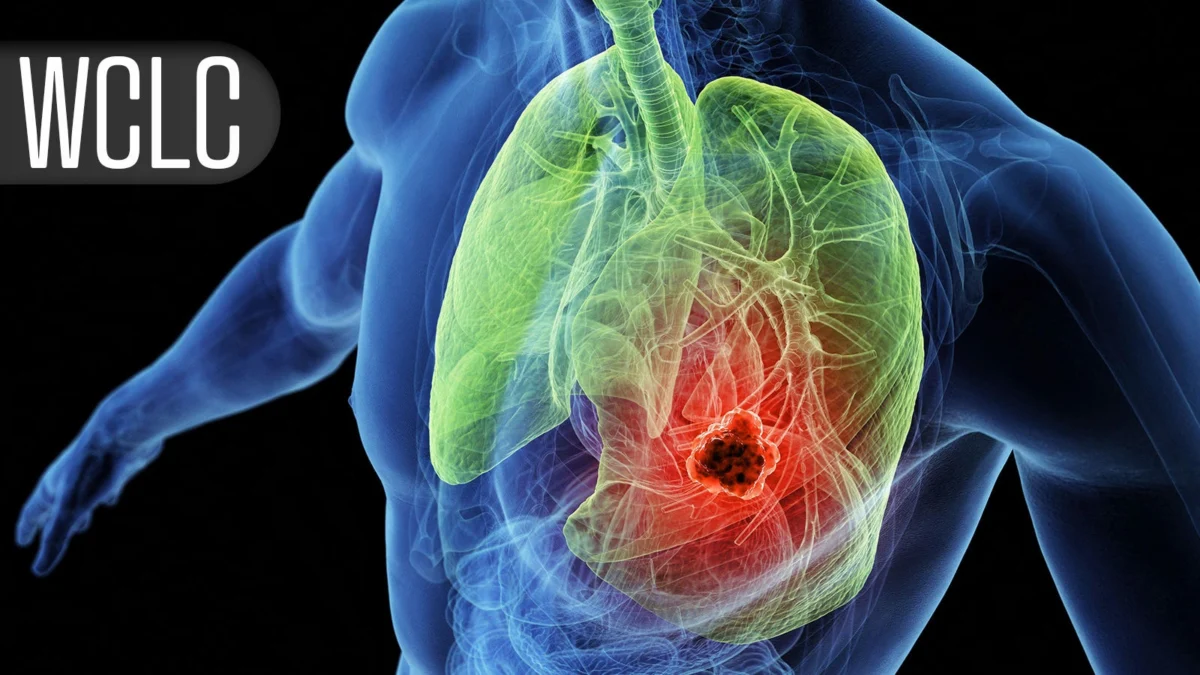
In the high-stakes arena of thoracic oncology, small cell lung cancer (SCLC) has long been considered one of the most formidable adversaries. Characterized by rapid progression and early metastasis, SCLC typically offers limited options for patients who progress beyond initial standard-of-care treatments. However, recent data unveiled at the World Conference on Lung Cancer (WCLC) in Seoul, South Korea, suggests a potential paradigm shift. Researchers presented preliminary results from a phase Ib/II trial evaluating a novel combination therapy: a PD-L1/VEGF bispecific antibody (pumitamig) paired with an antibody-drug conjugate (elfe-D).
The results, which demonstrated objective response rates (ORRs) reaching as high as 92.3% in first-line settings, have ignited excitement among clinicians while simultaneously prompting rigorous scientific debate regarding the necessity of such complex, multi-agent regimens.
The Clinical Landscape: Addressing the SCLC Challenge
Small cell lung cancer accounts for approximately 15% of all lung cancers. Because it is highly aggressive, the therapeutic window for intervention is narrow. While immune-oncology (IO) agents and recent advancements in DLL3-targeting therapies have improved outcomes for some, many patients eventually face treatment resistance.
The study, designated BNT324-01, sought to address this unmet need by utilizing a synergistic approach. The combination of pumitamig—which targets both PD-L1 and VEGF to modulate the tumor microenvironment—and elfe-D, an antibody-drug conjugate (ADC) designed to deliver potent cytotoxic payloads directly to tumor cells, aims to hit the cancer through multiple, non-overlapping mechanisms.
Chronology of the BNT324-01 Study
The development and execution of the BNT324-01 trial represent a global collaborative effort involving institutions across North America, Europe, Asia, and Australia.
- Trial Design and Enrollment: The study was designed as a multi-part, phase Ib/II trial. Investigators enrolled 279 patients across four dose groups, irrespective of their PD-L1 expression status. This inclusive enrollment criteria was intended to capture the real-world heterogeneity of SCLC patients.
- Dose Optimization: The second phase of the study focused on dose optimization and signal-seeking across various subgroups, including patients who had already received IO therapies and those who had been treated with DLL3-targeting agents.
- Data Analysis: The safety analysis encompassed the entire cohort of 279 patients, while the efficacy analysis focused on a dedicated subset of 78 patients with SCLC. The researchers evaluated patients for Objective Response Rate (ORR), Disease Control Rate (DCR), and circulating tumor DNA (ctDNA) clearance.
- Presentation at WCLC: In September, Dr. Adam J. Schoenfeld of Memorial Sloan Kettering Cancer Center presented the findings, marking the first time a PD-L1/VEGF bispecific antibody has been reported in combination with an ADC for lung cancer.
Supporting Data: Robust Efficacy and Safety Profiles
The efficacy data presented at WCLC was striking, particularly in how consistent the response rates remained across diverse patient demographics.
Efficacy Metrics
Among the 71 efficacy-evaluable patients, the overall ORR was 70.4%, with a Disease Control Rate (DCR) of 93.0%. The breakdown by line of therapy was particularly notable:
- First-line therapy: 92.3% response rate.
- Second-line therapy: 76.2% response rate.
- Third-line therapy: 52.4% response rate.
Furthermore, the treatment proved effective regardless of traditional prognostic markers. Patients with and without brain metastases saw response rates of 71.0% and 70.0%, respectively. Perhaps most impressively, 96% of evaluable patients showed a substantial reduction in circulating tumor DNA (ctDNA), a molecular indicator of tumor burden that often precedes radiographic evidence of response.
The Safety Profile
A primary concern with combining potent agents like ADCs and bispecific antibodies is the potential for overlapping toxicities, which could lead to prohibitive side effects. However, the BNT324-01 trial reported a favorable safety profile.
One-third of the total 279 patients developed grade 3 or higher treatment-emergent adverse events (TEAEs), while only one-quarter experienced grade 3 or higher treatment-related adverse events (TRAEs). The most common side effects included nausea (40.9%), decreased appetite (22.9%), and anemia (21.5%). Discontinuation rates were low, with only eight patients in the SCLC subgroup ceasing treatment due to adverse events.
Official Responses and Expert Commentary
Dr. Adam J. Schoenfeld, who led the presentation, emphasized the potential of this combination. "This is the first data for a PD-L1/VEGF bispecific antibody in combination with an ADC in lung cancer," Schoenfeld stated. "Most adverse events were grade 1/2, and there was a low rate of interstitial lung disease. The combination treatment showed encouraging early efficacy… across all lines of therapy and dose levels."
However, the clinical community has approached the data with a mix of enthusiasm and cautious skepticism. Dr. Mariana Brandão of the Institut Jules Bordet in Brussels, who served as the invited discussant, acknowledged the robustness of the data but posed critical questions regarding the trial’s underlying strategy.
"The results support further clinical development, but we have to ask ourselves, what’s the added value of this combination versus an ADC alone?" Dr. Brandão questioned. Her critique highlights a growing trend in oncology where the addition of multiple agents increases costs and potential toxicities without necessarily providing a commensurate survival benefit. She explicitly questioned the role of the anti-PD-L1/VEGF component, suggesting that while the combination is highly active, its place in the therapeutic hierarchy remains to be proven.
Implications for Future Oncology
The BNT324-01 trial findings have several immediate implications for the oncology community:
1. The "ADC-Plus" Era
We are entering an era where ADCs are increasingly being paired with other targeted therapies. The success of this trial suggests that we are moving toward a modular approach to cancer treatment, where drugs are combined not just by chance, but based on specific mechanistic synergies identified in preclinical models.
2. Monitoring the Competitive Landscape
Pumitamig/elfe-D is entering a crowded market. With multiple ADCs already being paired with PD(L)-1 inhibitors and some showing established survival advantages, the hurdle for new entrants is high. The clinical team must now design trials that clearly demonstrate how this combination outperforms current standards of care.
3. The Role of Biomarkers
While the trial enrolled patients regardless of PD-L1 status, future studies will likely need to identify which patient subpopulations benefit most from the VEGF-inhibiting properties of the bispecific antibody versus those who might respond to the ADC payload alone.
4. Moving Toward ESMO
The research team has indicated that data for other tumor types will be presented at the European Society for Medical Oncology (ESMO) congress later this year. This will provide a broader look at the safety and efficacy of the pumitamig/elfe-D combination, potentially clarifying whether the success seen in SCLC is a tumor-specific phenomenon or a platform-wide win for the drug combination.
Conclusion
The data from the BNT324-01 trial represents a significant, albeit preliminary, step forward in the treatment of advanced SCLC. By achieving high response rates in patients with heavily pre-treated disease and demonstrating a manageable safety profile, the combination of pumitamig and elfe-D offers a glimmer of hope. However, as the medical community looks toward upcoming reports, the focus will shift from "can this drug work?" to "is this specific combination the most efficient way to treat the patient?" The answers to these questions will be vital in ensuring that patients receive the most effective—and least burdensome—care possible.