





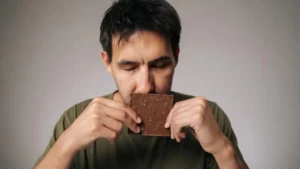


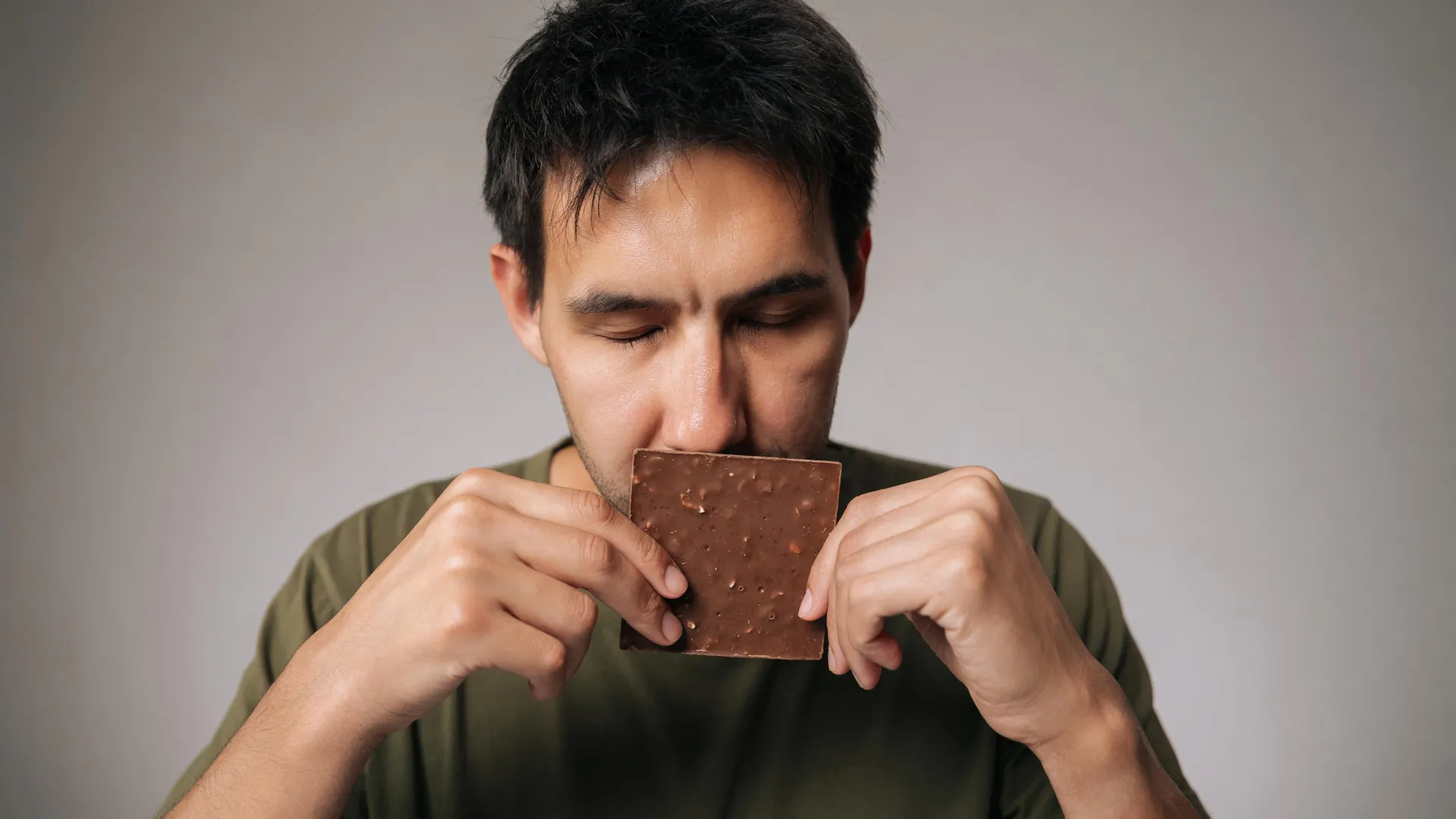
For many gym-goers, the toughest part of a rigorous "leg day" is the mental and physical barrier that emerges when fatigue begins to set in. We often look to caffeine, pre-workout supplements, or loud music to push through those final, grueling repetitions. However, recent scientific research suggests that the secret to a more productive workout might not be found in a pill or a powder, but rather in the air we breathe. A new study published in Frontiers in Physiology reveals that the simple act of smelling chocolate can significantly boost performance during resistance training without increasing the perceived difficulty of the exertion.
The Science of Olfactory Motivation
The human sense of smell is far more than a tool for enjoying dinner; it is a complex, primitive system wired directly into the brain’s limbic system—the area responsible for appetite, emotion, and memory. While scientists have long understood that scents can influence mood and hunger, the link between olfaction and physical exercise capacity has remained largely unexplored.
A team of researchers at the University of Malaya, led by Dr. Mohamed Nashrudin bin Naharudin, an assistant professor at the Faculty of Sports and Exercise Science, sought to bridge this gap. They hypothesized that the brain, when presented with specific, familiar food cues, might initiate a "psychobiological" response that prepares the body for action, effectively tricking the system into higher performance.
Chronology: A Controlled Investigation
To test this theory, the research team recruited 23 healthy, moderately trained men in their early to mid-20s. The methodology was designed to isolate the impact of scent while controlling for other physiological variables.
The Experimental Setup
All participants were required to fast for at least 10 hours prior to the study, ensuring that baseline metabolic and hunger signals were standardized. The subjects were divided into three distinct groups, each assigned a different olfactory stimulus:
- Group A: Exposed to liquified dark chocolate (90% cocoa).
- Group B: Exposed to liquified milk chocolate (60% cocoa).
- Group C: Exposed to water (the control group).
The Physical Protocol
The primary physical task was the leg extension—a classic isolation exercise for the quadriceps. Participants were tasked with performing the movement through multiple sets, with researchers measuring performance both before and during the exercise sessions.
Throughout the experiment, the researchers monitored the participants’ subjective experiences. Before the workout, subjects rated their hunger, fullness, and desire to eat. During the exercise, every 30 seconds, participants were exposed to their assigned scent, after which they provided feedback on their appetite levels.
Supporting Data: Dark vs. Milk Chocolate
The findings were striking, revealing that not all chocolate scents are created equal. The two chocolate varieties influenced the participants’ performance and appetite through distinctly different mechanisms.
Performance Gains
The most immediate takeaway from the study was the sheer increase in training volume.
- Participants exposed to the 90% dark chocolate aroma completed, on average, 18 more repetitions of the leg extension than the control group.
- Those exposed to the 60% milk chocolate aroma added approximately nine repetitions compared to the water control.
These increases occurred despite the participants not reporting an increase in perceived exertion. This is a critical distinction: usually, when an athlete pushes their body to do more, they "feel" the burn and the effort more intensely. In this study, the athletes were doing more work while feeling as though they were doing the same amount of effort as the control group.
The Appetite Paradox
The way the scents interacted with the brain’s hunger signals also varied. The dark chocolate aroma was strongly associated with a suppression of appetite. Participants reported feeling fuller and having a reduced desire to eat compared to both the water and milk chocolate groups.
Conversely, the milk chocolate aroma—which participants rated as more pleasant—did not significantly alter their appetite levels. Instead, it appeared to act as a "hedonic reward," creating a more positive sensory environment that encouraged the subjects to perform more work without necessarily triggering the satiation signals associated with the darker, more bitter cocoa.
Official Responses and Expert Analysis
Dr. Nashrudin bin Naharudin, the senior author of the study, emphasized the novelty of these findings. "Seeing a substantial increase in repetitions without the athletes feeling like they were exerting themselves any harder is a fascinating psychobiological outcome," he noted.
The research suggests that these scents function as "learned cues." From early childhood, human beings develop strong neurological associations between the smell of specific foods and the satisfaction of eating them. When the brain detects these smells, it initiates an anticipatory state.
"The dark chocolate scent serves as a learned cue for a rich, bitter, and highly satiating food, which essentially tricks the system into an anticipatory state of fullness," Dr. Nashrudin explained. "Conversely, the sweeter milk chocolate scent acts more like a hedonic reward cue, enhancing training volume by creating a highly pleasant sensory environment rather than by shifting basic metabolic hunger signals."
Essentially, the body is being "primed." By smelling the dark chocolate, the body expects the satiety that comes with a meal, which may dampen the brain’s focus on hunger and allow it to redirect focus toward physical output.
Implications for Future Athletic Performance
The implications of this study are profound, though researchers caution that they are still in the early stages of understanding these pathways.
Why Does This Matter?
If we can enhance athletic performance through external sensory cues rather than chemical stimulants, we might change how we approach training. Current pre-workout supplements are often loaded with caffeine or other stimulants that can cause jitters, sleep disruption, or cardiovascular strain. A sensory approach—utilizing familiar, pleasant, or satiating aromas—offers a non-invasive, non-chemical alternative to help athletes break through plateaus.
Limitations and the Need for Caution
While the results are promising, the research team is careful to note several limitations:
- Scope: The study was limited to a small group of healthy, young, moderately trained men. Whether these results would hold true for women, older adults, or elite professional athletes remains to be seen.
- Biological Pathways: The study did not measure blood hormone levels (such as ghrelin or leptin) or use fMRI imaging to track neural activity. Consequently, the researchers are currently speculating on the exact biological mechanisms at play.
- Intensity: The researchers noted that it was difficult to perfectly equalize the intensity of the chocolate aromas, and because the control group smelled odorless water, there was a risk of participant awareness regarding the experimental conditions.
Could Other Scents Work?
The question naturally arises: Is there something magical about chocolate, or can any familiar food produce this effect? Dr. Nashrudin suggests that chocolate is likely not unique. It is, however, a food with a "universally recognized reward association."
It is highly probable that other foods associated with comfort or satisfaction—such as vanilla, coffee, or even specific fruits—could yield similar results, provided the athlete finds the scent familiar and pleasant. The key factor is the personal history of the athlete; if a person finds a specific smell repulsive, the "anticipatory" psychological shift will not occur, and the performance boost will likely be nonexistent.
The Road Ahead
This research opens a new frontier in sports psychology and exercise physiology. Future studies will need to involve more diverse demographics and utilize physiological monitoring—such as blood tests and brain scans—to determine exactly how the brain translates an olfactory signal into a muscular contraction.
For now, the next time you find yourself flagging during a workout, you might not need to reach for another scoop of pre-workout powder. You might simply need a whiff of something that reminds your brain of a hearty, satisfying meal. As science continues to uncover the deep, often subconscious connections between our senses and our physical capabilities, one thing is clear: the path to your next personal record might just be a scent away.