











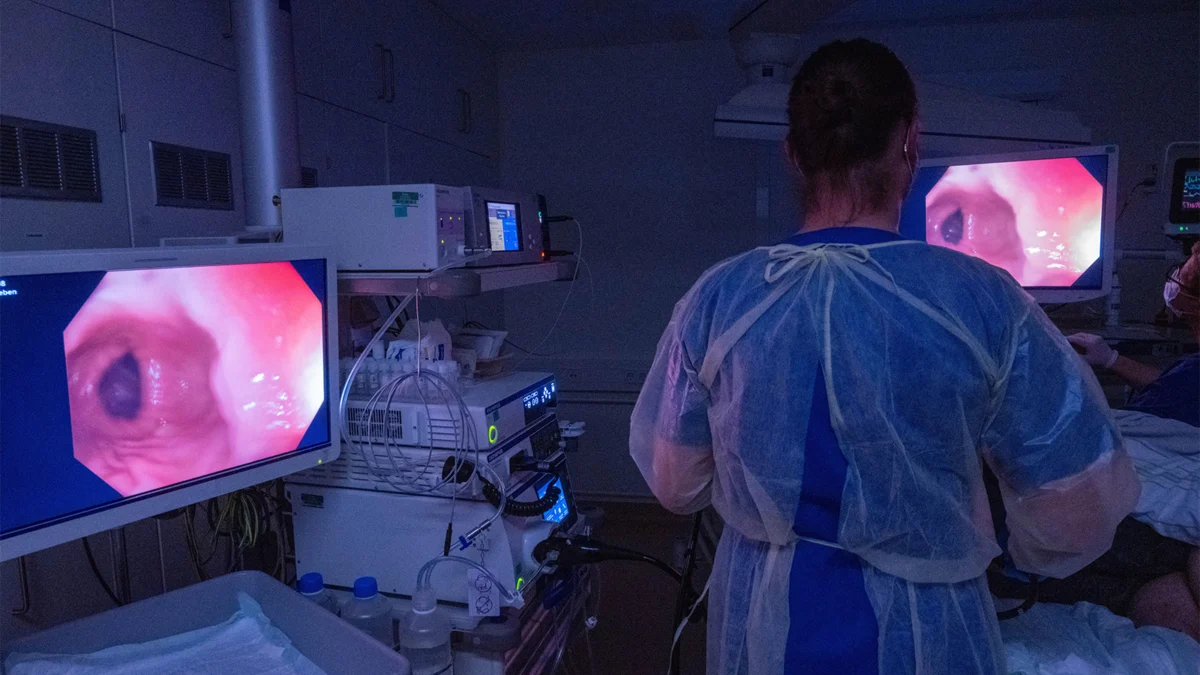
For decades, the standard of care for patients who have undergone the removal of high-risk adenomas has been defined by a philosophy of aggressive vigilance. Medical guidelines in both the United States and internationally have consistently recommended that these individuals undergo follow-up surveillance colonoscopies just three years after their initial procedure. The prevailing clinical consensus was rooted in the instinct that earlier detection—and more frequent monitoring—equated to better outcomes.
However, a major interim analysis from the ongoing European Polyp Surveillance (EPS) II trial, published in the New England Journal of Medicine, is now challenging this long-standing paradigm. The findings suggest that a five-year surveillance interval is just as effective as the traditional three-year interval in preventing colorectal cancer (CRC), potentially sparing thousands of patients from unnecessary, invasive, and costly procedures.
The Core Findings: A Shift in Clinical Evidence
The interim analysis, led by Dr. Michael Bretthauer of the University of Oslo, focused on the noninferiority of a five-year follow-up compared to the standard three-year window. The study involved a robust cohort of 10,799 patients across eight European countries, split almost evenly into two groups: 5,398 patients in the five-year group and 5,401 in the three-year group.
The data revealed that the cumulative incidence of colorectal cancer at 5.5 years of follow-up was 0.77% for those waiting five years, compared to 0.82% for those in the three-year group. Statistical analysis confirmed that the five-year interval met the study’s prespecified noninferiority margin. Furthermore, the incidence of both early- and late-stage CRC showed no substantial difference between the two groups. Fatalities resulting from colorectal cancer remained extremely low across both cohorts—three deaths in the five-year group and two in the three-year group.
Perhaps most provocatively, the authors noted that more than 99% of all study participants did not receive a diagnosis of colorectal cancer within the five-year window. This high rate of non-progression suggests that the current categorization of these individuals as "high-risk" may warrant a significant re-evaluation.
Chronology: From Observational Assumptions to Rigorous Trials
To understand why this shift is so significant, one must look at the evolution of gastroenterological guidelines.
- Historical Context: Historically, surveillance protocols were established based on observational studies and smaller, randomized trials that often provided imprecise estimates. Despite this, the medical community adopted the three-year interval as a "safe" default to prevent the development of interval cancers.
- The Rise of Guidelines: Following these historical trends, major bodies—including those in the U.S.—codified the three-year rule for patients with high-risk adenomas. High-risk was broadly defined as having at least one adenoma $ge$ 10 mm, high-grade dysplasia, a villous growth pattern, or the presence of three to 10 adenomas of any kind.
- The Inception of the Trial: Recognizing the lack of high-quality evidence, researchers launched the European Polyp Surveillance II trial (NCT02319928) to test these guidelines empirically.
- The Current Milestone: The recent publication represents the first major interim data point for this trial. While the primary endpoint is set for a 10-year follow-up, these findings provide the first rigorous evidence that the "three-year rule" may be more rooted in habit than in demonstrated patient benefit.
Supporting Data: Efficiency and Patient Burden
The implications of these findings extend far beyond cancer prevention statistics; they address the operational burden on healthcare systems and the physical burden on patients.
The Volume of Procedures
The total number of surveillance colonoscopies performed between enrollment and the end of the follow-up period highlights the scale of the potential change. The three-year group required 8,614 procedures, while the five-year group required only 4,434. This represents a 48.5% reduction in the total number of colonoscopies performed in the five-year cohort.
The Trade-off of Detection
Critics of longer intervals often point to the "miss rate" of adenomas. The study did acknowledge that more frequent surveillance led to the detection of more advanced adenomas (a 3.5-point difference). However, the researchers argued that this is likely due to the higher frequency of procedures rather than a failure of the five-year strategy. Because even advanced adenomas tend to grow slowly, the researchers posited that lesions missed during a five-year interval would still likely be identified well before they undergo malignant transformation.
Official Responses and Expert Commentary
The medical community has greeted these findings with a mix of excitement and measured caution. In an accompanying editorial, Dr. Aasma Shaukat of NYU Grossman School of Medicine and Dr. Theodore R. Levin of the Kaiser Permanente Division of Research praised the trial for providing an "important corrective" to decades of clinical instinct.
"Surveillance policy must be determined not by habit or by fear of doing too little, but by evidence of what benefits patients," Shaukat and Levin wrote. They emphasized that while the findings are promising, caution is necessary until the 10-year data is finalized. They noted that long-term data regarding cancer-specific mortality and late-stage diagnoses will be essential to solidify this change in clinical practice.
The study authors themselves remain pragmatic, noting that while the results are strong, they do not necessarily call for an immediate overhaul of global guidelines overnight. Instead, they frame the findings as an invitation for a serious, evidence-based conversation about resource allocation and patient safety.
Implications for the Future of Gastroenterology
If these results hold at the 10-year mark, the implications for healthcare will be transformative.
1. Economic and Systemic Impact
Colonoscopies are expensive, labor-intensive, and require significant infrastructure. By nearly halving the number of surveillance procedures for this patient demographic, healthcare systems could see massive cost savings. Furthermore, this reduction would free up endoscopy capacity for primary screening colonoscopies and other diagnostic procedures, potentially reducing wait times for patients who have not yet had their initial screening.
2. Reduced Patient Burden
Every colonoscopy carries a non-zero risk of adverse events, including perforation, bleeding, and complications related to sedation. For many patients, the procedure involves lost wages, significant anxiety, and the logistical burden of bowel preparation. Reducing the frequency of these procedures without compromising safety would significantly improve the quality of life for those in the high-risk category.
3. Reclassifying Risk
The data suggests that the term "high-risk" may be applied too liberally. By refining the criteria for who truly requires a three-year interval versus a five-year interval, clinicians can practice "precision medicine" rather than "one-size-fits-all" gastroenterology.
4. Future Research
The path forward will involve monitoring the 10-year outcomes with intense scrutiny. Researchers will need to determine if there are specific subsets of the "high-risk" population—such as those with specific genetic markers or distinct polyp morphologies—who might still benefit from more frequent monitoring, even if the general population does not.
Conclusion: A New Standard of Vigilance?
The European Polyp Surveillance II trial serves as a stark reminder that in modern medicine, "more" is not always "better." By subjecting long-held medical dogmas to the rigor of randomized clinical trials, Dr. Bretthauer and his colleagues have highlighted a path toward a more efficient, less invasive, and equally safe future for colorectal cancer prevention.
While the medical community awaits the final 10-year data to definitively close the book on this question, the interim results have already achieved something vital: they have successfully shifted the burden of proof. The question is no longer "Why wait five years?" but rather "Can we justify the burden of a three-year interval when the evidence suggests it offers no clear advantage?" For the thousands of patients undergoing surveillance, this change could represent a significant improvement in both their physical well-being and their experience within the healthcare system.