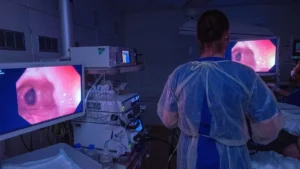












In a move that underscores the evolving landscape of cardiovascular device innovation, Johnson & Johnson (J&J) has officially offloaded its Laminar left atrial appendage (LAA) closure business. The asset has been acquired by Jaguar LAA, a newly formed entity backed by the investment firm Santé Ventures and key members of the original Laminar management team. This transaction marks a significant shift in J&J’s medtech strategy as the healthcare giant seeks to streamline its portfolio and concentrate on high-growth areas.
Main Facts: The Transition of Laminar
The acquisition of the Laminar technology platform—which includes a unique, investigational device designed to close the LAA—represents a rare "spin-out" of a recently acquired asset. J&J had originally acquired Laminar to bolster its cardiovascular offerings, but the company has since reassessed its internal priorities.
For the cardiovascular market, this move is particularly noteworthy because the Laminar device was positioned as a direct competitor to established industry giants. The technology aimed to challenge the market dominance of Boston Scientific’s Watchman and Abbott’s Amulet devices. By transitioning the program to Jaguar LAA, the stakeholders hope to provide the project with the focused operational bandwidth necessary to navigate the rigorous clinical and regulatory hurdles required for market entry.
A Chronology of the Laminar Program
The timeline of the Laminar program reveals a rapid cycle of innovation, corporate integration, and subsequent divestiture:
- Pre-2024: Laminar develops a differentiated LAA closure technology, distinguishing itself from competitors through a design intended to minimize device exposure within the left atrium.
- Late 2023: Johnson & Johnson acquires Laminar, bringing the technology into its expansive MedTech division as part of its broader push into heart health and structural heart interventions.
- February 2024: J&J initiates an investigational device exemption (IDE) study to clinically validate the Laminar system. The study design was intended to benchmark the technology against existing gold-standard devices from Boston Scientific and Abbott.
- Mid-2024: Johnson & Johnson undergoes a strategic review of its medical technology portfolio, prioritizing high-impact areas like robotics and specialized cardiovascular interventions.
- Late 2024: The divestiture is finalized. Jaguar LAA, a vehicle formed by Santé Ventures and Laminar’s leadership, assumes ownership of the technology, committing to continue the clinical development trajectory initiated earlier in the year.
Supporting Data: The Clinical Necessity of LAA Closure
The left atrial appendage is a small, pouch-like structure in the heart that is a primary source of blood clots in patients suffering from atrial fibrillation (AFib). When AFib occurs, the heart’s upper chambers do not contract effectively, allowing blood to pool in the LAA. These clots can break free and travel to the brain, causing a stroke.
The Competitive Landscape
The market for LAA closure is one of the most lucrative and fiercely contested segments in interventional cardiology:
- Boston Scientific’s Watchman: Currently the market leader, the Watchman device has set the standard for LAA occlusion with extensive clinical data and widespread adoption among electrophysiologists.
- Abbott’s Amulet: Known for its dual-seal technology, the Amulet provides an alternative for patients who may not be suitable candidates for the Watchman or who prefer a different procedural approach.
- The Laminar Differentiator: The Laminar system was designed to address lingering clinical concerns regarding device exposure. By minimizing the amount of foreign material left within the left atrium, the Laminar team aimed to reduce the risk of thrombus formation on the device itself—a potential complication for some patients—and simplify the healing process.
Official Responses and Corporate Strategy
The divestiture is framed by both parties as a mutually beneficial alignment of interests.
Johnson & Johnson’s Perspective
J&J has been aggressively reshaping its MedTech division. This includes the planned spin-out of its orthopedics business and a laser-like focus on cardiovascular care and robotic-assisted surgery.
"The Laminar asset sale reflects our disciplined approach to portfolio management," a J&J spokesperson stated. "Our strategy is focused on allocating resources where we can have the greatest impact. By moving the Laminar program to a dedicated, independent entity, we are ensuring that the technology is positioned for long-term success under ownership that is singularly focused on this specific program."
The Jaguar LAA Perspective
For the new leadership at Jaguar LAA, the acquisition is an opportunity to execute the clinical trial without the competing priorities of a global conglomerate. Jason Rogers, Chief Medical Officer of Jaguar LAA, emphasized the value of the technology’s design.
"We believe the Laminar technology offers a differentiated approach to LAA closure, particularly with its ability to leave minimal device exposure within the left atrium," Rogers said. "Our mission now is to build upon the robust clinical and development work already completed and successfully advance the program through its next stages of regulatory review."
Implications for the Cardiovascular Market
The exit of J&J from the specific LAA closure space via the Laminar program carries several implications for the industry at large:
1. Market Consolidation and Concentration
J&J’s decision to move away from a program they had just acquired suggests a growing trend in MedTech: "Focus or Fail." Large-cap companies are increasingly unwilling to support secondary programs that do not immediately align with their core revenue-driving pillars. While this might be seen as a retreat, it is more accurately described as a narrowing of scope to ensure higher returns on investment in their remaining areas of strength.
2. The Role of Venture-Backed "Spin-Outs"
The formation of Jaguar LAA by Santé Ventures demonstrates the critical role that private equity and venture capital play in bridging the "valley of death" for medical devices. When a large company decides a technology no longer fits their portfolio, the original management team often finds themselves in a position to re-acquire the asset. This "entrepreneurial recycling" allows promising technology to survive even when it no longer fits a corporate giant’s strategic roadmap.
3. Patient Outcomes and Future Innovation
The ultimate test for the Laminar program will be its performance in the IDE trial. If the device proves to be safer or more effective than the current market leaders, it could potentially disrupt the $1 billion+ LAA closure market. Surgeons and electrophysiologists are constantly seeking devices that offer shorter procedure times, easier deployment, and lower complication rates. If Jaguar LAA can prove that their "minimal exposure" approach leads to better patient outcomes, the acquisition will be viewed as a massive success for the startup team.
4. Regulatory Challenges
Advancing a Class III medical device through regulatory review is a capital-intensive and time-consuming process. Jaguar LAA faces the immediate challenge of maintaining the momentum of the IDE study. Regulatory bodies, such as the FDA, will require rigorous data demonstrating that the Laminar system provides a net clinical benefit. The ability of the new company to attract further funding—and perhaps eventually form a new partnership with a larger entity once the technology is de-risked—will be the defining factor in the company’s trajectory over the next 24 to 36 months.
Conclusion: A New Chapter for Laminar
The divestiture of Laminar by Johnson & Johnson is a microcosm of the modern MedTech ecosystem. It highlights the tension between the scale of global corporations and the agility required for device innovation. While J&J moves forward with its broader strategic pivot toward high-growth, high-margin sectors, the Laminar technology—now under the banner of Jaguar LAA—has been given a fresh lease on life.
The industry will be watching closely as the clinical trial data emerges. If the Laminar device succeeds, it will not only validate the vision of its original inventors but also prove that sometimes, a technology needs the focused, singular dedication of a smaller firm to truly reach its potential. For patients suffering from AFib, the promise of a more refined, less invasive LAA closure solution remains a compelling prospect, regardless of which corporate logo is on the box. As the medical community awaits the next phase of development, the story of Laminar serves as a reminder that in the high-stakes world of medical technology, strategy is as important as the science itself.