










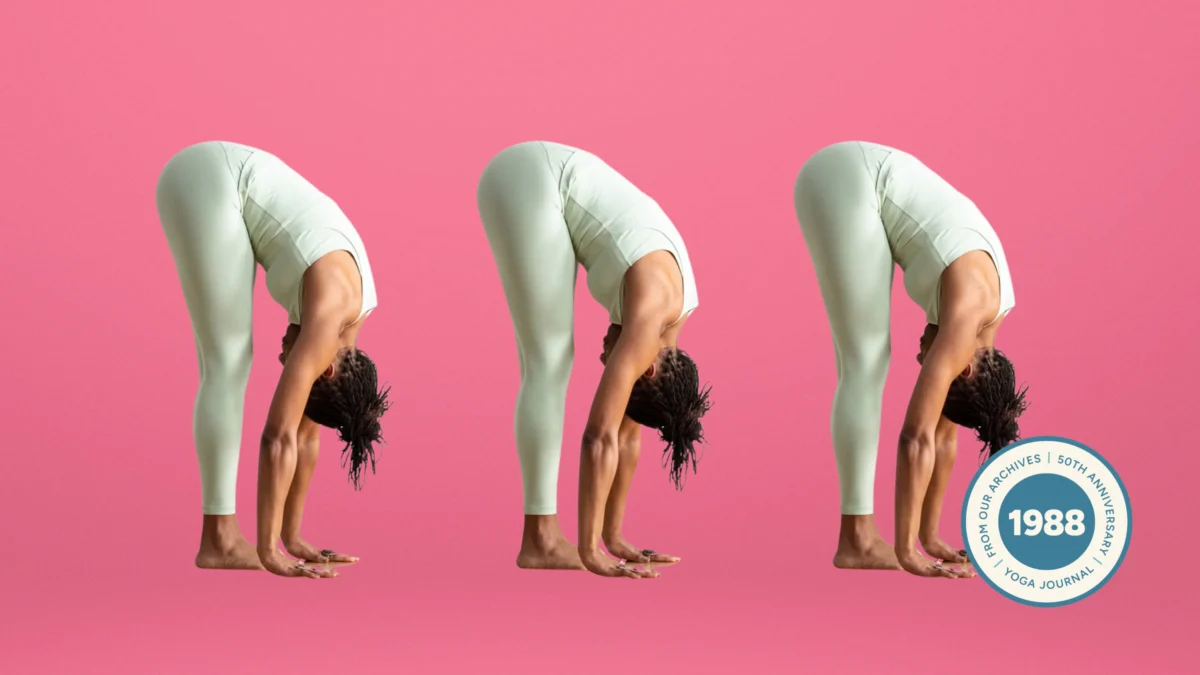
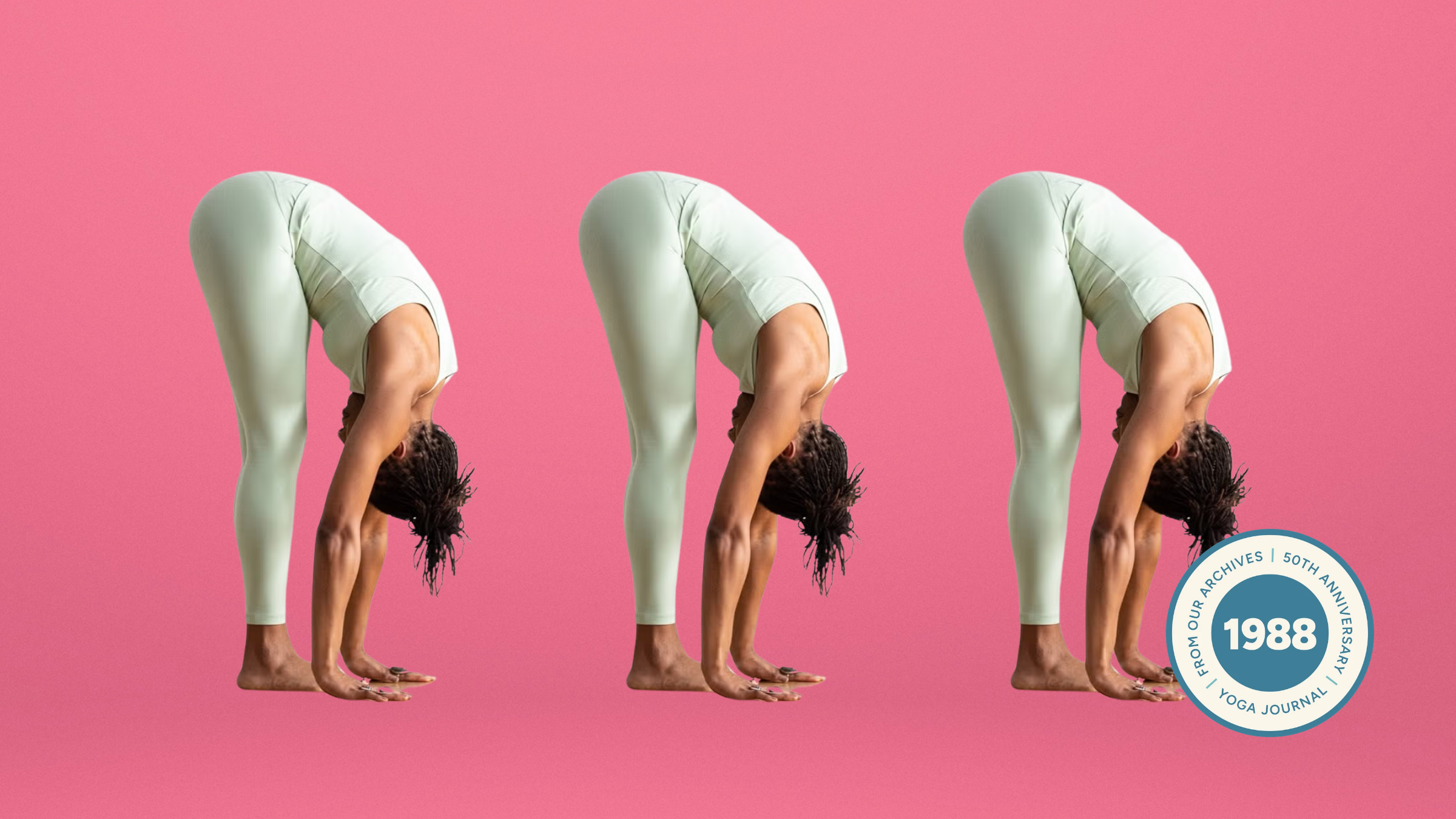
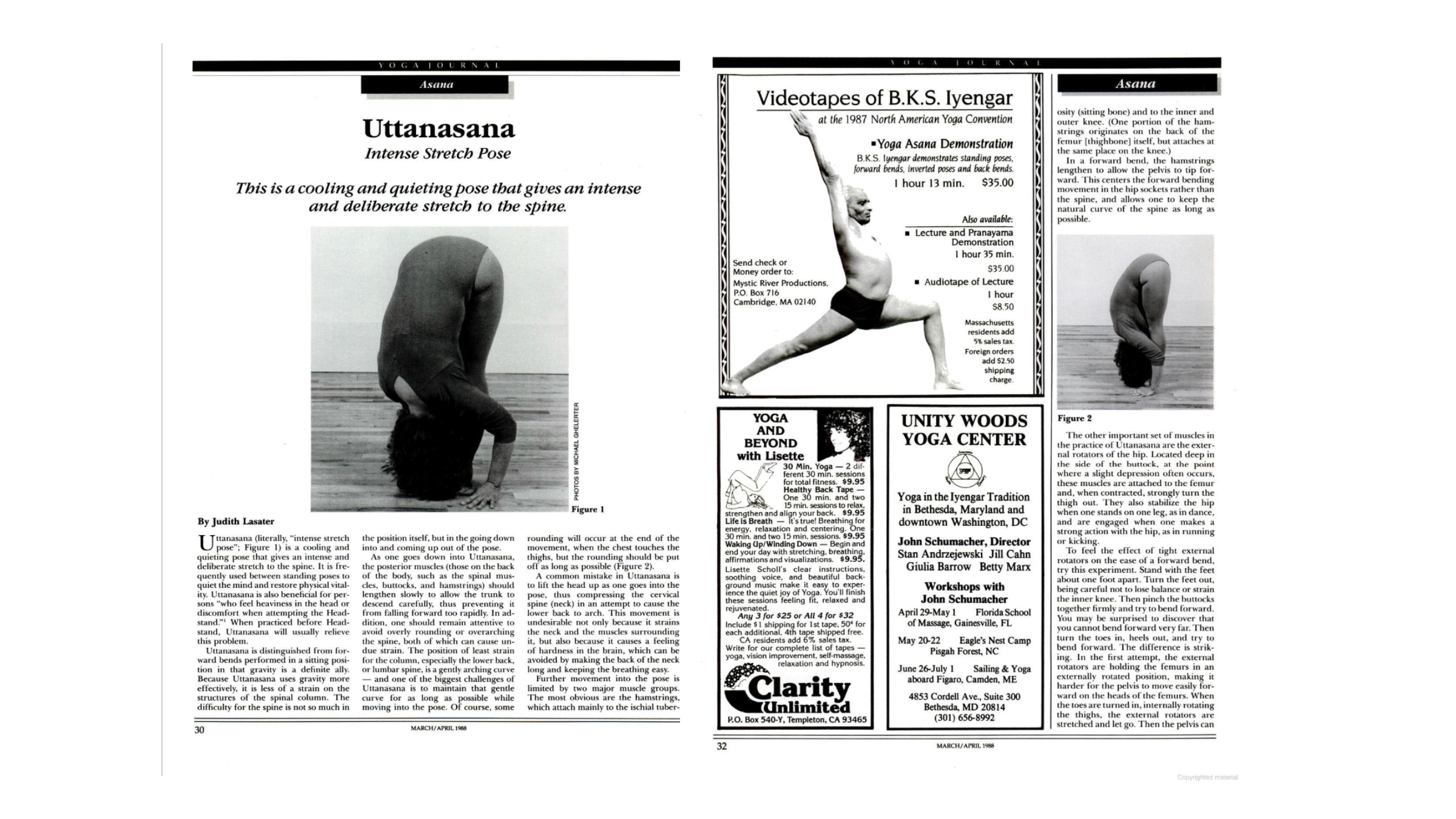
Originally published in the March-April 1988 issue of Yoga Journal, this archival exploration of Uttanasana remains a cornerstone of intelligent practice. As part of our ongoing commitment to preserving the lineage of yoga pedagogy, we revisit this foundational analysis of the Standing Forward Bend.
Main Facts: Defining the "Intense Stretch"
Uttanasana, translated literally as "intense stretch pose," serves as a sanctuary within the often-demanding sequence of a yoga practice. While it is frequently categorized simply as a hamstring opener, its utility far exceeds the mere stretching of the posterior chain. It is a cooling, quieting asana that restores physical vitality and serves as a vital bridge between high-energy standing poses.
At its core, the pose is a study in the elegant use of gravity. Unlike seated forward bends, where the practitioner must exert significant force to overcome resistance, Uttanasana allows gravity to act as an ally. By utilizing the weight of the torso, the practitioner can achieve a deliberate, controlled lengthening of the spine that is remarkably gentle on the spinal column when performed with precision. For those prone to discomfort during inversions like Headstand (Sirsasana), practicing Uttanasana beforehand acts as a physiological "reset," relieving heaviness in the head and preparing the nervous system for the inverted state.
Chronology: A Legacy of Pedagogical Precision
The journey of understanding Uttanasana has evolved over decades. In the late 1980s, the yoga community began a shift toward deeper anatomical inquiry. Educators moved away from "forcing" the body into a pose and toward understanding the mechanics of the hip joint and the spine.
- 1975–1985: Early instruction focused on the aesthetics of the pose—touching the floor or bringing the forehead to the knees.
- 1988 (The Archive Focus): The Yoga Journal feature introduced a nuanced anatomical perspective, emphasizing that the "difficulty" of the pose lies not in the final shape, but in the transition. It was during this period that the focus shifted to maintaining the natural lumbar curve during descent.
- 2000s–Present: Modern practice has integrated these lessons with current research on fascia and neuromuscular patterns, reinforcing the 1988 findings that the "secret" to the pose lies in the hip rotators rather than just the hamstrings.
Supporting Data: The Anatomy of the Bend
The primary obstacles to a graceful Uttanasana are often misunderstood. While the hamstrings—which attach to the ischial tuberosity (sitting bones)—are the most frequently cited culprits, the external rotators of the hip play a silent, yet dominant, role.
The Hip Rotator Experiment
To understand the mechanics, consider a simple clinical test:
- Stand with feet hip-width apart and turn the toes outward. Pinch the buttocks firmly and attempt to hinge forward. You will likely feel a rigid "block" in the pelvis.
- Conversely, turn the toes inward (internal rotation of the thighs) and attempt the same movement.
The difference is immediate. When the external rotators are engaged, they lock the femur in place, preventing the pelvis from tilting forward. When the thighs are internally rotated, these muscles are stretched and released, creating the necessary "clearance" for the pelvis to tip over the heads of the femurs. This shift in pelvic orientation is what allows the spine to maintain its natural, healthy curve rather than rounding into a C-shape under duress.
The Cervical Connection
A common error observed in both novice and intermediate practitioners is the tendency to lift the head while descending. This reflexive action compresses the cervical spine, creating a sensation of "hardness" in the brain. By keeping the back of the neck long and the gaze soft, the practitioner avoids this compression, ensuring that the cooling, quieting benefits of the pose reach the mind rather than causing agitation.
Official Perspectives: The Philosophy of Transition
In the context of traditional yoga philosophy, the "pose" is not merely the static position held at the end of a movement. The true practice occurs in the transitions.
Many students view the movement into and out of the asana as mere "travel time" between points of stability. However, the transition is where the mind is most likely to wander—leaping ahead to the next posture or reflecting on the previous one. By focusing on a stable anchor point—such as the steady pressure of the feet against the mat—the practitioner can maintain awareness during the transition.
"Life is a series of transitions," notes the 1988 archival analysis. "By learning to be centered and aware during the transitions of asana, we can learn to be stable and secure during all of life’s changes." This perspective transforms Uttanasana from a physical exercise into a meditative discipline, turning the act of folding forward into a lesson on grace under pressure.
Implications: Practical Application for Every Body
To integrate this wisdom into a modern practice, one must prioritize the process over the outcome.
How to Practice Effectively
- The Descent: Begin with the feet hip-width apart. Hinge from the hip sockets, not the waist. Keep the abdominal muscles engaged to support the lumbar spine.
- The Support: Do not hesitate to use props. Placing hands on blocks or a chair allows the spine to remain long and the breath to remain deep, even if the hamstrings are tight.
- The Ascent: Coming up is, in many ways, the most strenuous part of the pose, as the body fights gravity. Contract the abdominals and move slowly. If you experience dizziness, pause halfway up, using a chair for support, to allow the cardiovascular system to adjust.
- The Neck: Keep the neck neutral. Tension in the neck is a mirror for tension in the brain; if the neck is long and soft, the mind will naturally follow suit.
Variations for Different Needs
For the practitioner with stiff hamstrings, the "wall version" of Uttanasana is invaluable. By placing the buttocks against a wall and keeping the feet a foot away, the back is supported and the hamstrings are safely stretched. This version is particularly effective for those dealing with chronic lower back fatigue, as it offloads the stress of holding the torso upright.
The Psychological Spillover
The ultimate implication of mastering Uttanasana is the "spillover" effect. When we train ourselves to remain conscious during the physical challenge of folding and rising, we build a "muscle of presence." In the face of life’s emotional or professional transitions, the practitioner who has learned to breathe through the intensity of a forward bend is better equipped to remain grounded.
Whether you are a beginner using a chair to find space, or an advanced practitioner deepening the fold, the intention remains the same: to find the balance between effort and surrender. As we look back at the 1988 archives, the message remains timeless—Uttanasana is not about reaching the floor; it is about reaching the self through the deliberate, intense, and quiet stretch of the body and mind.