







Published September 17, 2026
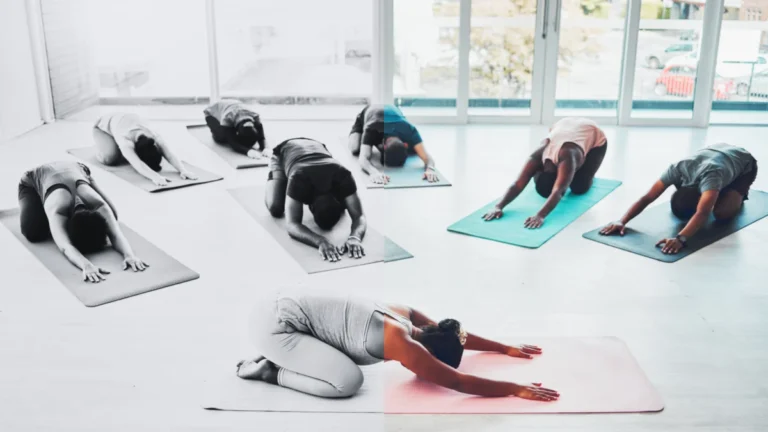
For the uninitiated observer, watching a seasoned yoga instructor lead a class while seamlessly mirroring their students can feel like witnessing a feat of cognitive gymnastics. As the teacher raises their right hand, the room follows suit, lifting their left. It is a fluid, intuitive dance that allows students to bypass the mental friction of spatial orientation. Yet, for the instructor, this "superpower" is often the result of rigorous, sometimes frustrating, training.
Amber Burke, a veteran yoga instructor with 16 years of experience and a background in writing from Yale and Johns Hopkins, notes that mirroring is more than just a performance trick—it is a pedagogical tool designed to foster a sustainable and accessible practice. However, as many instructors discover, the transition from teaching on the same side to teaching in a mirror-image requires more than just good intentions; it requires a systematic deconstruction of movement and direction.
The Cognitive Load of the Yoga Mat
At its core, mirroring is an act of empathy. When a teacher mirrors, they are effectively removing a layer of "mental translation" from the student’s experience. In a typical flow, a student is already tasked with regulating their breath, aligning their spine, and managing unfamiliar physical sensations. When an instructor forces the student to "reverse-engineer" a direction—mentally flipping the teacher’s left to their own right—it can disrupt the flow of the practice.
"The fewer mental gymnastics students have to do to figure out which arm or leg to move, the more they can stay connected to their breath, their body, and their own inner experience," explains Brett Larkin, founder of Uplifted Yoga.
For beginners, this is a game-changer. When a novice enters a studio, they are often navigating an alien landscape. By mirroring, the teacher provides a visual template that the student can replicate as easily as one might follow a dance partner. This is particularly effective in high-intensity Vinyasa classes, where the pace is often too swift to permit lengthy verbal clarifications.
A Chronology of Mastery: From Doubt to Muscle Memory
The path to becoming a proficient mirror-teacher is rarely linear. Most instructors start with a period of profound disorientation. The initial attempts are often characterized by "brain scrambles," where the instructor finds themselves accidentally lifting the wrong limb, leading to a wave of confusion that ripples through the front row.
The Early Stages of Training
In the initial stages, the goal is not perfection, but the isolation of the skill. Veteran trainer Nam Chanterrwyn of the American Yoga Council suggests that teachers begin their training away from the live classroom. "Doing this away from a live class, with no poses to think about, isolates the actual skill you’re building," he says.
By practicing simple movements—such as lifting the left arm while verbally cueing the right—in front of a mirror, instructors begin to build the necessary neural pathways. This practice period is essential. Just as a musician practices scales before playing a concerto, a teacher must practice directional cues until they become reflexive.
The Evolution of Cues
As instructors progress, they often employ physical "hacks" to assist their brain. Marking the floor with tape, wearing a watch on a specific wrist, or placing a ring on a designated finger serves as a tactile anchor. If a teacher knows their watch is always on their left wrist, they can immediately identify that their "watch hand" corresponds to the students’ right side.
Eventually, the reliance on these crutches fades. Through consistent, repetitive application in lower-pressure environments, the "mental flip" ceases to be a conscious calculation. It becomes muscle memory.
Strategies for the Modern Instructor
The pedagogical shift toward intentional teaching has yielded several best practices that are now being shared across global teacher training programs.
1. Contextualize, Don’t Just Direct
Instead of relying strictly on "left" and "right," many instructors are turning to environmental cues. If a studio has a prominent feature, such as a large window on the left side of the room, teachers are increasingly using "reach toward the window" instead of "reach to the left." This spatial anchor is often faster for the brain to process than a verbal direction.
2. Anatomical and Positional Anchors
In complex poses like Warrior II or Extended Side Angle, instructors are finding success by focusing on body parts rather than sides. Referring to the "front leg" or "top arm" removes the ambiguity of directional left/right entirely. This technique is particularly useful in diverse classrooms where students may have varying levels of familiarity with anatomical terminology.
3. The "Collaborative View"
Amy Ippoliti, a noted teacher trainer, advocates for a shift in perspective. Instead of viewing oneself as the source of truth, she encourages teachers to see their students as the mirror. By observing the students’ movements, the instructor can align their own cues to the collective motion of the class. This makes the session feel less like a performance and more like a shared, collaborative physical inquiry.
When to Abandon the Mirror
Despite its benefits, industry experts warn that mirroring is not a universal solution. In fact, attempting to force it in every situation can occasionally hinder the student’s learning process.
Situations where traditional demonstration is superior:
- Reclining Postures: When students are lying on their backs, they are not typically looking at the teacher. In these instances, verbal clarity is more important than visual mirroring.
- Circular Configurations: In a circle, students face many directions. Mirroring only works for those facing the instructor directly, leaving the rest of the class confused.
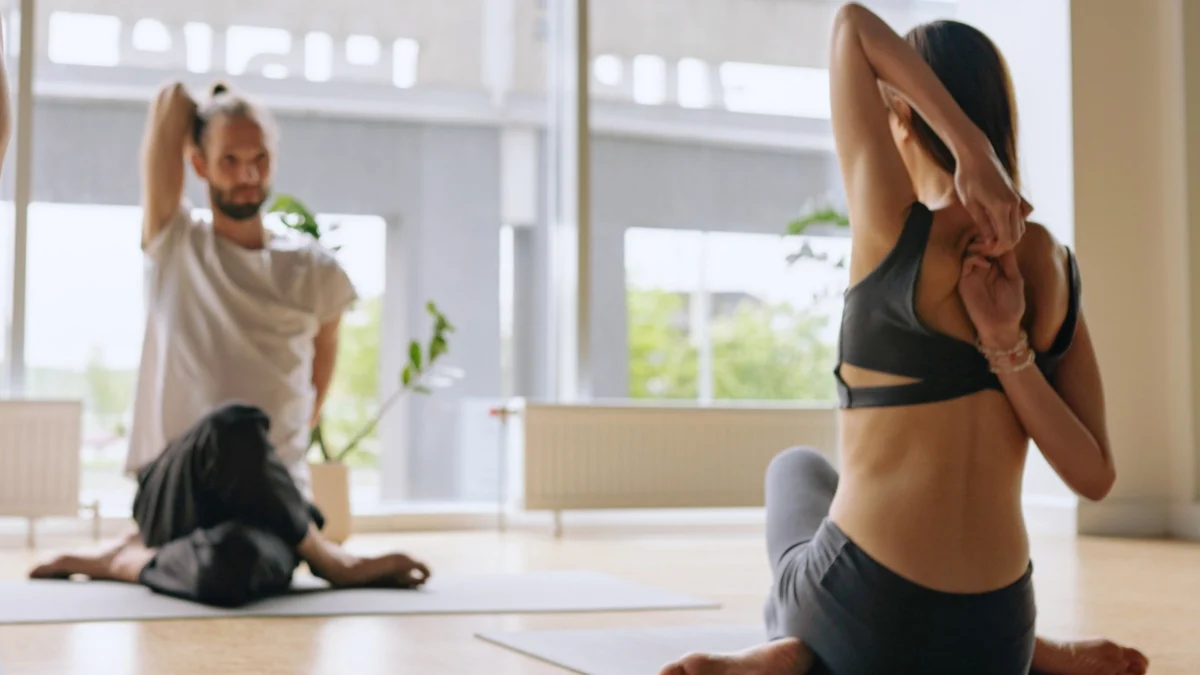
- Complex Binds and Interlacing: When teaching intricate hand placements or binds, the "back-facing" demonstration is often far more effective. It allows students to see the "how-to" of the movement from the same perspective they will be performing it.
- The "Mirror" Factor: If the studio itself is equipped with a mirrored wall, the instructor mirroring the class creates a "hall of mirrors" effect that can lead to significant vertigo and confusion for the students. In these rooms, it is often best for the instructor to face the mirror alongside their students.
The Neurodivergent Perspective
The debate over mirroring has gained nuance with the inclusion of neurodivergent perspectives in the yoga community. Kirstie MacDonald Scott, a PhD and neurodivergent yoga teacher, points out that for some students, the extra layer of processing required to interpret a mirrored instruction is detrimental to their practice.
"I remember taking a class [in which] the teacher was mirroring, [and] struggling to figure out if I was supposed to twist right or left. It scrambled my brain," Scott notes. Her approach, which focuses on allowing students to choose their own starting side, provides a valuable alternative that prioritizes individual comfort over standardized technique.
Implications for the Future of Yoga Instruction
As the yoga industry continues to professionalize, the conversation around mirroring highlights a broader shift: the move toward student-centered pedagogy. The goal is no longer for the teacher to show off their mastery of the pose or their ability to mirror, but to provide the most direct, safe, and effective path for the student to find the shape.
The consensus among trainers like Chanterrwyn and Larkin is clear: patience is paramount. Whether or not an instructor chooses to mirror is a personal pedagogical decision, but for those who choose to master it, the benefits are undeniable. By reducing the "mental tax" on the student, the teacher creates a clearer, more meditative, and ultimately more rewarding space for everyone involved.
"Every teacher who mirrors smoothly today once struggled to work it out in real time," Chanterrwyn concludes. "The calculation eventually stops being conscious. Just try to mirror one pose more cleanly than you did the class before."