








For decades, the public narrative surrounding lung cancer has been inextricably linked to the tobacco industry. The association is historically accurate: smoking remains the leading cause of lung cancer worldwide, responsible for the vast majority of cases. However, a silent, shifting trend is challenging this long-held medical consensus.
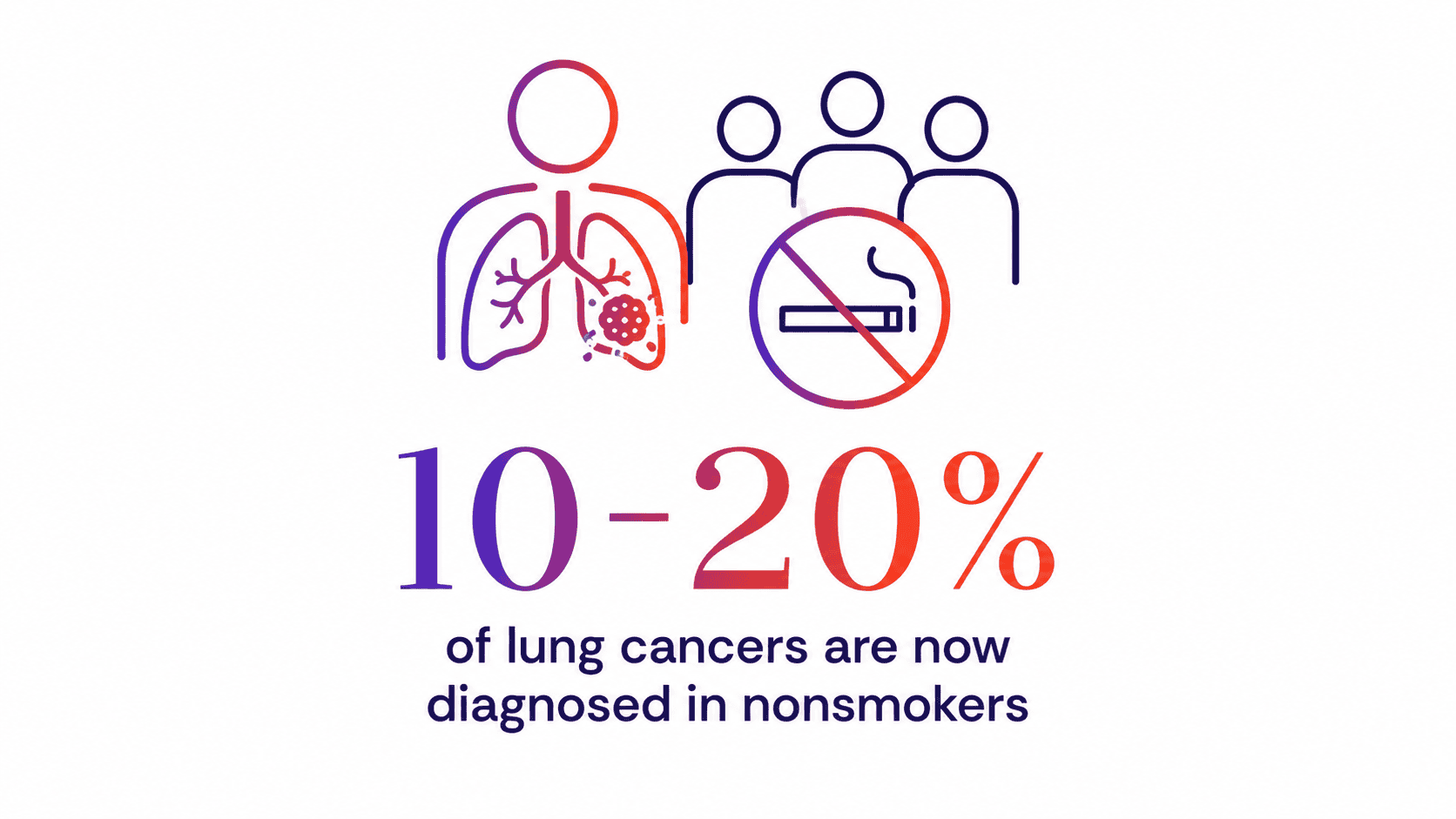
Researchers are increasingly identifying a distinct and growing phenomenon: lung cancer in never-smokers (LCINS). An estimated 10% to 20% of all lung cancer diagnoses now occur in individuals who have never touched a cigarette. This is no longer a statistical outlier; it is a clinical reality that necessitates a fundamental shift in how we perceive, screen for, and treat this malignancy.
Main Facts: A Distinct Biological Entity
Scientists now classify LCINS as a separate disease entity from smoking-related lung cancer. While smoking-related cancers are often characterized by thousands of DNA mutations caused by the toxic chemicals in tobacco, LCINS is frequently driven by a smaller, highly specific set of "driver" mutations.
These genetic markers function like a faulty ignition switch, fueling tumor growth independently of external tobacco-related damage. Furthermore, the epidemiology of the disease is distinct: two-thirds of LCINS cases occur in women, with a significantly higher prevalence among those of Asian descent. This demographic skew suggests a complex interplay between genetics, hormonal factors, and environmental triggers that medical science is only beginning to decode.
A Chronology of Discovery and Awareness
The medical community’s understanding of lung cancer has evolved in three distinct phases:
- The Smoking Era (1950s–1990s): The definitive link between cigarette smoking and lung cancer was established, leading to massive public health campaigns. During this time, lung cancer in a non-smoker was considered a rare medical curiosity, often dismissed as a misdiagnosis.
- The Genetic Revolution (2000s–2015): The mapping of the human genome allowed researchers to see inside the tumor. Scientists began identifying specific mutations—such as EGFR, ALK, and ROS1—that were present in patients who had never smoked. This shifted the view from "smoking-caused" to "mutation-driven."
- The Environmental & Epidemiological Shift (2016–Present): With the rise of global air pollution and an increase in reported cases among young, healthy, non-smoking adults, the focus has expanded. Current research now examines how environmental factors like PM2.5, radon, and wildfire smoke interact with individual genetic susceptibility to trigger the disease.
Supporting Data: The Global Landscape of Risk
The rise of LCINS is not confined to any single region, though the drivers of risk vary by geography.
The Radon Factor
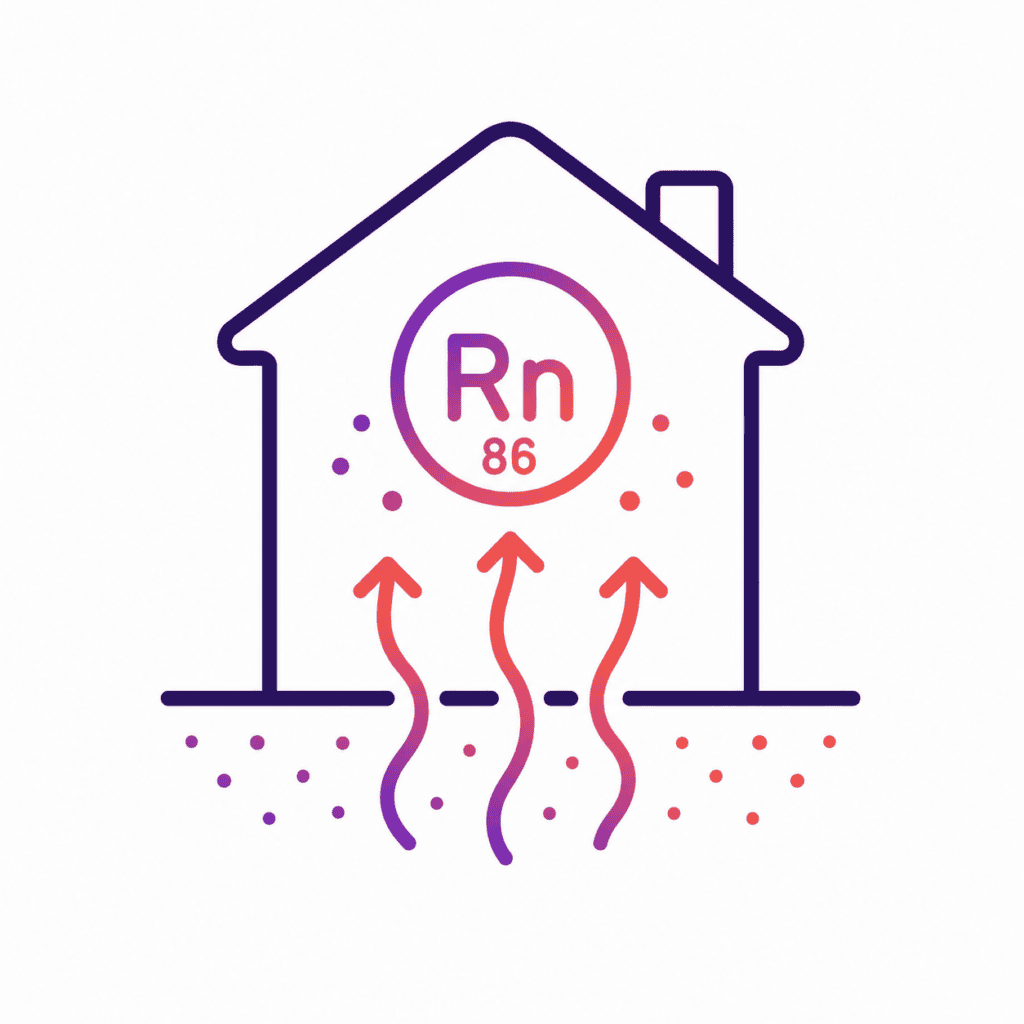
Radon, a naturally occurring radioactive gas, is the leading cause of lung cancer in never-smokers. It is an insidious threat: odorless, colorless, and tasteless. Produced by the decay of uranium in the earth, it seeps into buildings through cracks in foundations. Once inside, it deposits radioactive particles in the lungs, which damage DNA over time. Because it is found in high concentrations in poorly ventilated areas like basements, residential testing is the only way to mitigate this invisible danger.
Air Pollution and PM2.5
The World Health Organization (WHO) has set a recommended limit for fine particulate matter (PM2.5) at 5 µg/m³. Yet, in many parts of the world, this is a distant dream. In India, for example, average concentrations can exceed 50 µg/m³, with some urban centers seeing levels over 100 µg/m³.
New research indicates that these fine particles do more than irritate the lungs; they cause chronic inflammation that creates a "fertile soil" for tumors to develop. In 2026, the intersection of climate change and health became painfully clear when Canadian wildfires pushed pollution levels in the New York City metro area past 175 µg/m³, providing a stark example of how extreme weather events are now a public health hazard for lung health.

Official Responses and Clinical Challenges
The medical establishment is grappling with a diagnostic gap. Current screening guidelines in many countries are strictly age-based and smoking-history-dependent, typically requiring patients to be over 50 with a significant history of tobacco use.
This creates a "blind spot" for younger patients or non-smokers who present with symptoms. Because lung cancer is not often "top of mind" for these patients or their primary care physicians, symptoms such as a persistent cough, shortness of breath, or chest pain are frequently misdiagnosed as asthma, allergies, or bronchitis. By the time the correct diagnosis is made, over 70% of these cases have already reached an advanced stage.
Leading oncological organizations are now advocating for more nuanced risk assessments that include environmental history and genetic testing, even in the absence of a smoking history.
Implications for Modern Medicine: Personalized Treatment
The recognition of LCINS as a unique disease has revolutionized treatment protocols. Because these tumors lack the massive "mutational burden" found in smoking-related cancers, the standard "blunt force" approach of traditional chemotherapy and some forms of immunotherapy is often less effective.
Instead, treatment is becoming highly personalized:
- Targeted Therapy: Doctors now perform comprehensive genomic profiling on tumors to identify specific mutations. Drugs known as "tyrosine kinase inhibitors" (TKIs) can be used to specifically "switch off" the cancer-driving mutations.
- Combination Immunotherapy: Since LCINS tumors are often "stealthy" to the immune system, researchers are developing combination therapies that combine checkpoint inhibitors with other agents to force the immune system to recognize and attack the cancer cells.
- Ongoing Clinical Trials: The focus is shifting toward "precision oncology," where treatment is tailored to the unique molecular signature of the patient’s tumor, rather than the patient’s lifestyle history.
The Path Forward: Awareness and Advocacy
The rising incidence of lung cancer in never-smokers serves as a clarion call for a more sophisticated public health approach. While it is impossible to eliminate every environmental risk, there are tangible steps that can be taken to change the trajectory of this disease.

Public Health Priorities:
- Widespread Radon Testing: Normalizing the use of inexpensive radon home test kits.
- Stricter Air Quality Regulation: Supporting international efforts to curb industrial and vehicular emissions, as well as developing robust protocols for protecting vulnerable populations during wildfire events.
- Refining Screening Guidelines: Medical institutions must update screening criteria to consider non-smokers who may have high environmental exposure or genetic risk factors.
- Symptom Awareness: Patients must feel empowered to advocate for themselves. If a respiratory symptom persists for several weeks without explanation, seeking a second opinion or pushing for imaging (like a low-dose CT scan) can be a life-saving decision.
As we move toward 2030, the scientific community is optimistic that the "one-size-fits-all" approach to lung cancer is nearing its end. By treating lung cancer in never-smokers with the specific scientific rigor it requires, we are moving toward an era of earlier detection and more effective, personalized care. Each new discovery in the field of genomics and environmental toxicology brings us one step closer to transforming a once-overlooked diagnosis into a manageable, and perhaps one day, preventable condition.
The stigma of the past must be replaced by the precision of the future. The lungs do not care about the history of the person breathing through them; they only respond to the environment they inhabit. Understanding that truth is the first step toward better outcomes for all.