







Introduction: The Diesel Standard
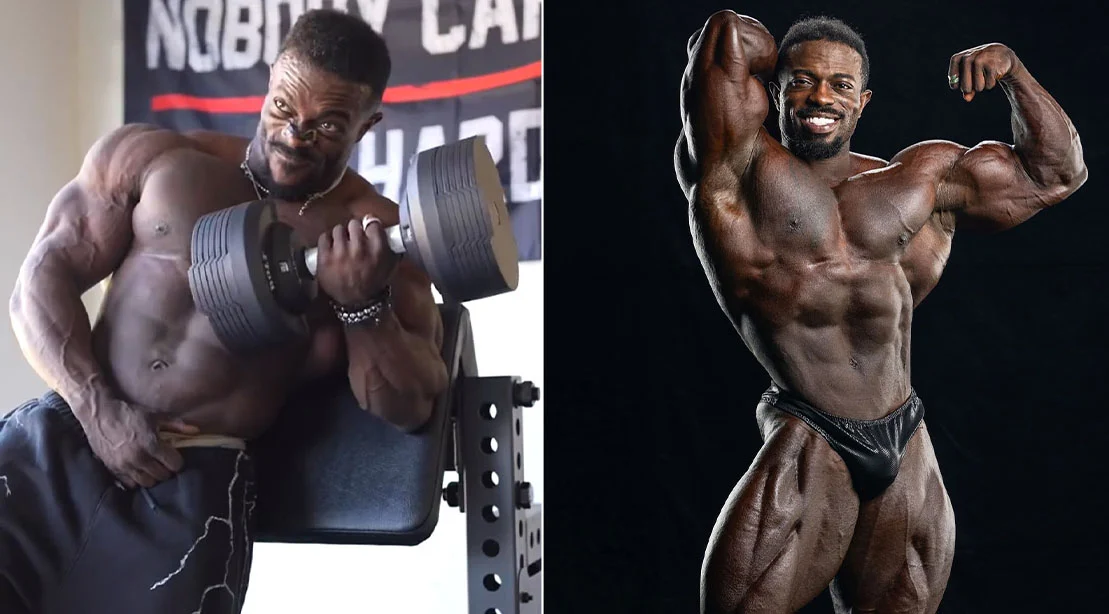
In the hyper-competitive world of IFBB Pro League Classic Physique, margins of victory are measured in millimeters of muscle separation and the precise arc of a peak. Few athletes embody this pursuit of perfection more than Terrence "Ruff Diesel" Ruffin. Fresh off a dominant victory at the 2025 EVLS Prague Pro—a win that solidified his qualification for the 2026 Olympia final—Ruffin remains a titan of the sport.
Yet, beneath the polished aesthetics and the two-time Arnold Classic trophies, Ruffin harbors a surprising confession: his arms, now considered some of the most aesthetic in the industry, were once his greatest developmental obstacle. For a man who earned his Pro Card at the tender age of 21, the journey to "sleeve-splitting" size was not a matter of genetics, but of strategic, tactical refinement.
Chronology of a Pro: From Airman to Olympia Contender
The trajectory of Terrence Ruffin’s career is as unique as his physique. Before he was standing under the bright lights of the Olympia stage, Ruffin served as a Senior Airman in the United States Air Force. The discipline required to balance military service with the grueling demands of professional bodybuilding provided a blueprint for his future success.
Ruffin’s professional journey began in earnest in 2014 when he secured his IFBB Pro Card. Over the following decade, he transitioned from a promising newcomer to a dominant force in the Classic Physique division. His career has been marked by a constant evolution of his training methodology. Unlike athletes who rely solely on heavy compound movements, Ruffin has spent years fine-tuning his approach to hypertrophy, specifically addressing the stubborn "lagging" body parts that often plague elite bodybuilders.
The 2025 season served as a masterclass in his refined philosophy. By the time he stepped onto the stage in Prague, Ruffin had implemented a new, hyper-focused arm training protocol that allowed him to bypass the plateaus he had struggled with for years.
Supporting Data: The Science of the "Ruff Diesel" Protocol
Ruffin’s approach to bicep development is grounded in two fundamental principles: unilateral execution and the Double Progression method.
The Case for Unilateral Training
Ruffin’s reliance on a unilateral (single-limb) approach is not merely a preference; it is a strategic necessity for muscle balance. In many bilateral exercises, the dominant side of the body tends to compensate for the weaker side, leading to structural imbalances and uneven growth. By isolating each arm, Ruffin ensures that both the biceps brachii and the brachialis are taxed equally, correcting strength discrepancies and enhancing overall mobility.
Mastering Time Under Tension
"Arms have taken the longest time to grow for me," Ruffin recently admitted to his followers. His solution was a shift toward slow, controlled eccentric movements. By prioritizing "time under tension" (TUT), Ruffin forces the muscle fibers to endure prolonged stimulus, which is essential for triggering the hypertrophic response necessary for growth.
The Big Three: Ruffin’s Bicep Blueprint
Ruffin has narrowed his focus to three primary movements, performed twice a week, to stimulate the biceps brachii and the brachialis.
1. Single Arm Preacher Curls
The preacher curl is a staple of bodybuilding, but Ruffin utilizes it with a focus on stability. By leaning against the bench, he removes the possibility of "cheating" through torso momentum. This forces the biceps brachii—the primary muscle responsible for elbow flexion—to do the heavy lifting in isolation. By keeping the load strictly on the bicep, he ensures maximum recruitment of the muscle fibers.
2. Single Arm Standing Curls
While the preacher curl provides isolation, Ruffin’s variation of the standing single-arm curl allows for a different angle of resistance. This movement is designed to challenge the bicep throughout the full range of motion. By maintaining strict form, he targets the peak of the bicep, an essential component for the Classic Physique aesthetic.
3. Single-Arm Cable Hammer Curls
The "secret weapon" in Ruffin’s arsenal is the hammer curl. By shifting the palm to face the torso, the focus of the exercise moves away from the biceps brachii and toward the brachialis—the muscle lying underneath the bicep—and the brachioradialis (forearm).
"This subtle change in hand placement has a big effect," Ruffin explains. By developing the brachialis, he creates a "shelf" that pushes the bicep upward, adding significant width and depth to the arm, which is crucial for achieving that "sleeve-scaring" look.
The Double Progression Method: A Coach’s Insight
To manage his training intensity, Ruffin utilizes the "Double Progression" method, a technique popularized by renowned strength coach Paul Carter. This methodology provides a logical framework for progressive overload.
The process is a two-step cycle:
- The Form Phase: Ruffin starts with a weight that allows for roughly 8 reps, focusing entirely on perfect, controlled form and a full range of motion.
- The Intensity Phase: Once the form is mastered at that weight, he ramps up the intensity by dropping the rep range to 4–8, using the heaviest weight possible while maintaining the same level of strict execution.
This dual-layered approach prevents the "plateau trap" where lifters increase weight at the expense of form. By oscillating between these two phases, Ruffin ensures constant, measurable growth.
Official Responses and Industry Impact
The bodybuilding community has taken notice of Ruffin’s transparency regarding his training. With nearly 100,000 followers on Instagram, his influence extends far beyond the stage. Coaches and amateur athletes alike have begun adopting his "Double Progression" and unilateral protocols, viewing them as a more sustainable path to muscle growth than the "ego lifting" often seen in commercial gyms.
Ruffin’s coach and peers have often cited his ability to objectively analyze his own physique as his greatest asset. He does not train based on trends; he trains based on the specific, measured needs of his own anatomy. This analytical mindset is why he has remained at the top of the Classic Physique heap while others have faded.
Implications for Future Training
Ruffin’s success story carries profound implications for the sport. It challenges the conventional wisdom that suggests "more is better." By focusing on only 2–3 movements twice a week, Ruffin has proven that volume is secondary to intent.
For the average lifter, the takeaway is clear:
- Quality over Quantity: Stop trying to fit ten different bicep exercises into a single session.
- Unilateral Focus: If your left arm is smaller than your right, start training them separately.
- Track Your Data: If you aren’t using a system like Double Progression, you aren’t training—you’re just exercising.
Conclusion: The Road to the 2026 Olympia
As Terrence Ruffin sets his sights on the 2026 Olympia final, his preparation is a testament to the fact that even the most elite athletes are students of the game. He has turned his greatest weakness into a cornerstone of his competitive identity. Whether it is through the meticulous study of biomechanics or the disciplined application of the Double Progression method, "Ruff Diesel" continues to redefine what is possible in the Classic Physique division.
For those looking to replicate his success, the message is simple: Find your lagging points, isolate them, control the tempo, and track your progress with cold, hard data. As Ruffin has shown, the difference between a good physique and a championship-caliber one is often found in the movements you choose to perfect.
To keep up with Terrence Ruffin’s training, nutrition, and journey toward the 2026 Olympia, you can follow him on Instagram.