







Contributing Author: Blood Cancer United
As medical science advances, the narrative of cancer treatment is shifting. We are no longer solely focused on immediate survival; we are increasingly concerned with the quality of life that follows remission. During Blood Cancer Awareness Month, the oncology community is taking a closer look at a crucial, yet under-researched, aspect of survivorship: the impact of cutting-edge therapies on reproductive health. Specifically, researchers are now working to determine whether CAR T-cell therapy—a revolutionary immunotherapy—affects the fertility of patients who undergo the procedure.
For many younger patients, the diagnosis of blood cancer brings with it a complex set of anxieties. Beyond the immediate fear of the disease, there is the long-term, deeply personal question of family planning. A collaborative study led by researchers at Blood Cancer United, the Moffitt Cancer Center, and University of Florida Health is currently working to bridge the gap in clinical knowledge by gathering direct data from those who have walked the path of CAR T-cell treatment.
The Evolution of CAR T-Cell Therapy: A Medical Breakthrough
To understand why this research is so timely, one must first understand the nature of the treatment itself. Chimeric Antigen Receptor (CAR) T-cell therapy is a sophisticated form of immunotherapy that harnesses the body’s own immune system to fight malignancy.
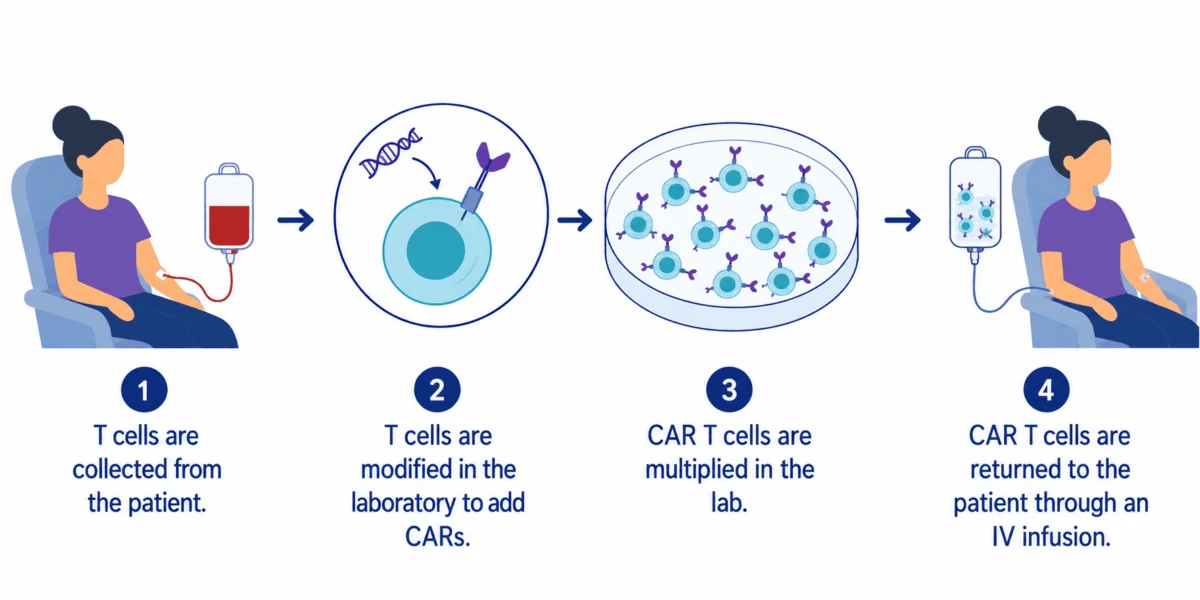
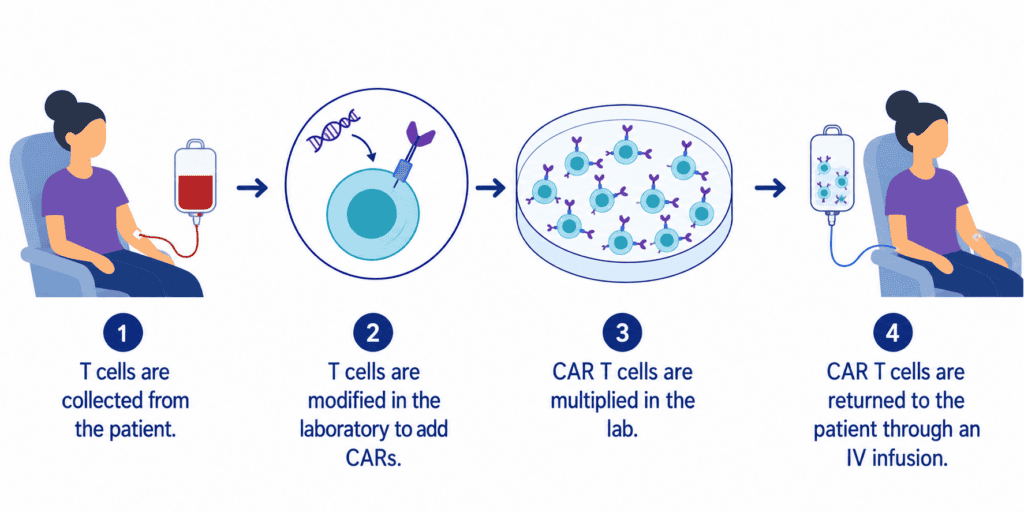
The process is highly personalized. T cells—a critical component of the white blood cell population—are harvested from the patient’s bloodstream. In a specialized laboratory, these cells undergo genetic modification to express a "chimeric antigen receptor" on their surface. This receptor acts as a biological "GPS," enabling the T cells to identify and bind to specific proteins found on the surface of cancer cells. Once these engineered cells are infused back into the patient, they multiply and launch a targeted attack on the tumor.
A Chronology of Innovation
- Early Research (1990s–2000s): The foundation of CAR T-cell therapy was built on decades of incremental research into T-cell biology and genetic engineering.
- The 2010 Milestone: A major breakthrough occurred when Dr. Carl June, a CRI Scientific Advisory Member, led a team that successfully used modified T cells to achieve remission in patients with refractory leukemia. This proof-of-concept changed the landscape of oncology forever.
- FDA Approval (2017): The momentum culminated in 2017 with the FDA’s first approval of a CAR T-cell therapy.
- Present Day: CAR T-cell treatments are now a standard-of-care option for various forms of leukemia, lymphoma, and multiple myeloma, offering hope to patients who have exhausted traditional treatment avenues.
The "Fertility Gap": Why Data Has Been Elusive
Historically, clinical trials for CAR T-cell therapy were designed to solve an immediate, life-threatening problem: how to save patients with aggressive, treatment-resistant cancers. Because these patients had typically failed previous rounds of chemotherapy, radiation, and stem cell transplants, the priority was strictly efficacy and acute safety.
This historical context makes it difficult for researchers to isolate the impact of CAR T-cell therapy on fertility. By the time a patient reaches the point of needing CAR T-cell treatment, their reproductive system has often already been impacted by their disease or their prior heavy-duty chemotherapy. Furthermore, the "lymphodepletion" process—a short, intense course of chemotherapy administered just before the CAR T-cell infusion to create space in the immune system for the new cells—adds another layer of complexity.
Distinguishing whether a patient’s fertility issues stem from the CAR T-cell therapy itself, the prior therapies, or the underlying disease process is a significant statistical challenge. To date, there has been a dearth of large-scale, prospective data specifically addressing this variable.
Preliminary Findings: Hope for the Future
To address this knowledge vacuum, the team at Blood Cancer United, in collaboration with Moffitt and the University of Florida Health, launched a patient-facing survey. By collecting real-world experiences directly from survivors, the team hopes to build a more accurate picture of post-treatment reproductive health.
The preliminary data, gathered from 106 respondents, provides a cautiously optimistic look at the landscape:
- Intent to Conceive: 32 respondents expressed a desire to have children post-treatment.
- Conception Attempts: 12 respondents reported actively trying to conceive.
- Pregnancy Success: Six pregnancies were reported—four among female respondents and two among partners of male respondents.
- Outcomes: At the time of the analysis, three pregnancies resulted in successful live births, while three remained ongoing. Notably, none of the respondents reported the use of assisted reproductive technology (ART), such as IVF.
While these numbers are small and preliminary, they are significant. They demonstrate that pregnancy and successful childbirth are not only possible but occurring among survivors of CAR T-cell therapy.
Official Perspective: Insights from Clinical Leaders
Dr. Nina Logan, Senior Director of Research and Clinical Programs at Blood Cancer United, emphasizes that while these findings are encouraging, they are merely the beginning of a broader investigation.
"These early findings are encouraging, but they also highlight how much we still need to learn," says Dr. Logan. "Our ultimate goal is to provide patients and their care teams with better, evidence-based information regarding fertility after CAR T-cell therapy. We want to ensure that patients can engage in fully informed conversations about their treatment plans, their long-term survivorship, and their aspirations for building a family."
Dr. Logan notes that the lack of clear data has historically forced clinicians to rely on generalized assumptions. By gathering specific patient data, the medical community can move toward a model of "precision survivorship," where fertility counseling is as personalized as the therapy itself.
The Broader Implications: Autoimmune Research and Beyond
The quest to understand CAR T-cell therapy extends beyond the realm of oncology. Currently, clinical trials are investigating the efficacy of CAR T-cell therapy for severe autoimmune diseases, such as lupus. Because these patients often have different medical histories compared to cancer patients, their outcomes offer a unique "control group" of sorts.
A notable 2026 report provided further evidence, documenting 14 pregnancies across 13 patients who had received CAR T-cell therapy for autoimmune conditions. With eight healthy infants born at the time of publication, the data is beginning to converge on a singular truth: the immune system’s recovery post-CAR T-cell therapy may be more robust than previously hypothesized.
Why This Research Matters
The implications of this work are profound for clinical practice:
- Informed Decision-Making: Clinicians will be better equipped to provide accurate risk assessments to patients.
- Fertility Preservation: If risks are better understood, clinicians can provide more targeted guidance on whether a patient should pursue fertility preservation (such as egg or sperm freezing) prior to treatment.
- Standardization of Care: Clear data allows for the development of clinical guidelines, ensuring that reproductive health is a standard component of post-CAR T-cell survivorship care.
Participating in the Future of Oncology
The "CAR T-Cell Therapy and Fertility Survey" remains a vital component of this ongoing effort. By inviting adults over the age of 18 to share their experiences, researchers are creating a robust dataset that will eventually influence clinical policy and patient education.
As the field of immunotherapy matures, the definition of a "successful" cancer treatment is expanding. Success is no longer just the absence of cancer cells; it is the presence of a healthy, fulfilling life thereafter. By participating in research, patients are not just providing data—they are helping to pave a clearer path for the generations of survivors who will follow them.
For those interested in contributing their experience to this mission, the survey remains open to all adults who have received CAR T-cell therapy for blood cancer. Every response brings the medical community one step closer to understanding the full impact of this life-saving innovation.
Selected Sources for Further Reading
- Pediatric cancer immunotherapy and potential for impact on fertility: A need for evidence-based guidance, Transplant Cell Ther (2024).
- Fertility outcomes following CAR T-cell therapy: Results from a patient-facing survey, Tandem Meetings | Transplantation & Cellular Therapy Meetings of ASTCT and CIBMTR (2026).
- Pregnancies in patients with autoimmune disease receiving CAR T-cell therapy, N Engl J Med (2026).
- Approved Cellular and Gene Therapy Products, U.S. Food and Drug Administration (2026).
Disclaimer: This article is provided for informational purposes only. The organizations mentioned do not endorse or recommend specific study participation. Please consult your oncology team or the study coordinators directly to determine if participation is appropriate for your individual medical situation.