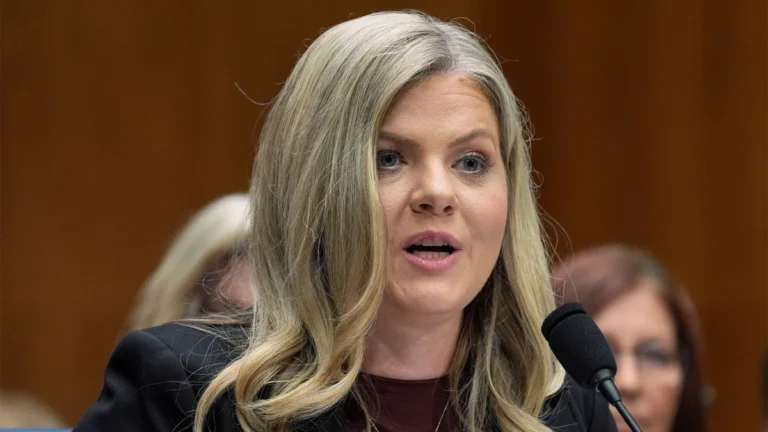









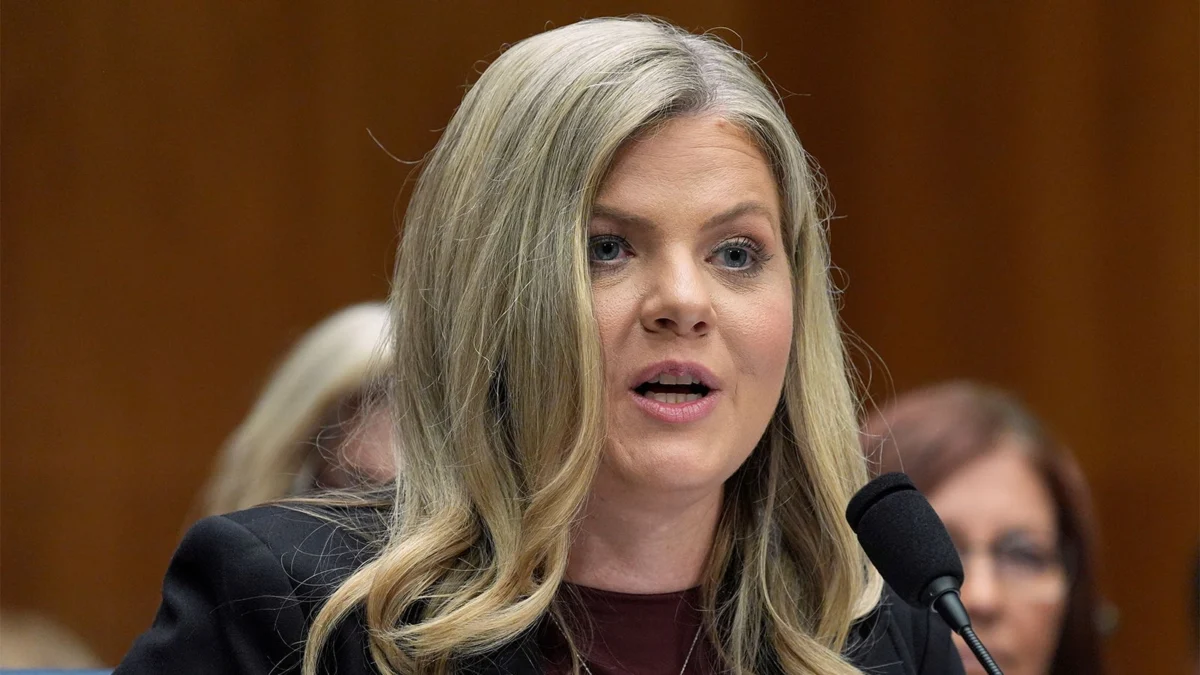
In a high-stakes confirmation hearing that underscored the deepening rift between scientific consensus and the current administration’s policy agenda, Dr. Heidi Overton, President Donald Trump’s nominee to lead the Food and Drug Administration (FDA), navigated a gauntlet of questions regarding vaccine safety, reproductive health, and the future of public health regulation.
As the nominee seeks to take the helm of an agency currently grappling with internal instability and a exodus of veteran staff, her testimony served as a litmus test for whether the FDA can maintain its role as an objective arbiter of science under intense political pressure.
The Core Conflict: Science vs. Executive Policy
The central tension of Thursday’s hearing revolved around the Trump administration’s recent, controversial initiatives targeting childhood immunization schedules. Dr. Overton, a physician and current White House adviser who has been a key architect of various health initiatives, found herself in the unenviable position of defending the FDA’s gold-standard safety profile while standing beside an administration that has openly questioned the necessity of long-established vaccine mandates.
The controversy was exacerbated by recent rhetoric from the White House, specifically President Trump’s unfounded claim that the MMR (measles, mumps, and rubella) vaccine could be "quite lethal." When pressed by Senate Health Committee Chairman Sen. Bill Cassidy (R-La.), a physician himself, to formally distance herself from these remarks, Overton walked a narrow tightrope.
"Right now, every vaccine that is on the market has been determined to be safe and effective," Overton stated, including the MMR vaccine in that affirmation. However, she pointedly declined to explicitly label the President’s past comments as factually incorrect, instead pledging to adhere to the statutory requirements of the FDA commissioner—a response that left several committee members visibly unsatisfied.
Chronology of Institutional Friction
To understand the gravity of Overton’s potential appointment, one must examine the turbulent timeline of the FDA over the last two years:
- Pre-2024: The FDA consistently maintained rigorous standards for vaccine approval and reproductive health medication access.
- Early 2025: The White House issues an executive order demanding the "spacing out" of childhood vaccinations, a move widely criticized by the medical community as lacking clinical justification.
- May 2025: Dr. Marty Makary, the previous FDA Commissioner, resigns amidst widespread reports of internal dysfunction and a 20% loss of agency personnel.
- June 2025: Dr. Heidi Overton is nominated to replace Makary, having served as an adviser during the administration’s most aggressive regulatory rollbacks.
- July 2025: The current confirmation hearing takes place, marked by heated exchanges over the politicization of the FDA’s scientific review process.
The departure of Dr. Makary, who was the first to face the full weight of the administration’s conflicting demands, set a grim precedent. His tenure was defined by "scientific disputes, leadership changes, and a string of media stories detailing low morale," according to committee records. The loss of nearly one-fifth of the agency’s workforce since the current administration took office suggests a deep-seated crisis of confidence that the incoming commissioner will be forced to address on day one.
Supporting Data: A Landscape of Uncertainty
The challenges facing the FDA are not merely ideological; they are structural and systemic. The agency oversees thousands of products—from life-saving cancer drugs to consumer vaping devices—that are now at the center of a tug-of-war between public health advocates and proponents of deregulation.
The Mifepristone Debate
A focal point of the committee’s concern was the abortion drug mifepristone. Having previously worked at the America First Policy Institute, where she publicly branded the mailing of the drug as "dangerous" and "chemical abortion on demand," Overton faced pointed questions from Sen. Patty Murray (D-Wash.).
Overton attempted to pivot from her past commentary, stating that the drug "has met the safety and efficacy determinations of the FDA." However, the nominee refused to "prejudge" an ongoing, administration-ordered safety review of the medication. This hesitation has put her in the crosshairs of moderate Republicans like Senators Susan Collins and Lisa Murkowski, both of whom have historically defended abortion access and are now being asked to vote on a nominee whose past rhetoric suggests a potential reversal of agency precedent.
E-Cigarette Regulatory Shifts
Beyond pharmaceuticals, the committee scrutinized the FDA’s recent pivots on flavored e-cigarettes. Previously restricted under earlier administrations due to the epidemic of youth vaping, new rules have allowed several fruit-flavored products to enter the market. Overton defended these approvals, citing the findings of FDA scientists who argued that such products aid in adult smoking cessation. The argument, however, remains contentious, as pediatricians and public health officials argue that the risks to youth far outweigh the potential benefits to adult smokers.
Official Responses and Political Stakes
Chairman Cassidy’s frustration was palpable throughout the proceedings. Having previously received—and been disappointed by—guarantees from Health Secretary Robert F. Kennedy Jr. regarding the independence of public health agencies, Cassidy was in no mood for ambiguity.
"Kennedy gave me guarantees, and he did not keep them," Cassidy noted, directly challenging Overton. "If the president asks you to do something that goes against those guarantees you give us today, what will you do?"
Overton’s response—that she would "follow the statutory requirements" and provide her "best advice"—was interpreted by skeptics as a non-answer. For the committee, the question of whether a commissioner will be "radically honest" when confronted with political pressure is the ultimate test of their fitness for the office.
Implications for the Future of Public Health
If confirmed, Dr. Overton will inherit an agency of 16,000 employees, many of whom are watching the confirmation process as a barometer for the agency’s future autonomy. The implications of her confirmation are significant:
- Scientific Independence: Can the FDA remain the gold standard for global medicine if the Commissioner is perceived as an arm of the White House’s ideological agenda?
- Internal Morale: The loss of 20% of the staff is a massive blow to institutional knowledge. The nominee’s lack of experience in managing large-scale bureaucracies—unlike her predecessor, who struggled significantly—raises concerns about her ability to stabilize the workforce.
- Public Trust: The FDA’s authority relies entirely on the public’s belief that its decisions are based on data, not the whims of politicians. Every instance where a nominee refuses to affirm the safety of proven medical interventions like the MMR vaccine further erodes that trust.
Furthermore, the lack of financial ties to the industry, which was highlighted as a positive in her disclosure, provides a clean slate but does little to mitigate the political baggage she carries. With $50,000 to $100,000 in student loans and a background primarily in clinical research and policy advocacy, Overton represents a new breed of nominee—one that prioritizes ideological alignment with the appointing administration over the traditional, apolitical tenure of previous FDA leaders.
As the Senate Health Committee moves toward a potential vote, the outcome remains uncertain. The pressure on moderate senators to secure the integrity of the FDA, while simultaneously navigating the demands of a polarized electorate, ensures that the confirmation process will remain one of the most consequential chapters in the agency’s history. For Dr. Overton, the path forward requires not just technical expertise, but the political fortitude to stand against the very administration that nominated her should their policies threaten the foundational scientific integrity of the institution she seeks to lead.