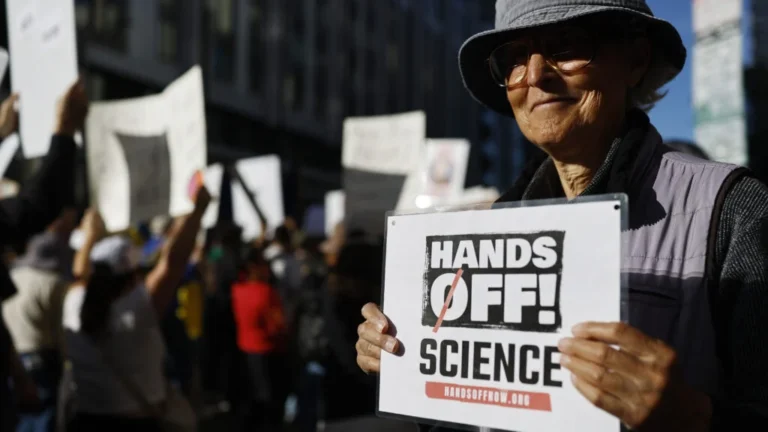












The U.S. Food and Drug Administration (FDA), an agency historically anchored by the bedrock of empirical data and clinical consensus, currently stands at a precarious crossroads. During a high-stakes confirmation hearing on Thursday, Dr. Heidi Overton, President Donald Trump’s nominee to lead the agency, faced a gauntlet of skepticism from members of the Senate Health, Education, Labor, and Pensions (HELP) Committee. As the administration continues to challenge the established scientific status quo, Overton’s testimony provided a glimpse into the internal friction between executive mandates and the institutional integrity of federal health oversight.
The Core Conflict: Science vs. Political Mandate
The central tension of Thursday’s hearing centered on whether the nominee could—or would—defend long-standing public health standards against a White House that has increasingly prioritized ideological skepticism over traditional medical guidance.
Overton, a physician and current White House adviser who has been instrumental in drafting recent executive orders, found herself in the unenviable position of balancing her professional credentials with her political loyalty. Most notably, senators pressed her on the administration’s aggressive push to modify decades-old childhood vaccination schedules.
The political context is fraught: Overton was present in the Oval Office when President Trump erroneously characterized the combined measles, mumps, and rubella (MMR) vaccine as “quite lethal.” When pressed by committee chair Sen. Bill Cassidy (R-La.), a fellow physician, to explicitly repudiate that claim, Overton opted for a carefully measured response. She affirmed that all currently marketed vaccines have been deemed “safe and effective,” yet she notably declined to directly contradict the President’s past rhetoric, leaving lawmakers concerned about her independence.
Chronology of Institutional Friction
The current volatility at the FDA is not a new development, but rather the latest chapter in a turbulent tenure for the agency under the Trump administration.
- 2023–2024: The administration initiates a series of investigations into the safety of the abortion medication mifepristone, following pressure from anti-abortion coalitions.
- May 2025: Dr. Marty Makary, the previous FDA commissioner, resigns following a tenure marred by high staff turnover and internal disputes regarding scientific autonomy.
- June 2025: President Trump signs an executive order calling for a restructuring of childhood immunization protocols, prompting widespread alarm in the public health community.
- July 2025: Dr. Heidi Overton is formally nominated as FDA Commissioner.
- August 2025: The Senate HELP Committee convenes for the confirmation hearing, marked by intense questioning regarding the nominee’s past writings on “chemical abortion” and the scientific validity of the MMR vaccine.
The departure of Dr. Makary, who served as a polarizing figure, left a leadership vacuum characterized by low morale. Internal data suggests that the FDA has hemorrhaged approximately 20% of its workforce since the start of the current administration, with departures attributed to buyouts, resignations, and a perceived erosion of the agency’s scientific mission.
Supporting Data and Regulatory Challenges
Overton’s path to confirmation is complicated by the breadth of the agency’s portfolio, which includes everything from the oversight of high-stakes reproductive medicine to the regulation of the booming e-cigarette industry.
The Mifepristone Debate
During her time at the America First Policy Institute, Overton authored pieces describing the FDA’s decision to allow the mailing of mifepristone as “dangerous to women,” characterizing the procedure as “chemical abortion on demand.” When questioned by Sen. Patty Murray (D-Wash.), Overton pivoted to a bureaucratic defense, noting that the drug has met FDA safety and efficacy standards.
However, the committee remains deeply divided. Republicans, led by Sen. Cassidy, have released reports alleging that companies distributing the drug may be in violation of oversight requirements regarding physician prescription protocols. Whether Overton will use her authority to initiate a formal safety review—a move requested by anti-abortion factions—remains the primary source of anxiety for Democratic senators who fear a politicized reversal of access.
The E-Cigarette Paradox
The regulation of flavored e-cigarettes represents a significant shift from previous policies. While the FDA under earlier administrations moved to restrict sweet-flavored vaping products due to their appeal to minors, the current agency has granted approval to several fruit-flavored products. Overton defended these approvals, citing internal FDA scientific determinations that these products meet the statutory standard of being “appropriate for the protection of public health” by facilitating smoking cessation for adults.
Official Responses and Political Implications
The committee’s reaction to the hearing was lukewarm at best, with key moderate senators holding their cards close to the vest.
Sen. Susan Collins (R-Maine), whose support is crucial in a closely divided chamber, focused her inquiry on the e-cigarette approvals, signaling that her vote may hinge on the protection of youth rather than the administration’s broader deregulatory agenda. Similarly, Sen. Lisa Murkowski (R-Alaska) remains a wildcard, as her past support for reproductive rights puts her in direct conflict with the administration’s stance on the abortion pill.
Sen. Cassidy’s frustration was palpable. Reflecting on his past dealings with Health Secretary Robert F. Kennedy Jr., who reportedly failed to uphold guarantees regarding vaccine standards, Cassidy warned: "Kennedy gave me guarantees, and he did not keep them. If the president asks you to do something that goes against those guarantees you give us today, what will you do?"
Overton’s response—that she would “follow the statutory requirements” while offering the President her best advice—failed to mollify skeptics who fear that the statutory mandate will be interpreted through an ideological lens.
Implications for the Future of Public Health
If confirmed, Dr. Overton will be tasked with steering a massive, 16,000-person bureaucracy with no prior executive experience in managing a large government entity. Unlike her predecessor, she enters the role without the burden of complex financial conflicts of interest, having reported no investments in healthcare or food companies. However, she faces the significant hurdle of a demoralized workforce that is currently struggling to reconcile professional scientific ethics with a rapid, top-down mandate for change.
The implications for the American public are significant. Should the FDA move toward a more permissive stance on flavored vaping products or a restrictive stance on reproductive health, the agency’s reputation as a neutral arbiter of safety will be further tested. Furthermore, if the administration follows through on its threat to alter long-standing vaccine protocols, the FDA may find itself in a direct legal and public relations battle with the medical community at large.
The committee has yet to schedule a vote on Overton’s nomination. As it stands, her path forward requires not just the support of a Republican majority, but a demonstration that she can withstand the pressures of an administration that views the FDA not as an independent scientific authority, but as a lever of policy implementation. The coming weeks will determine whether she can satisfy the senators’ demand for “radical honesty” or whether she will become the latest casualty of a White House that demands conformity over clinical independence.