









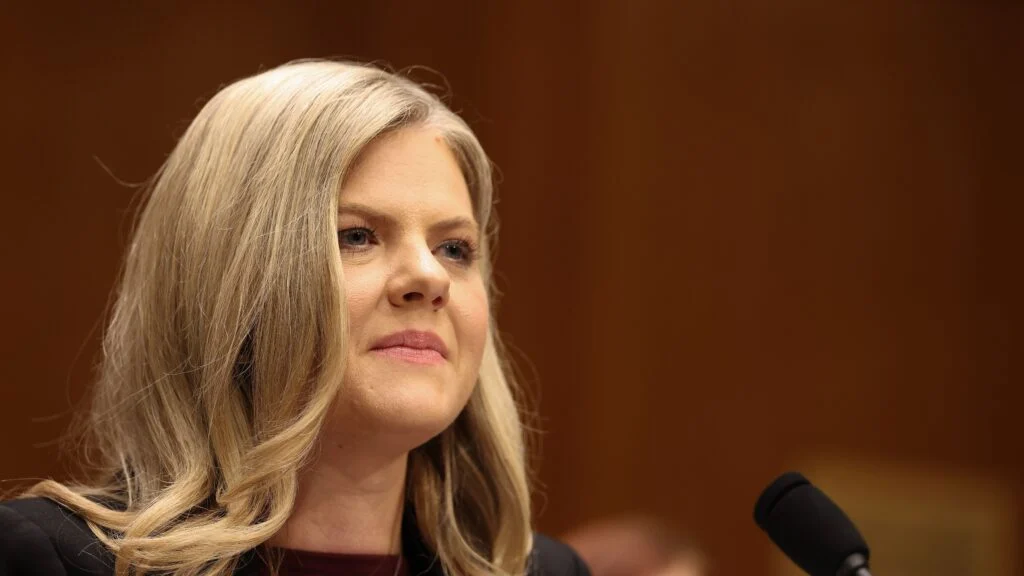
The confirmation hearing for Dr. Heidi Overton, President-elect Trump’s nominee to lead the Food and Drug Administration (FDA), concluded this past Thursday, leaving many in the medical and reproductive health communities deeply unsettled. While the hearing touched upon a broad array of public health concerns—ranging from vaccine protocols to food safety standards—the most pointed tension centered on the future of mifepristone, the primary medication used for medication abortion.
For those tracking the intersection of federal health policy and reproductive rights, the stakes could not be higher. As the nominee avoided definitive commitments regarding the protection of current FDA protocols, critics warn that the agency is on the precipice of a significant, ideologically driven shift. Underpinning this concern is the reality that the FDA, an agency traditionally built on the bedrock of empirical science and clinical data, now faces the prospect of a leadership transition that prioritizes political alignment over established medical consensus.
A Chronology of Contention: Two Decades of Scrutiny
To understand the current anxiety surrounding the Overton nomination, one must look back at the twenty-year history of mifepristone’s regulatory journey in the United States. Since its approval, the drug has existed in a state of perpetual legal and political siege, arguably receiving more congressional scrutiny and judicial interference than perhaps any other pharmaceutical in modern history.
The Early Years and the Regulatory Burden
Following its initial approval, mifepristone was subjected to a series of unique, medically unnecessary restrictions—often referred to as REMS (Risk Evaluation and Mitigation Strategy) protocols. These include requirements for clinician certification, special pharmacy registration, and patient signature mandates. Despite these hurdles, the medication has maintained an exemplary safety profile.
The Rise of Telehealth and the "Shield" Era
As the political climate post-Roe v. Wade shifted, access to care became increasingly difficult for patients in restrictive states. Telemedicine emerged as a vital bridge, allowing patients to consult with clinicians and receive medication by mail. This development effectively bypassed the physical barriers of clinics, many of which had been the site of decades of harassment and intimidation. Today, roughly 30% of U.S. abortion patients utilize telehealth, a shift that has fundamentally altered the landscape of reproductive healthcare.
Recent Judicial Challenges
The legal theater has only intensified in recent years. In 2024, the Supreme Court in FDA v. Alliance for Hippocratic Medicine dismissed a nationwide challenge to the drug’s approval on the grounds of standing. However, the victory was short-lived. The state of Louisiana quickly pivoted to a new legal strategy, targeting the legality of remote prescribing. While the Supreme Court temporarily stayed an order from the 5th Circuit that would have mandated in-person dispensing, the litigation remains active, and the pressure on the FDA to "re-evaluate" its stance is mounting.
Supporting Data: Safety vs. Political Narrative
The dissonance between the political rhetoric surrounding mifepristone and the clinical reality is stark. Data from the FDA itself, alongside years of global clinical application, suggests that mifepristone is not only safe but is also a standard-of-care medication for both pregnancy termination and the management of early pregnancy loss.
Comparative Safety Metrics
Critics of current abortion access often point to "risks" associated with mifepristone, yet these claims wither under statistical scrutiny. Reports of adverse events remain exceptionally rare. When placed in the context of other common over-the-counter medications, the disparity is glaring. For instance, acetaminophen, which is widely available in retail environments without any oversight, is linked to hundreds of deaths annually. Mifepristone, by contrast, has no definitive causal link to maternal mortality in the context of its intended use.
The Role of Misoprostol
When paired with misoprostol, the regimen is globally recognized as the gold standard for reproductive care. Despite this, the FDA has notably failed to add miscarriage management to the mifepristone label, a bureaucratic omission that forces patients experiencing natural pregnancy loss to navigate the same complex, restrictive web of regulations as those seeking elective termination. This is not a matter of scientific caution; it is a matter of administrative inertia, perpetuated by a climate that fears the political fallout of normalizing the drug.
Official Responses and the Overton Hearing
The confirmation hearing provided a window into the nominee’s philosophy regarding the agency’s independence. Throughout the proceedings, Dr. Overton faced persistent questioning from both sides of the aisle.
When pressed by Senator Maggie Hassan (D-N.H.) to name a single instance where the current administration’s public health guidance—specifically regarding vaccine schedules and food safety—might have been incorrect, Dr. Overton remained silent. This inability to distance the agency’s scientific mission from the administration’s political agenda has alarmed public health experts.
Furthermore, Dr. Overton’s comments regarding the internal FDA research on mifepristone were particularly telling. She confirmed that the agency’s safety study would be "immediately on [her] desk" upon her confirmation. When coupled with the vocal support she has received from organizations like Americans United for Life, whose leadership has openly discussed the intent to "expose" the risks of the drug, the implication is clear: the incoming administration intends to use the FDA’s regulatory levers to undermine access to abortion medication.
Implications for the Future of Public Health
The potential consequences of an ideologically captured FDA extend far beyond the immediate debate over abortion.
The Erosion of Institutional Trust
Public trust in the FDA’s drug approval process is a hard-won commodity that took decades to build. Should the agency begin to treat settled scientific evidence as "negotiable," it risks a catastrophic collapse in credibility. If the approval of drugs becomes a matter of partisan debate rather than rigorous clinical review, the entire pharmaceutical pipeline—and the public’s confidence in medical breakthroughs—is jeopardized.
The "Fox in the Hen House"
The removal of over 3,000 FDA staff members in the past year, combined with the resignation of the previous commissioner, suggests an agency in the midst of a significant power vacuum. Dr. Overton enters an environment where the internal expertise of the agency is being hollowed out, leaving it vulnerable to external political pressures. The fear is that the FDA will cease to be an objective referee of medical safety and instead become an arm of the executive branch’s social policy.
The "Horse Has Left the Stable"
Despite the aggressive posture of anti-abortion activists, there is a limit to the damage they can inflict. The infrastructure for reproductive autonomy has expanded to include resilient telehealth networks and cross-border clinical support. Even if the FDA were to revoke its current approvals, the demand for reproductive care remains, and the medical community has already begun to prepare for "Plan B" scenarios, including the use of misoprostol-only regimens.
Ultimately, the battle over mifepristone is a battle over the soul of the FDA. By attempting to restrict access to a safe, effective, and widely used medication, political actors are not only endangering the lives of patients who rely on these drugs for health and autonomy, but they are also dismantling the very institutions that protect the American public’s health.
As the confirmation process moves toward a final vote, the scientific community remains vigilant. The question is no longer just about the future of a single drug, but about whether the United States will continue to allow science to dictate health policy, or whether that authority will be permanently surrendered to the demands of political ideology. Protecting the integrity of the FDA is not merely a policy preference; it is a fundamental requirement for a functioning, science-driven society.