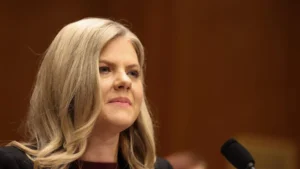












In a high-stakes confirmation hearing that underscored the deepening divide between scientific autonomy and political influence, FDA commissioner nominee Heidi Overton faced a grueling examination by the Senate Health, Education, Labor, and Pensions (HELP) Committee yesterday. As the nation watches the intersection of public health policy and the incoming administration’s agenda, Overton’s performance—characterized by calculated caution and adherence to procedural rhetoric—has left both supporters and critics questioning how the agency will navigate the pressures of a new political era.
While STAT’s reporting highlights a strategy of evasion regarding hot-button social and medical issues, the broader implications of her testimony point to a potential shift in how the FDA interacts with the executive branch, particularly under the influence of figures like Robert F. Kennedy Jr.
Main Facts: The Strategy of Neutrality
The primary takeaway from the hearing was Overton’s deliberate refusal to commit to firm stances on polarizing topics, including vaccine efficacy, reproductive health, and the agency’s independence from political interference. When pressed by senators on whether she would act as a bulwark against potential directives from President Trump or the proposed health secretary, Robert F. Kennedy Jr., Overton pivoted repeatedly to "existing law" and "established agency policy."
This approach, while common for nominees seeking to minimize friction during the confirmation process, was met with frustration by committee members on both sides of the aisle. The hearing served as a microcosm of the current tension within the American health apparatus: the struggle to maintain the FDA’s reputation as a data-driven, apolitical entity while facing unprecedented scrutiny from populist political movements.
Chronology of a Contentious Day
The hearing unfolded in several distinct phases, each revealing a different facet of the nominee’s defensive strategy:
- Morning Session (Opening Statements): Overton began by emphasizing her commitment to the FDA’s gold-standard regulatory framework. She spoke at length about the need to modernize drug approvals and address supply chain vulnerabilities.
- Mid-Day (The Vaccine Gauntlet): When asked about the agency’s role in vaccine safety and efficacy—a topic heavily politicized by recent rhetoric from the incoming administration—Overton maintained that the FDA’s mission is to be guided by clinical data. However, she stopped short of outright endorsing the current administration’s vaccine protocols, choosing instead to defer to "ongoing scientific reviews."
- Afternoon (The Abortion Question): Perhaps the most volatile exchange involved the regulation of abortion medication. Overton dodged direct inquiries about potential changes to current access, repeatedly stating that the agency’s role is to ensure drugs are safe and effective, rather than to legislate reproductive rights.
- Late Afternoon (Independence and Executive Pressure): Senators directly questioned her ability to resist pressure from a Health and Human Services (HHS) secretary known for skepticism toward the medical establishment. Overton asserted that she would be a "steward of the agency," though she declined to provide a concrete plan for how she would handle direct conflicts with the White House.
Supporting Data: The Political Landscape
The context surrounding Overton’s nomination is framed by significant shifts in public and political trust in health institutions. Data from recent polling suggests that confidence in the FDA has fluctuated significantly since the onset of the COVID-19 pandemic.
- Public Trust: According to recent analyses, trust in the FDA among independent voters has dropped by nearly 15% since 2020.
- Legislative Pressure: The HELP Committee, currently grappling with a legislative backlog, is under immense pressure to finalize appointments. With the pharmaceutical industry awaiting clarity on regulatory pathways for new therapies, the speed of this confirmation process is tied to broader economic interests.
- Global Context: As STAT reporter Jason Mast is currently on the ground in Shanghai, the global pharmaceutical supply chain is increasingly volatile. Overton’s testimony touched on the need for "onshoring" critical drug manufacturing, a move that would require significant capital investment and international trade recalibration.
Official Responses and Senate Reactions
The committee’s reaction to Overton’s "non-answers" was starkly divided.
Senator Bernie Sanders (I-Vt.), known for his focus on drug pricing and transparency, expressed concern that the nominee’s refusal to challenge potential political overreach was a "red flag for the integrity of the agency." He noted that an FDA commissioner must be willing to say "no" to the President if public safety is at risk.
Conversely, Republican members of the committee praised her discipline, framing her refusal to take bait on social issues as "professionalism." Senator Bill Cassidy (R-La.) remarked that the FDA commissioner’s job is to enforce the law as written by Congress, not to engage in the ideological battles of the day.

Outside the chamber, advocacy groups have reacted with a mixture of apprehension and tactical silence. Pharmaceutical lobbying groups have generally supported her nomination, hoping for a return to predictable regulatory decision-making, while public health watchdogs have called for more transparency regarding her communication with the transition team.
Implications: The Future of the FDA
The implications of Overton’s performance reach far beyond the halls of the Senate. Her hearing signals a transition into a new, more contentious chapter for the FDA.
1. The Erosion of Agency Autonomy
The primary fear among career FDA scientists is that the agency will be sidelined in favor of political agendas. If the commissioner is viewed as someone who will not push back against improper influence, the morale of the agency’s thousands of scientists may suffer, leading to a "brain drain" of top-tier talent.
2. Regulatory Predictability
For the biotech and pharmaceutical sectors, the most important outcome of the confirmation is stability. Regardless of her personal politics, the industry is looking for an FDA that maintains clear, consistent, and science-based pathways for drug approval. If Overton’s "caution" translates into a paralyzed agency, it could delay the approval of life-saving therapies and harm the U.S. competitive edge in global biotech innovation.
3. The "China Factor"
With the global supply chain for Active Pharmaceutical Ingredients (APIs) heavily reliant on China, the FDA’s role in international inspections is more critical than ever. As our colleagues in Shanghai have reported, the geopolitical friction between the U.S. and China is directly impacting the speed and reliability of drug manufacturing. Overton will be tasked with balancing the need for rigorous oversight of foreign facilities while maintaining a supply of essential medicines that the U.S. currently cannot produce domestically.
4. Navigating the Kennedy Influence
The shadow of Robert F. Kennedy Jr. looms large over the entire HHS transition. Whether or not Overton is confirmed, the new commissioner will inevitably have to define the boundaries between their office and the HHS secretary’s office. If she fails to establish these boundaries early, the FDA risks becoming a secondary player in its own regulatory sphere, subservient to the ideological whims of political appointees.
Conclusion
The confirmation hearing of Heidi Overton has provided a window into the precarious state of the FDA. By choosing to deflect rather than commit, Overton has survived the initial gauntlet of the Senate. However, her true test will not be in the hearing room, but in the day-to-day operations of the agency once she takes the helm.
In an era where the boundary between public health and political warfare is increasingly porous, the FDA requires a leader who can command respect through transparency, scientific rigor, and the courage to uphold the agency’s mission against all pressures. Whether Overton can rise to that challenge—or if she will become the instrument of the very political forces she refused to discuss—remains the most significant question facing the U.S. healthcare sector today.
As we continue to track this story, the focus will remain on the intersection of these legislative maneuvers and the reality of life-science innovation. With the biotech landscape shifting rapidly, both in Washington and abroad in hubs like Shanghai, the eyes of the global scientific community remain fixed on the FDA’s next moves. The "need-to-know" is simple: the agency is at a crossroads, and the direction it takes under its next leader will define public health outcomes for a generation.