









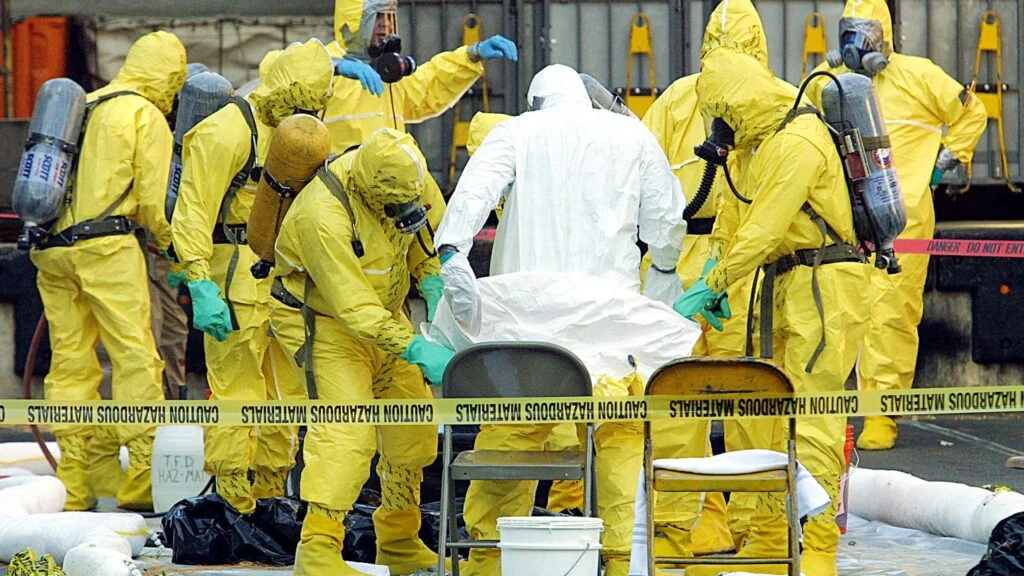
Twenty-five years ago, as the United States struggled to process the psychological trauma of the September 11 terrorist attacks, a secondary, silent terror began to unfold. In the autumn of 2001, envelopes containing weaponized anthrax spores were funneled into the nation’s postal system, targeting media outlets and congressional offices. By the time the dust settled, 22 people had contracted anthrax disease, five had died, and the nation’s sense of security had been fundamentally altered.
The attacks were not merely a localized tragedy; they were a systemic shock that cost billions of dollars in cleanup, litigation, and public health restructuring. Today, as the landscape of biological threats shifts from the mechanical distribution of spores to the potential for AI-driven pathogen development, the lessons of 2001 have never been more relevant.
The Chronology of a Silent Crisis
The first warning signs emerged from an unlikely source: the offices of American Media Incorporated (AMI) in Florida. In October 2001, a photo editor for The Sun tabloid fell severely ill. An astute clinician, noticing telltale signs in a spinal tap, suspected Bacillus anthracis.
When the Centers for Disease Control and Prevention (CDC) was alerted via its newly established Laboratory Response Network, investigators initially operated under the assumption of a natural, environmental exposure. However, the discovery of a second infected AMI employee—occurring just weeks after the 9/11 attacks—transformed the investigation into a bioterrorism inquiry.
The CDC rapidly mobilized, establishing an Emergency Operations Center (EOC) within one of its auditoriums. What followed was a complex, high-stakes epidemiological race. The investigation eventually identified two distinct mailings:
- The September 18 Mailing: Often referred to by responders as "crunchy" anthrax due to the clumping of the powder, these envelopes were primarily associated with cutaneous (skin) infections among media workers.
- The October 9 Mailing: Containing a "fine powder" formulation, these letters were more easily aerosolized, leading to more severe inhalational disease and infecting postal workers along the distribution chain.
This "crude experiment," as some investigators viewed it at the time, demonstrated a chilling mastery of pathogen formulation. It raised immediate fears of a larger, coordinated assault, though fortunately, no further intentional releases of this magnitude occurred.
Supporting Data: When Science Met the Unknown
The 2001 investigation relied heavily on emerging molecular testing technologies that were, at the time, relatively novel. By comparing isolates recovered from patients, environmental samples, and four of the powder-containing envelopes, scientists were able to prove that the agents were indistinguishable, confirming a common source.
However, the scientific data also revealed a profound failure of existing models. Pre-attack literature had largely concluded that the risk of re-aerosolization of deposited anthrax spores was low. Consequently, existing guidance focused almost exclusively on the immediate decontamination of individuals and offices where envelopes were physically opened.
The subsequent illness and deaths of postal workers—individuals who were nowhere near the intended targets but were exposed through the processing of the mail—shattered these assumptions. The investigation forced a total pivot in public health policy, eventually leading to the administration of antimicrobial prophylaxis to an estimated 32,000 people. This mass response highlighted a critical lesson in epidemiology: in a deliberate biological event, initial clinical data is often misleading, and investigators must look far beyond the intended target to map the entire path of dissemination.
Official Responses and Systemic Vulnerabilities
The aftermath of the anthrax attacks triggered a massive federal response, resulting in the implementation of "select-agent" rules and the introduction of advanced mail-screening technologies. Today, the U.S. postal system is far more resilient, and the mail volume itself has decreased, reducing the surface area for such an attack.
Yet, as we reflect on the 25th anniversary, the infrastructure to respond to both natural and intentional infectious diseases remains precarious. Recent reports from the Center for Strategic and International Studies (CSIS) indicate that Americans face greater risks from biological threats today than at any time this century. This surge in risk is fueled by a volatile intersection of factors:
- Technological Acceleration: Artificial Intelligence is increasingly capable of facilitating the design and, potentially, the generation of dangerous biothreat pathogens.
- Institutional Erosion: Budget cuts to civilian and military biodefense programs have left the nation’s public health apparatus stretched thin.
- Workforce Attrition: The CDC is currently grappling with a significant loss of subject matter experts and scientific leadership, with covered civilian staff levels reported to be roughly 28% lower than in 2024.
Implications: A Call for a New Biodefense Strategy
The current atmosphere of public health is marked by a series of outbreaks—from Hantavirus and Ebola to Cyclospora and measles—that serve as a grim reminder of our biological vulnerability. To bridge the widening gaps in readiness, three core lessons from the 2001 response must be institutionalized.
1. Detection Must Lead to Rapid Action
Detection is useless without interpretation and execution. There is a growing concern that current administrative frameworks have undermined independent, evidence-based decision-making. A real-time biothreat signal requires a coordinated, swift response that bridges the gap between federal agencies and state/local governments. Any delay in this relay can prove fatal.
2. Prepare to Be Wrong
The anthrax investigation taught us that initial assumptions are frequently flawed. A culture of preparedness must prioritize the management of uncertainty. It requires an environment where dissenting internal dialogue is encouraged, not suppressed. Currently, the intolerance for such discourse within certain health departments serves as a major impediment to the rapid course correction necessary during a crisis.
3. Capability Must Be Maintained, Not Just Built
Technology, no matter how sophisticated, cannot replace the human element. The strength of the 2001 response lay in the "shoe-leather" epidemiology of experienced professionals, established networks, and practiced relationships. Without a sustained investment in the people who operate these institutions, we are building a shell of defense that will crumble under the weight of a high-consequence event.
Conclusion: The Path Forward
Twenty-five years later, the shadow of the anthrax attacks reminds us that the first signal of a biological event is rarely the whole story. The strength of our future response will not be measured by the sensitivity of our sensors alone, but by our institutional ability to maintain the relationships, scientific integrity, and public trust required to act in the face of the unknown.
As we look toward the next quarter-century, the specter of an intentional biological threat should act as a catalyst for a renewed commitment to cross-sector coordination. We must move beyond the reactive posture of the past and invest in a proactive, science-driven culture of biodefense. The vulnerabilities we see today are not insurmountable, but they require the recognition that our most valuable defense is not a machine or an algorithm—it is the seasoned expert who knows when to look beyond the initial data to protect the public.
Daniel B. Jernigan, M.D., M.P.H., is a contributing scholar at the Johns Hopkins Bloomberg School of Public Health and previously served 31 years at the CDC. During the national investigation of bioterrorism-related anthrax in 2001-2002, he participated as the lead for the Epidemiology and Surveillance Team of the CDC’s Emergency Operations Center.