







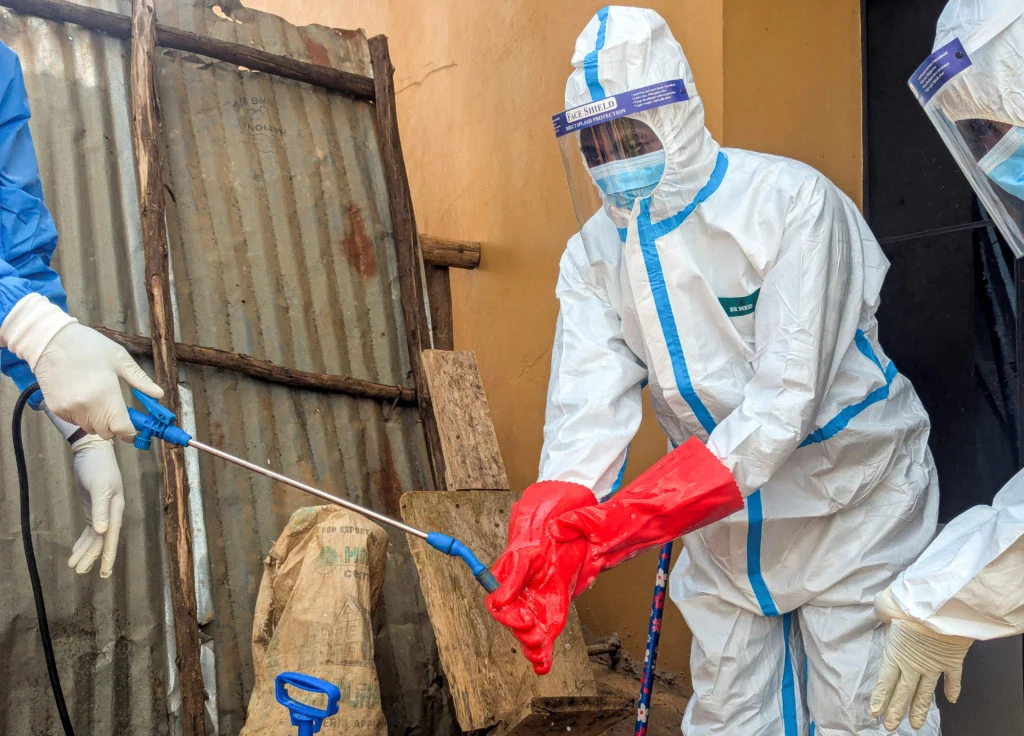
BUNIA, Congo — The Democratic Republic of Congo (DRC) is currently grappling with an Ebola outbreak of unprecedented proportions, testing the limits of the nation’s fragile healthcare infrastructure. As of late September 2026, health officials have issued a dire warning: while some pockets of the country show signs of stabilization, the overall situation remains volatile and uncontrolled. The World Health Organization (WHO) has highlighted a critical shortage of frontline personnel as the primary obstacle to stemming the tide of a virus that is now on track to surpass the devastating 2014-2016 West Africa epidemic.
The Current State of the Emergency: Main Facts
The numbers are staggering. According to the latest government data, the outbreak has claimed 3,759 lives, with 7,773 confirmed cases reported across seven provinces. The virus, characterized by its rapid transmission and high mortality rate, continues to thrive in an environment defined by conflict, displacement, and systemic instability.
The WHO’s most recent situation report paints a complex picture of a disease that is geographically widespread. In the eastern province of North Kivu, a terrifying surge has seen cases climb by 73% over a mere three-week period. This spike has overwhelmed existing facilities, creating a desperate need for more treatment centers and, more importantly, the skilled hands required to staff them.
"The outbreak is still not under control and remains spread across a wide geographic area," stated Marie Roseline Belizaire, the WHO’s regional emergency director for Africa. While the epicenter in Ituri and the province of Haut-Uele have seen modest declines in transmission—falling by 26% and 15% respectively between late August and late September—these gains are easily overshadowed by the relentless climb of cases in North Kivu.
A Chronology of the 2026 Outbreak
The current crisis did not emerge in a vacuum. It is the result of a convergence of factors that have hindered public health interventions since the virus first began its recent climb.
- Mid-2026: As cases began to accelerate, the DRC government and international partners scrambled to establish a coordinated response. However, the geographic spread across seven provinces made logistics a nightmare.
- July 2026: Tensions reached a breaking point when frontline health workers initiated a strike. The primary grievance: unpaid wages. The government, represented by Health Minister Roger Kamba, acknowledged the issue, citing fraudulent entries on payroll lists—individuals not involved in the response had been added to the roster. Promises were made to rectify the payments, yet many workers reported receiving either nothing or only partial arrears, leading to deep-seated distrust.
- August 2026: Despite the logistical hurdles, the WHO and the DRC government began a massive vaccination campaign for health workers in the epicenter. This was seen as a vital step in protecting the very people needed to operate the treatment centers.
- Late September 2026: The WHO released its updated assessment. While treatment beds are being added daily, the human resource gap remains the "single biggest obstacle" to managing the influx of patients.
Supporting Data: The Burden on the Vulnerable
The epidemiological data reveals a tragic trend: the virus is disproportionately affecting the youngest and most vulnerable members of society.
The case fatality rate for children under five stands at a harrowing 60%, significantly higher than the 40% rate observed among adults. This disparity is attributed to both biological vulnerability and the diagnostic challenges inherent in pediatric care.
"Detecting cases among children under five is also very difficult," noted Catherine Smallwood, the WHO’s Ebola incident manager. "The children cannot always explain their symptoms, and the clinical presentation can be confusing, often mimicking other common tropical diseases."
The geographic spread is also exacerbated by intense population movements. In a region marked by ongoing conflict, displacement often forces families into crowded, unsanitary conditions where the virus can spread with alarming speed. Furthermore, the persistent insecurity in North Kivu hampers contact tracing efforts, as health workers are frequently unable to access remote or contested areas to isolate the sick and monitor those who have been exposed.
Official Responses and the "Human Resource Gap"
The WHO and international partners have moved to scale up the response, but they acknowledge that building infrastructure is insufficient without the staff to operate it.
"We are building Ebola treatment centers, but we do not always have the human resources needed to operate them," said Anne Ancia, the WHO representative in Congo. She explained that a single, fully functional Ebola treatment center requires a specialized team of approximately 300 professionals. This includes highly trained anesthetists, nurses, hygienists, and general practitioners, all of whom must be compensated fairly to maintain the continuity of care.
The government’s struggle to manage payroll—compounded by the need to purge the system of ghost workers—has had a direct, negative impact on the response. When health workers are not paid, they cannot afford to work, and the entire system of infection prevention and control begins to crumble.
Health Minister Roger Kamba has maintained that the government is committed to sanitizing the payroll process, yet for the workers on the ground, the delay has been a matter of survival. International donors are being urged to provide more flexible funding to ensure that frontline responders are prioritized, as the human cost of these administrative failures continues to mount.
Implications: The Shadow of 2014
The specter of the 2014-2016 West Africa outbreak looms large over the current crisis. That epidemic, which claimed over 11,000 lives, serves as a sobering benchmark for the international community. The WHO has warned that the current DRC outbreak is on a trajectory to potentially exceed that number if the transmission chain is not broken.
The implications of failure are severe. If the virus continues to spread unchecked, it threatens to further destabilize the eastern provinces of the DRC, exacerbating the humanitarian crisis and potentially spilling over borders into neighboring nations.
Furthermore, the "human resource gap" highlights a structural failure in global health security: the lack of a sustainable, well-funded mechanism to support health workers during protracted crises. If the DRC cannot retain its own medical professionals due to administrative and economic instability, the international community’s ability to respond to future pandemics will remain compromised.
As of late September 2026, the situation remains a race against time. While the scientific tools—vaccines, diagnostic tests, and treatment protocols—are available, the logistical, social, and economic barriers to deploying them remain daunting. The world is watching to see if the DRC, with the support of the WHO and international partners, can bridge the staffing divide and bring the most rapid Ebola outbreak in history to a halt.
For the families in North Kivu and beyond, the success or failure of these efforts is not a matter of statistical projections—it is a matter of life and death. The international community’s commitment to supporting the health workers on the front lines will, in the coming weeks, be the deciding factor in whether this outbreak is contained or whether it descends into an even greater catastrophe.