





As the final days of September—Pain Awareness Month—draw to a close, the transition to October brings little change for the more than 60 million Americans navigating the relentless, often invisible, landscape of chronic pain. While the month serves as a vital focal point for advocacy, policy discussion, and awareness campaigns, the reality for those living with chronic conditions is not seasonal; it is a 365-day-a-year endurance test.
For these individuals, the conclusion of an awareness campaign does not mark the end of their challenges. Instead, it underscores a persistent, systemic need for sustained support, medical progress, and the empathetic understanding of a society that often struggles to comprehend the nuance of life with chronic illness.
The Magnitude of the Crisis: Supporting Data
Chronic pain remains one of the most significant public health challenges in the United States. According to the Centers for Disease Control and Prevention (CDC), chronic pain is a primary driver of long-term disability and is frequently linked to depression, anxiety, and social isolation.
The economic burden is equally staggering, with estimates suggesting that chronic pain costs the U.S. economy hundreds of billions of dollars annually in direct medical expenses and lost productivity. Beyond the macro-statistics, the human cost is found in "countless diagnoses and millions of stories"—from the teenager struggling with unexplained fatigue to the retiree grappling with the aftermath of decades of joint degradation.
The Search for Sustenance: What Keeps Us Moving?
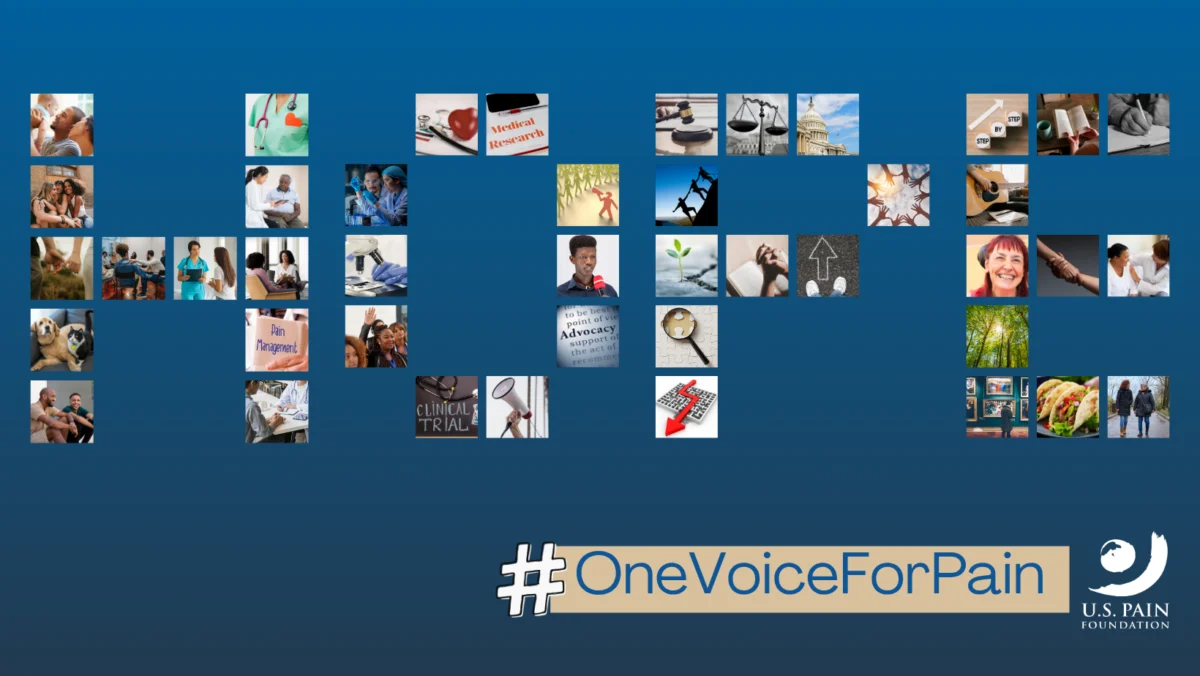
Throughout September, the #OneVoiceForPain movement invited patients to share what sustains them when the burden of pain feels insurmountable. Their responses—raw, honest, and profoundly human—provide a roadmap for how individuals manage to persist in the face of physiological and psychological strain.
1. The Anchors of Social Support
For many, the primary catalyst for endurance is the presence of a "witness"—someone who acknowledges their struggle. This support often comes from family, friends, and, increasingly, the community of peers who "get it."
- The Power of Shared Experience: Barry, 57, notes that his partner, who also lives with chronic pain, provides a level of understanding that is impossible to replicate.
- The "Fur Baby" Effect: Many respondents cited pets as a crucial source of comfort, offering unconditional companionship that demands nothing of the person in pain.
- The Necessity of Community: Niki, 54, finds strength in faith-based support groups and friends who live with serious illness. "They fight the good fight every day with joy and gratitude," she explains.
- Glimmers of Hope: For parents like Kari, 37, the "glimmers" of normalcy in their children—a request to visit a coffee shop or a moment of deep, focused play—serve as the fuel required to survive the worst pain flares.
2. The Critical Role of Validation in Healthcare
The medical journey for a chronic pain patient is often fraught with gaslighting and clinical dismissal. The difference between a patient who gives up and one who continues seeking care often comes down to the empathy of a single provider.
- Reframing Goals: Erica, 45, credits her mental health therapist for teaching her that living with pain does not mean abandoning goals, but rather modifying them.
- The Compassionate Exception: Bobbie, 42, highlights a harsh reality: "Where there are 10 nurses who treat you the worst and don’t believe your pain, there are two that have a heart of compassion." These few, she notes, are the ones who make the clinical environment survivable.
- Persistence of Care: Christina, 46, emphasizes that knowing her pain specialist is still in her corner, refusing to give up on her treatment plan, provides the necessary momentum to keep trying.
3. Science as the Engine of Optimism
While many are still in the trenches of trial-and-error medicine, the slow but steady march of research offers a horizon line of hope.
- Historical Progress: Debbie, 68, notes that fibromyalgia is significantly more understood today than it was nearly two decades ago.
- The Promise of Innovation: Katie, 58, expresses excitement about emerging technologies and new pharmaceutical interventions that were not available even five years ago.
- The Youth Perspective: Daisy, 13, represents a generation that is increasingly vocal about their needs, holding onto the simple, vital hope that her high pain levels will not be a permanent state of existence.
Advocacy as a Tool for Transformation
Perhaps the most profound transformation occurs when a patient turns their suffering into a tool for systemic change. Advocacy provides a sense of agency to those who feel their bodies have betrayed them.
"I started advocating for chronic pain and patients because I have to make sense of what happened to me," says Sammie, 31. For others, like Mollie, 58, advocacy is not just a hobby; it is a lifeline. "Advocating for others is the only thing that gives me hope," she admits. This shift from "patient" to "advocate" allows individuals to reclaim a sense of purpose that exists independently of their pain levels.
Redefining Purpose: Faith, Hobbies, and Small Wins
When the medical system fails or treatments plateau, individuals often look inward. For many, this involves a recalibration of what a "successful" day looks like.
- The Power of Creativity: Max, 24, and Traci, 49, utilize artistic outlets like songwriting to externalize their pain, transforming suffering into something tangible and communicative.
- The Discipline of Determination: Beverly, 84, provides a sobering, resilient perspective: "I have just been moving forward, because I don’t know what else to do. I do not know how to give up."
- Faith and Persistence: For Linda, 64, faith has been the anchor during periods of suicidal ideation and physical near-total failure, turning her life into a testimony of resilience for others.
The Silence of Despair: Acknowledging the Void
Any honest discussion about chronic pain must account for those who find no comfort. The survey results included individuals who explicitly stated that they find no hope.
"Nothing gives me hope. I just survive day to day," wrote one 56-year-old respondent.
This is not a failure of the individual; it is a failure of the current medical and social infrastructure. These voices serve as an urgent call to action for researchers, policymakers, and clinicians. They remind us that for a significant segment of the population, pain is not merely a physical sensation—it is an all-encompassing reality that can erode the very capacity for hope.
Implications: Where Do We Go From Here?
As Pain Awareness Month concludes, the primary implication is clear: the conversation must be institutionalized, not ritualized. The challenges identified by the #OneVoiceForPain movement necessitate a multi-pronged approach:
- Clinical Reform: Medical education must integrate mandatory training on the nuances of chronic pain, focusing on trauma-informed care and the validation of patient experience to prevent medical gaslighting.
- Multidisciplinary Treatment: Moving beyond pharmacological solutions, the future of pain management must emphasize integrated, multidisciplinary teams that include physical therapists, psychologists, and social workers.
- Social Integration: Employers and educational institutions must evolve to accommodate the fluctuating nature of chronic pain, moving toward flexible, outcome-based environments rather than rigid, hours-based expectations.
- Sustained Funding: Research must move beyond symptom management toward the underlying mechanisms of nerve regeneration, neuro-inflammation, and central sensitization.
Conclusion: Carrying the Movement Forward
The stories shared this month reveal that hope is not a monolithic concept. For one person, it is a new device; for another, it is the smile of a neighbor or the simple act of journaling.
As we look toward the future, the goal of the pain community is to build a world where hope is not a luxury afforded only to those with the best resources, but a standard expectation for everyone. By continuing to share our stories, advocating for policy shifts, and listening to those whose pain has pushed them to the margins, we can ensure that #OneVoiceForPain is not just a hashtag, but a catalyst for real-world change.
The end of September does not mean the end of the fight. It is merely the beginning of the next chapter in the ongoing, collective effort to redefine, manage, and ultimately change the reality of pain. Together, we must continue to listen, to learn, and to work toward a future where everyone has more reasons to hope.
#LetsChangePain.