Introduction: More Than a Milestone
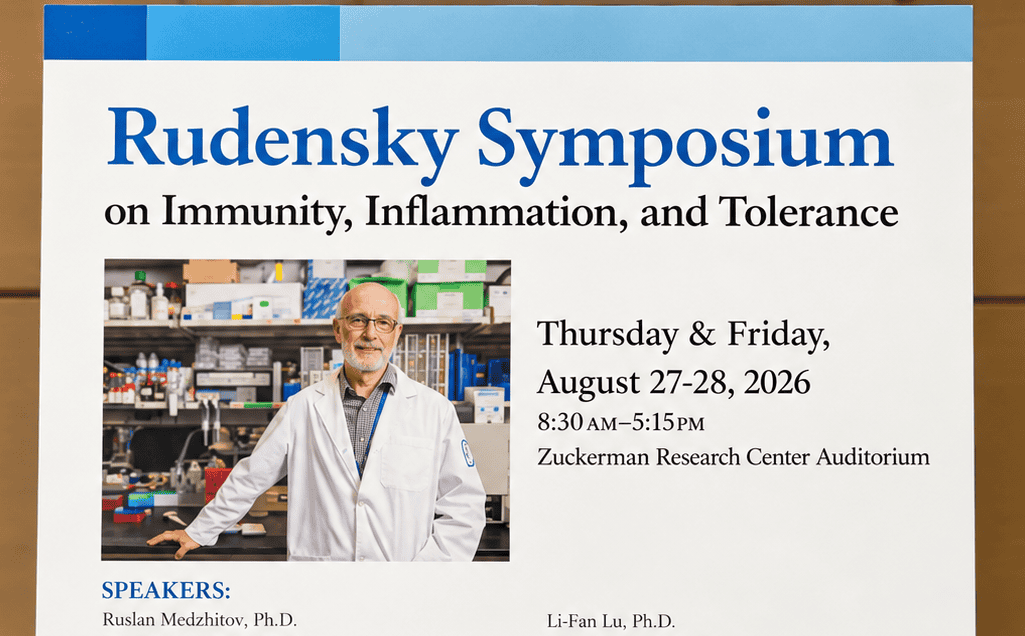
On August 27–28, 2026, the scientific community gathered not merely for a conference, but for a celebration of a life’s work that has fundamentally altered our understanding of the human immune system. The "Rudensky Symposium on Immunity, Inflammation and Tolerance" served as a tribute to the 70th birthday of Dr. Alexander “Sasha” Rudensky of the Memorial Sloan Kettering Cancer Center.
However, the symposium was far more than a professional milestone; it was a testament to the "scientific family" built over decades of mentorship. The event brought together generations of former trainees, collaborators, and esteemed colleagues, weaving together high-level scientific discourse with personal reflections on the intellectual curiosity that has defined Dr. Rudensky’s career. As the Cancer Research Institute (CRI)—a long-term supporter of Dr. Rudensky’s work—noted, the symposium highlighted the critical bridge between basic immunological research and the clinical breakthroughs that continue to save lives today.
Chronology: Two Days of Scientific Synthesis
The symposium was structured to mirror the evolution of modern immunology, moving from the foundational mechanics of cellular balance to the complex, systemic environments where cancer thrives.
Day One: The Mechanics of Homeostasis
The opening sessions focused on how the body maintains equilibrium. Dr. Ruslan Medzhitov, a 2003 CRI Coley Awardee, set the stage by challenging traditional views of immune function. He presented data on how stressed cells recruit macrophages—not just to fight infection, but to act as a cellular “janitorial crew,” clearing protein debris and maintaining tissue integrity.
This theme of “maintenance over defense” was echoed by Drs. Diane Mathis and Christophe Benoist, both 2024 CRI Coley Award recipients. Their work on regulatory T cells (Tregs) illuminated how these cells do far more than suppress immunity. Dr. Mathis detailed how specific Treg populations are essential for muscle repair and scar management, while Dr. Benoist provided a molecular breakdown of how a Treg’s identity—and its resulting function—is dictated by the specific molecular targets it recognizes.
Day Two: From Prevention to Intervention
The second day shifted toward the clinical implications of these findings, particularly in oncology. Dr. Richard A. Flavell, a 2012 CRI Coley Awardee, shared fascinating preclinical insights into "immunosurveillance." By observing mutant intestinal stem cells, Dr. Flavell’s team demonstrated that the immune system identifies and eliminates "pre-cancerous" cells long before they form a detectable tumor. The symposium participants discussed how, when these early-stage mutant cells lose the ability to signal to T cells, they gain a competitive survival advantage.
Dr. Julien C. Marie further expanded on this by discussing the TGF-β signaling pathway. His research suggests that when these regulatory signals are disrupted, specific immune cells (Th17) can be pushed into a chronically inflammatory state, which creates a permissive environment for DNA damage and tumor initiation.
Supporting Data: The Treg Paradox and Ecosystems
A significant portion of the symposium was dedicated to the "Treg paradox." While Tregs are vital for preventing autoimmune diseases, they are frequently co-opted by tumors to create immunosuppressive neighborhoods that shield cancer from the immune system.
- Collagen Highways: Dr. Paula D. Bos presented compelling evidence that Tregs influence the physical scaffolding of breast cancer tumors. By modulating macrophages, Tregs help create aligned collagen fibers that act as "highways" for tumor cells to migrate and metastasize.
- Targeted Modulation: Dr. Nicholas Arpaia explored how fibroblasts attract Tregs to the lung tumor microenvironment. His collaboration with CRI Lloyd J. Old STAR Dr. Tal Danino has led to promising work involving engineered bacteria, which could potentially deliver immune-modulating therapies directly into the tumor core, bypassing the need for systemic treatment that might inadvertently harm healthy tissue.
Official Perspectives: The Role of the Cancer Research Institute
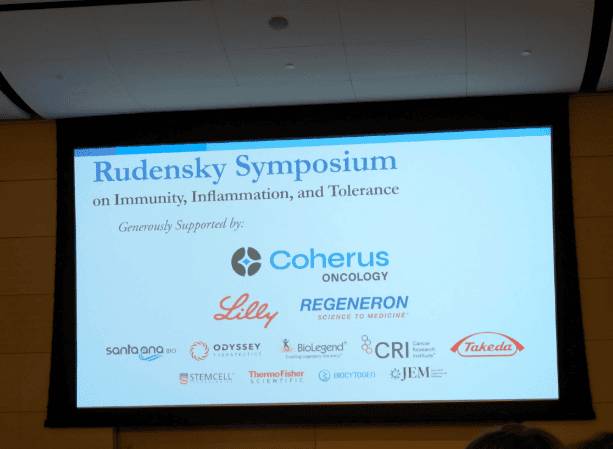
The Cancer Research Institute’s involvement in the symposium reflects its decades-long commitment to supporting basic research. For over 20 years, CRI has funded Dr. Rudensky’s laboratory, supporting more than a dozen fellows who have since gone on to lead their own labs.
“The connection between basic immunology and cancer immunotherapy is not a bridge; it is the same path,” noted a representative from the CRI. In 2015, the CRI recognized Dr. Rudensky’s pioneering work on Tregs with the prestigious William B. Coley Award. The CRI’s stance is clear: by funding scientists who ask fundamental questions—such as how a cell repairs itself or how a gut bacterium influences a T cell—they are ultimately building the toolkit for the next generation of cancer cures. The symposium served as a physical manifestation of this investment, showcasing the "ripple effect" of long-term funding.
Implications for Future Oncology
The symposium’s overarching conclusion was that cancer cannot be viewed in isolation. It is a disease of its ecosystem. The discussions across the two days pointed toward several emerging paradigms:
- The Microbiome Connection: Dr. Dan Littman’s work highlighted that the "immune training" that occurs in the gut can dictate the efficacy of systemic checkpoint immunotherapies. This suggests that future clinical trials may need to account for a patient’s unique microbiome to predict treatment response.
- Early Detection through Immunosurveillance: If we can identify the mechanisms by which the immune system rejects early-stage mutations, we may eventually develop preventative therapies that "boost" these natural surveillance mechanisms, stopping cancer before it ever takes hold.
- Refining Immune Modulation: The goal is no longer to simply "activate" or "suppress" the immune system. As the research from Drs. Arpaia and Bos demonstrates, the future lies in "precision modulation"—altering the tumor microenvironment or the physical architecture of the tumor to expose it to the body’s natural defenses without triggering systemic autoimmunity.
Conclusion: The Human Element of Science
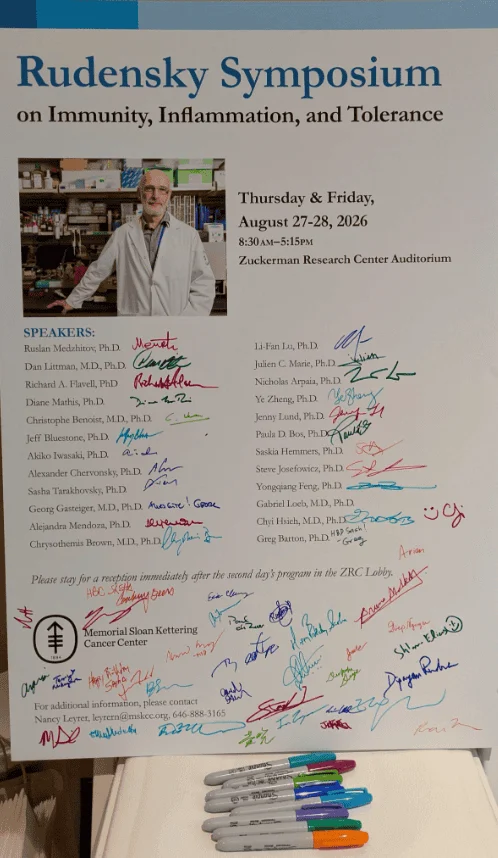
Perhaps the most poignant aspect of the symposium was the visible evidence of the "Rudensky Research Family." A poster board, signed by dozens of current and former students, stood in the hall—a silent testament to the mentorship that has fueled these scientific leaps.
The symposium underscored a profound truth in academia: breakthrough discoveries are rarely the result of a singular "eureka" moment in a vacuum. They are the result of environments that foster rigorous debate, encourage the pursuit of obscure biological questions, and value the human connections that sustain long-term collaborative projects.
As the scientific community looks toward the future of cancer treatment, the lessons from the Rudensky Symposium are clear. We must continue to invest in the fundamental science of immunity. Whether it is understanding the janitorial work of macrophages or the navigational cues of collagen, every piece of the biological puzzle is a potential key to a future cancer cure. Dr. Rudensky’s legacy is not just the discovery of a specific cell type; it is the creation of a culture of inquiry that will continue to challenge, inform, and heal for decades to come.