








For decades, the concept of a "personalized" cancer vaccine—a therapy engineered to teach an individual’s own immune system to hunt down their specific tumor—lived in the realm of theoretical medicine. Today, that vision has shifted from the laboratory bench to the forefront of clinical reality.
Merck and Moderna have officially announced positive top-line results from their pivotal Phase 3 clinical trial, INTerpath-001. The study evaluated the efficacy of intismeran autogene, an individualized, mRNA-based cancer vaccine, administered in tandem with the immune checkpoint inhibitor pembrolizumab (Keytruda®). The trial targeted patients with high-risk melanoma who had undergone complete surgical resection. The results confirm that this dual-action approach significantly extends the time patients remain cancer-free, marking a historic milestone in oncology.
The Mechanics of Precision Immunotherapy
To understand the magnitude of this breakthrough, one must distinguish between traditional preventive vaccines and the therapeutic paradigm of intismeran autogene. While conventional vaccines prime the body to ward off future viral or bacterial infections, intismeran is a therapeutic vaccine designed to treat an active malignancy.
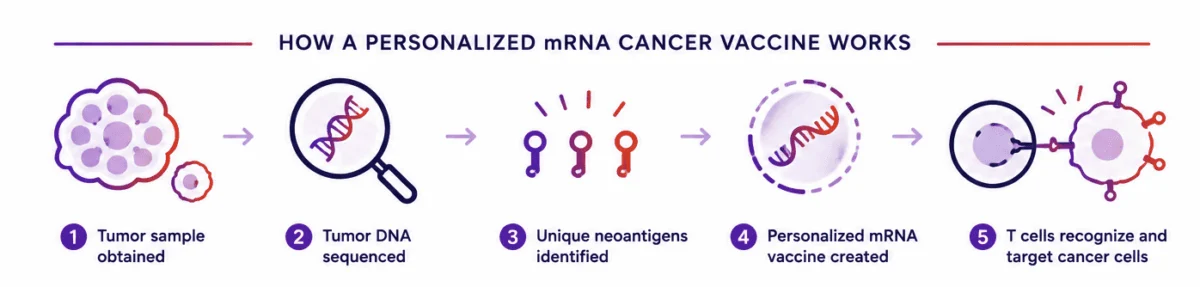
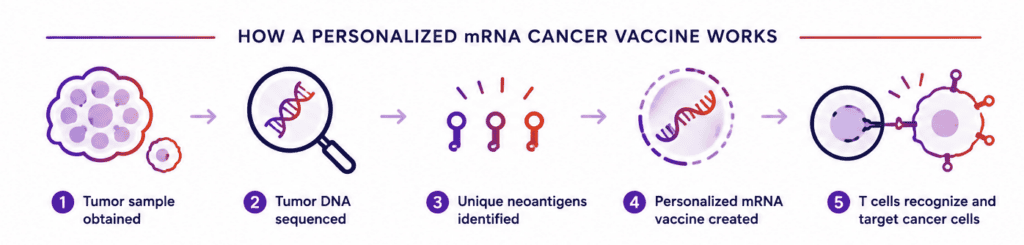
The process is a masterclass in modern biotechnology. It begins with a biopsy of the patient’s tumor. Researchers perform a comprehensive genetic analysis to identify mutations that produce "neoantigens"—unique protein markers found on the surface of malignant cells but absent in healthy tissue.
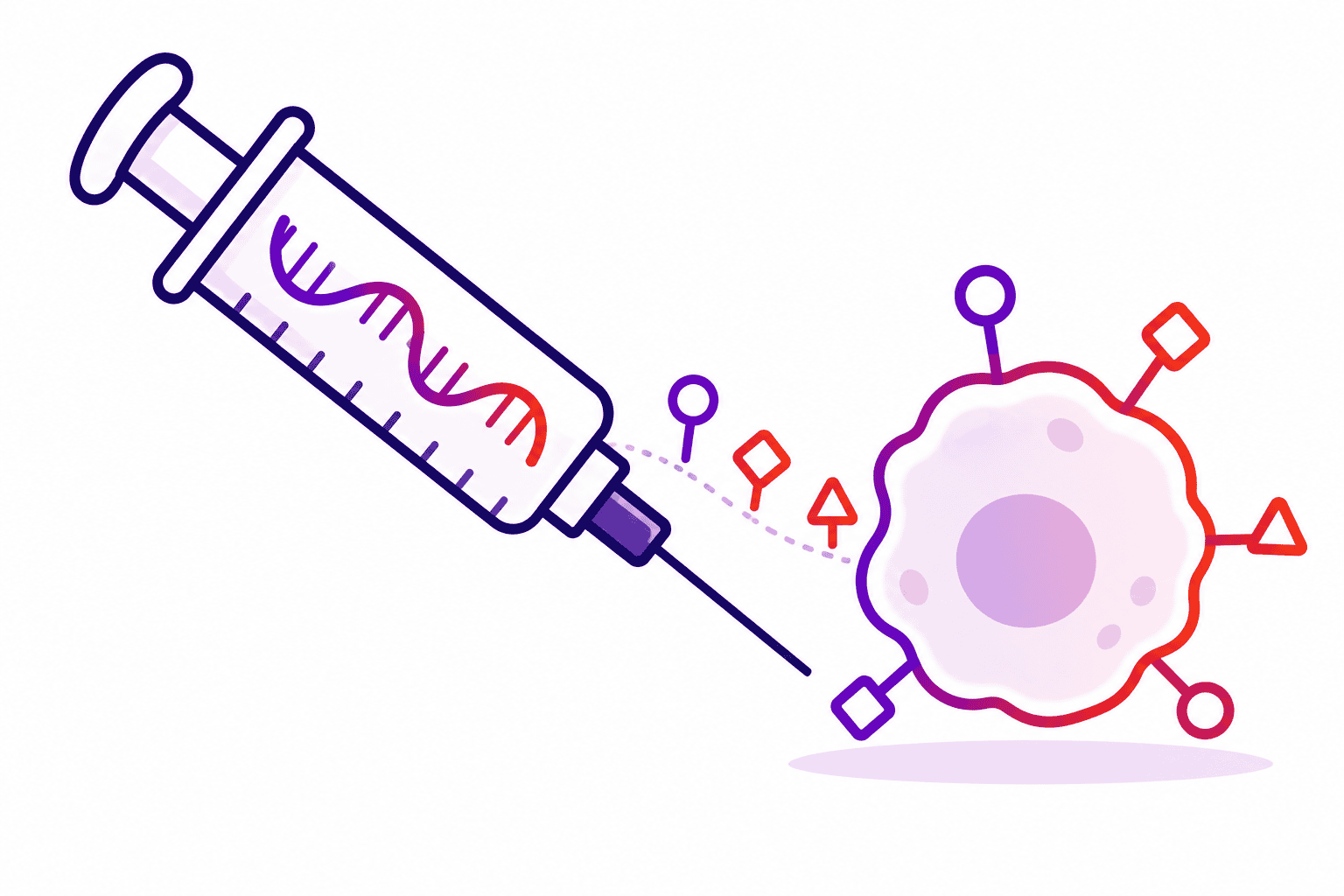
Once these patient-specific neoantigens are identified, they are encoded into a sequence of messenger RNA (mRNA). When injected, this mRNA provides the immune system with a temporary, highly specific "wanted poster" of the tumor. The immune system, now alerted to the precise identity of the cancer cells, mounts a targeted attack.
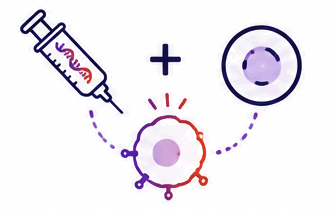
However, cancer is notoriously adept at evasion. Tumors often hijack natural "checkpoints" in the immune system to suppress T cell activity. Keytruda serves as the crucial partner in this therapy by blocking the PD-1 checkpoint, effectively releasing the brakes on the immune system and allowing the T cells—now primed by the vaccine—to persist and destroy the remaining cancer cells.
A Chronology of Discovery: From BCG to mRNA
The success of INTerpath-001 is not an overnight sensation; it is the culmination of over 70 years of dedicated immunological research, much of which was fostered by the Cancer Research Institute (CRI).
The Mid-20th Century: Foundations of Immunotherapy
In the 1950s, Dr. Lloyd J. Old, the founding scientific director of the CRI, pioneered the study of immune-based cancer treatments. His research into the tuberculosis vaccine BCG demonstrated that the immune system could be stimulated to target tumors in mice. This work laid the bedrock for the first FDA-approved active cancer immunotherapy.
The Turn of the Century: The Cancer Vaccine Collaborative
By 2001, the need for a global, coordinated effort became clear. CRI and the Ludwig Institute for Cancer Research launched the Cancer Vaccine Collaborative (CVC). Over the next decade, the CVC conducted nearly 60 early-phase trials, shifting the focus from simple tumor recognition to understanding how to create durable, long-lasting immune responses.
The Checkpoint Revolution
Concurrent with vaccine research, scientists like James P. Allison, PhD, were uncovering the secrets of immune checkpoints. His 1992 research—which received consistent funding from the CRI—revealed that blocking CTLA-4 and PD-1 could enable the immune system to recognize cancer as a foreign invader. His work earned the 2018 Nobel Prize and provided the necessary "engine" for the vaccine to function.
The mRNA Paradigm
The final piece of the puzzle arrived with the maturation of mRNA technology. In 2021, the CRI honored Katalin Karikó, Drew Weissman, Uğur Şahin, and Özlem Türeci with the William B. Coley Award for their pivotal work in mRNA therapeutics. The subsequent success of mRNA COVID-19 vaccines proved that this technology could be scaled and manufactured with unprecedented precision, paving the way for the clinical testing of intismeran autogene.
Supporting Data and Clinical Evidence
The INTerpath-001 trial represents the most robust evidence to date for personalized neoantigen therapy. The study enrolled 1,137 patients with stage IIB through IV cutaneous melanoma. Following surgery, patients were randomized to receive either the combination therapy of intismeran autogene and Keytruda or Keytruda monotherapy.
Efficacy Endpoints
At the interim analysis, the study reached its primary endpoints:
- Recurrence-Free Survival (RFS): Patients receiving the vaccine-checkpoint inhibitor combination showed a statistically significant and clinically meaningful delay in the return of their cancer compared to the control group.
- Distant Metastasis-Free Survival (DMFS): The combination also significantly extended the time before cancer spread to distant organs, a critical metric for long-term survival in high-risk melanoma patients.
While exact percentages for the Phase 3 trial remain proprietary pending peer-reviewed publication, the data builds upon the impressive results of the earlier Phase 2b trial. In that study, the combination reduced the risk of recurrence or death by 49% and the risk of distant metastasis or death by 59% at the five-year follow-up mark.
Official Perspectives and Industry Response
The pharmaceutical industry and the broader oncology community have hailed these results as a watershed moment.
"This is the first time we have seen a personalized neoantigen therapy show such clear, statistically significant benefit in a large-scale Phase 3 trial," noted a lead investigator involved in the study.

From the perspective of the Cancer Research Institute, the trial validates a "convergent" strategy. By pairing the information-gathering capabilities of a vaccine with the "un-braking" power of checkpoint blockade, researchers have finally achieved a synergy that has eluded the field for generations. The consensus among the scientific community is that this trial provides a template for future treatments, not just in melanoma, but across a spectrum of solid tumors.
The Implications: Challenges and Future Horizons
Despite the euphoria surrounding the trial, stakeholders are cautious about the path ahead. The successful transition of intismeran autogene from a clinical trial to standard practice involves significant logistical hurdles.
The Manufacturing Challenge
Unlike "off-the-shelf" drugs, a personalized vaccine requires a unique manufacturing process for every single patient. This necessitates high-speed genetic sequencing, bioinformatic modeling, and rapid mRNA synthesis—all of which must be completed in weeks, not months. Scaling this infrastructure to handle thousands of patients globally will be one of the primary challenges for the healthcare system.
Accessibility and Cost
The complexity of production raises inevitable questions regarding health equity and pricing. If personalized vaccines are to become a pillar of oncology, health systems must determine how to subsidize or integrate these high-cost, high-tech interventions into standard care models without creating barriers to access.

Beyond Melanoma
The success in melanoma is merely the opening chapter. Merck and Moderna are already expanding their investigation of intismeran autogene into other indications, including lung, colorectal, and head-and-neck cancers. If these trials mirror the success of INTerpath-001, the medical community may be witnessing the birth of a new "personalized standard of care."
Conclusion: A New Chapter in Human Health
Scientific breakthroughs of this magnitude are rarely the result of a single "eureka" moment. They are the result of decades of persistent, often controversial, inquiry. The skeptics of the 1990s and 2000s questioned whether the immune system could ever be reliably trained to recognize cancer. Today, that question has been answered with a resounding "yes."
The INTerpath-001 trial is not the end of the cancer vaccine story. Instead, it serves as a foundational proof of concept. As we move forward, the focus will shift to optimizing the duration of treatment, refining the identification of tumor targets, and expanding access. For patients with high-risk cancer, the convergence of mRNA technology and checkpoint inhibition represents more than just a scientific achievement—it represents a tangible, promising step toward a future where cancer is no longer a terminal diagnosis, but a condition that can be managed and controlled by the very immune system we were born with.