










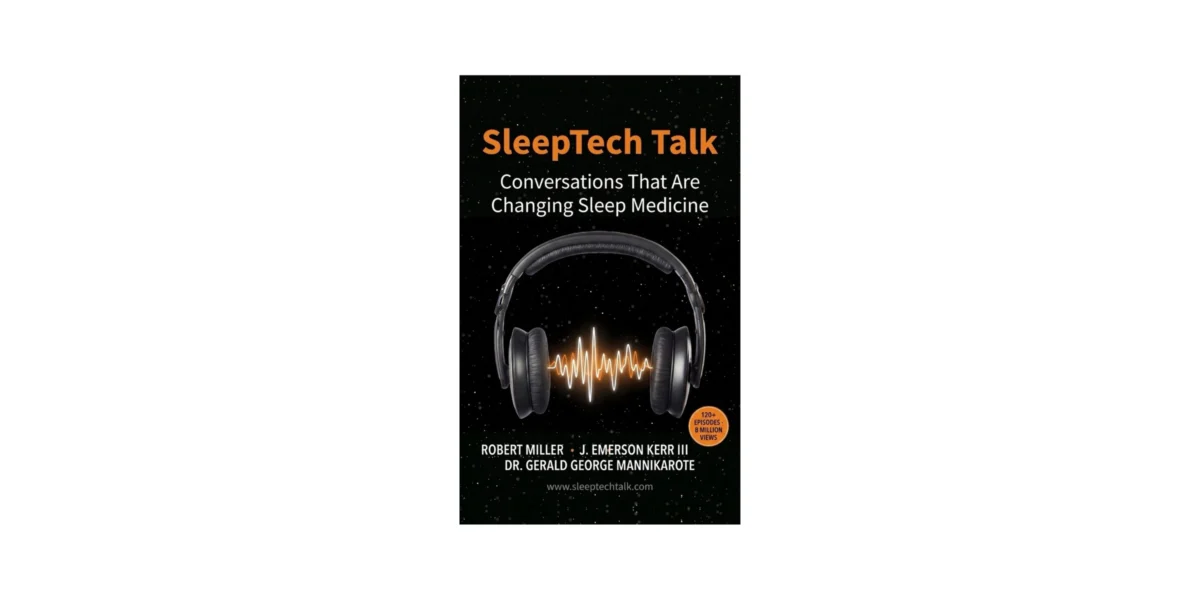
The landscape of sleep medicine is currently undergoing a period of profound recalibration. As clinical methodologies evolve and the integration of consumer technology accelerates, the discipline finds itself at a pivotal crossroads. A new, comprehensive publication, SleepTech Talk: Conversations That Are Changing Sleep Medicine (First Edition, August 2026), arrives at this critical juncture, offering a panoramic view of an industry in flux.
Authored by a trio of industry stalwarts—Robert Miller, RPSGT; J. Emerson Kerr III, MBA, RRT, FAAST; and Gerald George Mannikarote, MBBS, MBA, NCSF-CPT, CBA—the book serves as both an oral history and a strategic manifesto. By synthesizing insights from over 120 podcast episodes, 8 million YouTube views, and more than 100 deep-dive expert interviews, the authors have curated a roadmap for where sleep medicine has been, where it faltered, and where it is headed.
Main Facts: A Synthesis of Expert Discourse
Unlike traditional textbooks that lean heavily on static academic theory, SleepTech Talk operates as a living document. It captures the dynamic, often messy reality of a medical field that is still in its relative infancy.
The book is structured into nine core parts, spanning 28 chapters that move beyond the conventional boundaries of respiratory therapy and sleep diagnostics. It brings together a diverse assembly of voices—ranging from pioneering engineers and surgeons to patient advocates and entrepreneurs—to dismantle the "standard practice" narrative. By leveraging the vast repository of the SleepTech Talk media brand, the authors provide a multidimensional look at the field that is rarely captured in peer-reviewed journals.
The publication is available in both paperback and eBook formats via Amazon, positioning it as an accessible resource for clinicians, sleep technicians, industry innovators, and the informed public alike.
Chronology: From 1980 to the Digital Frontier
To understand the urgency of this book, one must appreciate the brevity of the discipline’s history. The authors emphasize that sleep medicine is a remarkably young field. It is a sobering reminder that the first patient treated with continuous positive airway pressure (CPAP) dates back only to 1980.
In the early decades of the field, practice was largely characterized by improvisation. Practitioners were working with nascent technology, limited data, and a nascent understanding of sleep-disordered breathing. As the authors argue, much of what is considered "standard of care" today is a direct descendant of these early, ad-hoc solutions.
- The Formative Years (1980s–1990s): The establishment of sleep labs and the initial adoption of CPAP therapy.
- The Technological Shift (2000s–2015): The rise of digital data tracking, the refinement of sleep-disordered breathing metrics, and the expansion of the sleep technician’s role.
- The Modern Era (2016–Present): The disruption caused by home sleep testing (HST), the integration of consumer wearables, and the move toward patient-centric, telehealth-driven models.
The book serves as a bridge, connecting the "wild west" beginnings of the 80s to the highly digitized, evidence-based, and increasingly contested clinical environment of the late 2020s.
Supporting Data: Examining the Bottlenecks and Controversies
The strength of SleepTech Talk lies in its commitment to highlighting the friction points within the industry. The authors do not shy away from the contradictions that define modern sleep care.
The Compliance Paradox
One of the most significant debates addressed in the text is the validity of the "four-hour nightly compliance rule." For years, this metric has served as the gold standard for defining clinical success in PAP therapy. However, the book presents a compelling argument that this threshold may be an outdated relic that fails to account for individual patient outcomes, quality of life, and long-term adherence.
The Home Sleep Testing (HST) Disruption
The transition from lab-based polysomnography (PSG) to home-based testing has been perhaps the most significant structural change in the field. While HST has democratized access to care, it has also created new bottlenecks and diagnostic challenges. The book analyzes how this shift has impacted diagnostic accuracy and the relationship between sleep centers and primary care providers.
The Gap Between Efficacy and Effectiveness
A recurring theme is the historical divergence between therapy efficacy—what the machine can do in a controlled setting—and real-world effectiveness. The authors delve into why treatments that appear perfect on paper often struggle to gain traction in the daily lives of patients, identifying the gaps in patient education, hardware design, and clinical follow-up.
Official Responses and Methodology
The co-authors, all of whom possess deep technical and administrative expertise, are clear about their objective. "This book is neither a transcript collection nor a textbook—it is a synthesis," they stated in an official release. "It organizes more than a hundred conversations to show where sleep medicine is, what it got wrong, what it is fixing, and where the industry goes next."
To ensure intellectual honesty, the book utilizes a unique pedagogical structure. Every chapter concludes with a "Complementary Case" and a "Contrasting Case," effectively forcing the reader to engage with the arguments from multiple angles. This design choice highlights the reality that in many areas of sleep medicine, there is no single "correct" answer, but rather a spectrum of valid clinical opinions.
Furthermore, each chapter includes "Tech Notes," where Miller, Kerr, and Mannikarote provide their own editorial commentary. This adds a layer of transparency and professional context that is typically absent from academic literature. The inclusion of six extensive appendices—including a therapy comparison table and a verified index of the source episodes—provides the reader with a robust toolkit for further research. The authors have also taken the proactive step of disclosing their commercial interests in the opening pages, setting a high standard for transparency in medical publishing.
Implications: Where Does the Industry Go Next?
The publication of SleepTech Talk signals that the field of sleep medicine is entering an era of professional maturity. The move toward questioning foundational practices suggests that the next decade will be defined by refinement rather than just rapid expansion.
A New Model for Patient Advocacy
The book elevates the role of the patient, shifting the focus from "patient compliance" to "patient-centered care." By including insights from patients alongside surgeons, dentists, and engineers, the authors argue for a holistic approach where technology serves the patient’s lifestyle, rather than forcing the patient to adapt to the technology.
The Future of the Workforce
As diagnostic tools become more automated and AI-driven, the roles of sleep technologists and physicians are evolving. The industry is moving toward a model that values data interpretation and patient counseling over simple data collection. This book serves as a vital resource for those looking to pivot their careers in alignment with these technological advancements.
Conclusion: A Call to Critical Thinking
SleepTech Talk is not just a summary of past interviews; it is an invitation to engage with the complexities of modern sleep health. By documenting the shift from historical improvisation to the current, highly scrutinized clinical environment, the authors have provided a foundation for the next generation of sleep medicine professionals.
For those in the field, this book represents a necessary disruption. It challenges readers to set aside the "textbook" dogma and look critically at the data, the technology, and the patients they serve. As the sleep industry continues to grow in importance—fueled by an aging population and an increasing focus on sleep as a cornerstone of general wellness—resources like SleepTech Talk will prove essential in guiding the discourse, ensuring that as the field changes, it does so in a way that truly serves the health of the patient.
Whether you are a seasoned sleep specialist, a student entering the field, or an industry stakeholder, the insights distilled in this volume offer a rare and valuable opportunity to understand the mechanics of a field that is literally changing the way we rest.