










WASHINGTON, D.C. — In the high-velocity landscape of the nation’s capital, where progress is measured in policy shifts and efficiency is the ultimate currency, a sudden quiet has descended upon the north end of Dupont Circle. The catalyst was not a legislative recess or a political stalemate, but the physical collapse of a local landmark: a 55-year-old oak tree that had served as a silent witness to decades of urban transformation.
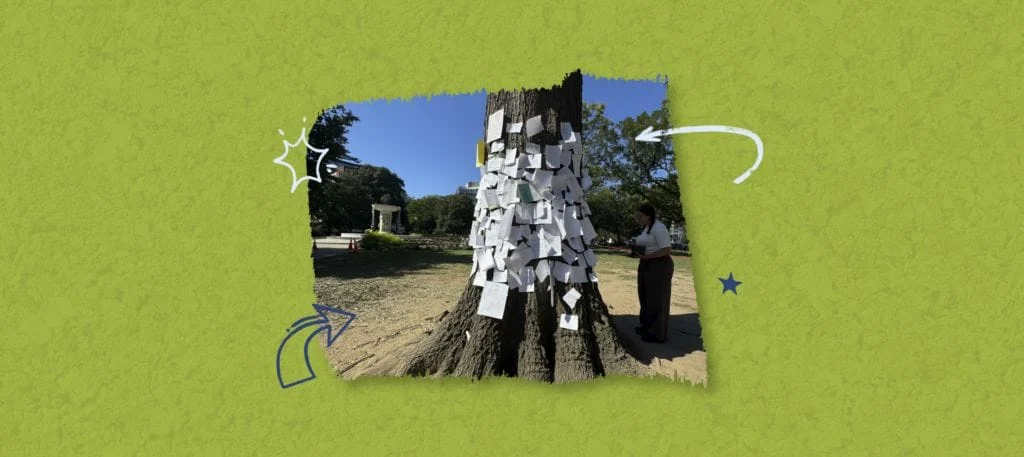
Following a torrential storm in mid-September 2026, the "Dupont Oak" was uprooted, leaving behind a 15-foot stump and a community grappling with the loss of a mundane yet essential fixture of their daily lives. What began as a routine instance of storm damage has evolved into an organic, grassroots memorial, highlighting a profound societal need for connection, intentionality, and mental health awareness in an increasingly fragmented world.
The Incident: A Storm of Symbolic Proportions
On the night of September 13, 2026, Washington, D.C. was battered by a storm that, while brief, carried enough intensity to jar the city’s infrastructure. The weather event resulted in widespread power outages and the closure of several school districts due to downed lines. To many residents, it was simply another manifestation of the "fickle, thunderous summers" characteristic of the Atlantic coast.
However, as the city woke on September 14, the true cost of the storm became visible in Dupont Circle. The massive oak tree, which had stood for over half a century, lay in the dirt. All that remains of the towering canopy is a jagged 15-foot stump and a network of "knobs and bulging grooves"—roots that now serve as a physical reminder of the tree’s struggle to hold onto the soil.
The loss of the tree initially appeared to be a minor footnote in the city’s recovery efforts. In a region where trees are as commonplace as the storms that threaten them, the fall of a single oak rarely makes headlines. Yet, for the residents of Dupont Circle, the tree was not merely a piece of landscaping; it was a "halfway marker toward home" and a provider of shade for generations of "mornings running by" and "afternoons lazed underneath."
Chronology of a Communal Awakening
The transformation of the fallen oak from debris to a memorial occurred almost instantly. Within hours of the storm’s passing, a single anonymous note was tacked to the remaining stump. It read: “When you’re falling in Dupont and there’s nobody around, did you ever even crash or even make a sound?”

This poignant inquiry, a play on the classic philosophical thought experiment, resonated with a community accustomed to the "chaotic hustle of life." It served as a catalyst for a neighborhood-wide conversation. By the afternoon of September 14, the stump was covered in dozens of messages.
The chronology of the memorial’s growth reflects a rare moment of collective pause:
- September 14, 08:00 AM: Local residents discover the fallen oak; initial shock and disappointment are reported.
- September 14, 11:30 AM: The first notes appear, expressing grief and gratitude.
- September 14, 03:00 PM: A diverse cross-section of the city—men in suits, parents with strollers, teenagers, and elders—begin to gather around the stump, not just to view the damage, but to read the burgeoning "conversation in ink."
- September 15, 09:00 AM: The site becomes an informal community forum. Neighbors who had previously been strangers began trading stories of their lives in the city, using the tree as a common denominator.
Supporting Data: The Psychological Necessity of "Third Places"
The emotional reaction to the Dupont Oak is supported by a growing body of sociological and psychological research. According to data cited by mental health advocates, the relationship between humans and oaks is deeply rooted in shared history. A study published in the National Center for Biotechnology Information (NCBI) notes that the "shared history of humans and oaks also generated cultural and emotional relationships that translated into symbols or were incorporated into religious beliefs and mythology."
Furthermore, the "pause" observed in Dupont Circle addresses a critical deficit in modern urban mental health. In a society described as being built for "efficiency and grit," the impulse to seek the "next dopamine hit" often overrides the need for genuine reflection.
Urban forestry experts and psychologists suggest that trees in dense urban environments act as "soft fascinations," which allow the brain’s directed attention mechanisms to rest. When these fixtures are removed, the community experiences a form of "solastalgia"—the distress caused by environmental change in one’s home environment. The organic memorial in Dupont Circle is a collective coping mechanism, a way for residents to manage their "relationships with gratitude and intentionality" in a world that rarely encourages either.
Official Responses: Active Minds and the Call for Connection
Active Minds, a leading national organization dedicated to mental health advocacy for young adults, has highlighted the Dupont Oak incident as a case study in the importance of community ecosystems. The organization, which frequently operates at the intersection of student life and mental wellness, views the memorial as a manifestation of their core philosophy: "to be loved is to be known."

"The tree reminded the neighborhood it wasn’t just an environment, it was an ecosystem," a representative from Active Minds stated. "We are only strangers as long as we don’t see one another. This fallen oak forced us to see one another."
The organization has pointed to this event as a real-world application of the principles taught in their Mental Health Advocacy Institute. While the Institute typically focuses on campus-based interventions—such as peer education and stress management for finals week—the Dupont Circle phenomenon demonstrates how "change starts with you and happens here," even in the wake of a natural disaster.
Active Minds advocates emphasize that the "mundane" aspects of our environment—the trees we walk past, the benches we sit on—are the connective tissues of a healthy community. By acknowledging the loss of the tree, the residents of D.C. are actually acknowledging their need for one another.
Implications for Urban Mental Health and Future Planning
The story of the Dupont Oak carries significant implications for how cities approach urban planning and mental health in the late 2020s. As climate change increases the frequency of severe weather events in the Mid-Atlantic region, the loss of urban canopy will become more common. The Dupont memorial suggests that city officials must view urban forestry not just through the lens of environmental sustainability, but as a critical component of public mental health infrastructure.
1. The Value of the "Quiet Interruption"
The memorial highlights the necessity of "moments of quiet interruption" that break through the "chaotic hustle." Experts suggest that cities should intentionally design spaces that encourage these pauses, rather than focusing solely on the efficiency of movement.
2. Community Resilience through Shared Grief
The fact that a fallen tree could unite "men in suits, children in strollers, and teenagers with friends" suggests that shared environmental loss can be a powerful tool for building social cohesion. In an era of political and social polarization, these "mundane" points of connection offer a path toward mutual understanding.

3. Redefining the "Ecosystem"
The Dupont Circle community has redefined their neighborhood as a human ecosystem. This shift in perspective—from seeing the city as a collection of buildings and roads to seeing it as a web of care and recognition—is vital for long-term mental resilience.
Conclusion: "And the Tree was Happy"
As of late September 2026, the stump remains a focal point of Dupont Circle. One of the final notes tacked to the wood, a reference to Shel Silverstein’s The Giving Tree, simply reads: “And the tree was happy.”
While the physical oak can no longer provide shade, its final act has been to provide a different kind of shelter: a space for the "waking community" to express gratitude, joy, and grief. The Dupont Oak has proven that even in a world of "finite time and infinite possibilities," the most profound impact often comes from the things we take for granted until they are gone.
The lesson for the residents of Washington, D.C., and perhaps for the nation at large, is to let routines be interrupted and to celebrate the "dose of community that comes in appreciating the mundane." In the end, the fallen oak did not just make a sound; it started a conversation that may help a city heal its invisible wounds.
For those looking to foster similar connections in their own communities, Active Minds encourages participation in mental health advocacy and the practice of "intentional pausing." Whether through peer support or simply acknowledging a neighbor, the goal remains the same: to ensure that no one feels like they are falling in the woods with no one around to hear.