










For centuries, the practice of fasting has occupied a unique space at the intersection of religious tradition, ancient medicine, and modern wellness. While the biological shift from glucose-based metabolism to fat-burning—a state known as ketosis—is well-documented, the systemic impact of extended caloric deprivation has long remained a black box. A landmark 2024 study published in Nature Metabolism has finally pulled back the curtain, revealing that prolonged fasting triggers a sophisticated, coordinated biological transformation that extends far beyond simple weight loss.
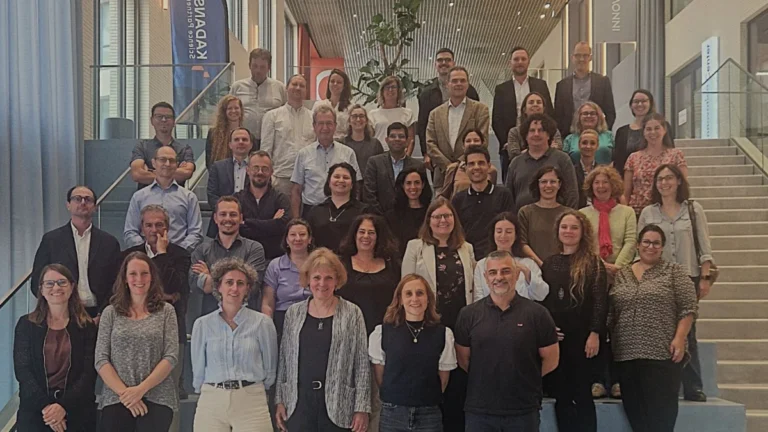
Researchers from Queen Mary University of London’s Precision Healthcare University Research Institute (PHURI) and the Norwegian School of Sports Sciences have provided the most granular look to date at how the human body reconfigures itself when deprived of food for an extended period. The findings suggest that the body undergoes a profound "systemic reset," but perhaps most crucially, this transformation is not instantaneous. The most significant molecular shifts do not manifest until after a specific, critical threshold: 72 hours of total calorie restriction.
The Metabolic Crossroads: How the Body Adapts
To understand the magnitude of these findings, one must first appreciate the body’s evolutionary design. Humans are biologically hardwired to survive periods of famine; our ancestors required the ability to maintain cognitive and physical function when food sources were unpredictable. Today, however, the context of fasting has shifted toward the clinical, the cultural, and the therapeutic.
When an individual stops eating, the body does not immediately begin a "housekeeping" process. It first exhausts its immediate energy reserves—glucose circulating in the bloodstream and glycogen stored in the liver. Once these supplies dwindle, the body pivots to its secondary fuel source: adipose tissue.
While scientists have long understood this transition, they have struggled to quantify what happens to the rest of the body’s machinery during this time. Do these systemic changes offer health benefits that mitigate inflammation and cellular aging, or do they introduce harmful stress? Using advanced protein analysis, researchers were finally able to map the complex "protein landscape" of the body, observing how thousands of proteins fluctuate in response to starvation.
Chronology of a Seven-Day Fast
To capture this data, researchers recruited 12 healthy volunteers to undergo a medically supervised, seven-day water-only fast. The study design was rigorous, requiring daily monitoring and the systematic measurement of approximately 3,000 proteins in the bloodstream—before, during, and after the fast.
Phase 1: The Glucose-to-Fat Transition (Days 1–2)
During the initial 48 hours, the body focuses primarily on energy homeostasis. As glucose levels drop, the liver increases the production of ketones. For the study participants, this period was characterized by the expected metabolic switch. Weight loss was significant, though it primarily reflected a combination of fat mass reduction and the loss of lean tissue—specifically water-rich tissues like glycogen-laden muscle.
Phase 2: The Three-Day Threshold (Day 3)
As the fast entered its third day, the researchers observed a dramatic shift. The protein signatures in the blood began to change in a way that could no longer be explained by simple weight loss or a mere change in fuel source. This was the "tipping point" where the body appeared to initiate a coordinated, systemic response.
Phase 3: Deep Adaptation (Days 4–7)
Beyond the third day, the molecular changes became more pronounced and widespread. Changes were detected in proteins associated with the structural integrity of neurons in the brain, as well as proteins linked to major organs throughout the body. By the end of the week, the participants had lost an average of 5.7 kilograms. Interestingly, when the researchers checked in three days after the participants had resumed eating, they found that while the lost lean mass had largely returned, the reduction in fat mass remained, suggesting a selective, albeit temporary, metabolic remodeling.
Supporting Data: Mapping the Molecular Landscape
The researchers combined their blood protein measurements with large-scale genetic data to predict the downstream health implications of these changes. The results were striking: approximately one-third of the measured proteins shifted significantly.
The data suggests that fasting acts as a catalyst for widespread biological repair. For instance, the researchers noted changes in proteins that support the neuronal architecture. Neurons are notoriously sensitive to metabolic stress, yet the protein shifts observed during prolonged fasting suggest that the brain may enter a state of increased structural maintenance or "pruning" during deep caloric restriction.
Furthermore, the study confirms that these changes are systemic. Because proteins perform the "heavy lifting" of the body—building tissues, catalyzing chemical reactions, and facilitating cellular communication—the observation that 30% of these proteins fluctuated suggests that virtually every major organ system is involved in the fasting response.
Official Perspectives: The Experts Weigh In
The implications of this research are significant for both preventative medicine and therapeutic intervention.
Claudia Langenberg, Director of PHURI, emphasized the novelty of the findings: "For the first time, we’re able to see what’s happening on a molecular level across the body when we fast. Popular diets that incorporate fasting—such as intermittent fasting—claim to have health benefits beyond weight loss. Our results provide evidence for the health benefits of fasting beyond weight loss, but these were only visible after three days of total caloric restriction—later than we previously thought."
Langenberg’s point is vital: it serves as a cautionary note for proponents of intermittent fasting. While shorter periods of fasting may have metabolic benefits, this study highlights that the "deep" molecular reprogramming—the kind that may offer protection against chronic disease—appears to require a longer, more intensive commitment to caloric restriction.
Maik Pietzner, Health Data Chair at PHURI, highlighted the potential for future drug development: "Our findings have provided a basis for some age-old knowledge as to why fasting is used for certain conditions. While fasting may be beneficial for treating some conditions, often times, fasting won’t be an option to patients suffering from ill health. We hope that these findings can provide information about why fasting is beneficial in certain cases, which can then be used to develop treatments that patients are able to do."
Implications: The Quest for the "Fasting Mimetic"
Perhaps the most exciting implication of this study is the potential for "fasting mimetics"—pharmacological interventions that could trick the body into believing it is fasting.
For patients suffering from conditions such as rheumatoid arthritis, epilepsy, or metabolic syndrome, a seven-day water fast may be dangerous or physically impossible. If researchers can pinpoint the exact molecular pathways triggered after the 72-hour mark, they could theoretically develop drugs that activate these same repair mechanisms without the patient having to forgo nutrition.
This would represent a paradigm shift in precision medicine. Instead of prescribing blanket lifestyle changes, doctors might one day prescribe a therapeutic molecule that induces the same neuronal support or anti-inflammatory protein profiles identified in this study.
Conclusion: A New Frontier in Biological Research
The 2024 Nature Metabolism study marks a departure from looking at fasting as a mere weight-loss tool. It positions the practice as a complex, whole-body biological event that operates on a delayed schedule. By identifying that the most profound changes occur only after the three-day mark, the researchers have provided a roadmap for future investigations.
While the study is limited by its small sample size and the specific nature of the water-only fast, it serves as a foundational text for the next generation of metabolic research. Whether through the refinement of fasting protocols or the development of new, targeted therapies, the goal remains clear: to harness the body’s innate, evolutionary capacity for self-repair, making the benefits of fasting accessible to all, regardless of their medical profile or capacity for long-term abstinence from food.
The scale may tell us how much we weigh, but as this research proves, it tells us almost nothing about the sophisticated, invisible, and potentially life-extending molecular work the body performs when we give it the space to reset.