









In the foundational text of classical yoga, Patanjali’s Yoga Sutras, the second verse of the first chapter serves as both a definition and a destination: Yogash chitta vritti nirodha—"Yoga is the cessation of the fluctuations of the mind." This succinct aphorism acts as the North Star for practitioners, yet it remains one of the most widely misunderstood concepts in modern wellness culture. To truly grasp the depth of this practice, one must delve into the philosophical architecture of Samkhya, which posits a fundamental duality between the observer and the observed: Purusha (pure consciousness) and Prakruti (material nature).
Main Facts: The Architecture of Consciousness
At the heart of the yogic paradigm lies the distinction between spirit and matter. Purusha represents the witness, the unchanging, eternal essence of the Self. In contrast, Prakruti—the material world—is dynamic, ever-changing, and governed by the three gunas (qualities of nature: sattva, rajas, and tamas).
The "fluctuations" (vrittis) mentioned by Patanjali are the expressions of Prakruti. When we attempt to meditate, we are essentially trying to transcend the incessant churn of material nature to align with the stillness of Purusha. The core challenge for any practitioner is the realization that the mind, thoughts, and even blissful sensory experiences are all part of Prakruti. If the goal of yoga is the cessation of movement, then the identification with any mental state—even a positive one—is fundamentally an entanglement with the material, not the spiritual.
Chronology of Realization: The Path from Doing to Being
The journey through the Yoga Sutras is not a linear progression of "getting better," but rather a systematic refinement of perception. The historical development of this practice can be categorized into three distinct phases of practitioner experience:
- The Phase of Accumulation: In the early stages, the practitioner focuses on building the ahamkara (the ego-construct). This is necessary to function in the world. Ayurveda and early yogic ethics emphasize that one must possess a healthy, coherent sense of self before one can effectively move toward selflessness.
- The Phase of Discernment (Viveka): As meditation deepens, the practitioner begins to distinguish between the witness (Purusha) and the phenomena being witnessed (Prakruti). This is where the "trap of arrival" occurs—when meditators mistake a transient, heightened state of consciousness for the final goal of enlightenment.
- The Phase of Nirodha: The final stage is the active release of the impulse to "do." It is the transition from the breadth of worldly experience to the depth of pure awareness, where the practitioner learns to be passive with spirit and active with matter.
Supporting Data: The Science of Gunas and Tanmatras
To navigate this path, Patanjali provides a analytical framework. The tanmatras (subtle elements) represent the interface between our senses and the material world. Many practitioners get "stuck" in the tanmatra realm, experiencing heightened sensory clarity or psychic phenomena. While these are indicators of progress, they are still governed by the laws of cause and effect.
In the realm of Ayurveda, this same principle of Prakruti is used to measure health. Maya, derived from the root ma (to measure), reminds us that Prakruti is the tool of measurement. By analyzing the gunas of our food, our environment, and our relationships, we can apply objective, scientific rigor to our internal state. For instance, an herbal remedy that is "heating" or "cooling" is a manifestation of Prakruti. By learning to measure these qualities, we gain the Viveka (discernment) necessary to manage our internal environment, eventually calming the vrittis enough to allow for genuine meditation.
Official Philosophical Perspectives
The "dualistic" label often applied to Patanjali’s school of thought is a subject of ongoing academic debate. Critics argue that by separating Purusha and Prakruti, the system creates a hierarchy that devalues the material world. However, proponents of the system argue that this separation is a strategic tool, not a final reality.
The Satguru narrative, often cited in classical teachings, illustrates this beautifully: a master resides in a dilapidated cottage, yet the environment is filled with a palpable, transcendent beauty. Many visitors notice the "beautiful place" (the material environment), but few recognize the presence of the master (the Purusha). The lesson is that true spiritual power is often invisible to those who are only looking for the loud, flashy, and "active" manifestations of Prakruti.
Implications for the Modern Practitioner
The implications of this philosophy for modern life are profound. We live in a society that prioritizes "doing"—collecting experiences, travel, and constant intellectual stimulation. Patanjali suggests that while these activities are natural, they are ultimately the expression of the Prakruti within us, seeking to diversify.
The "Passive-Active" Paradox
The most practical takeaway for the modern individual is the concept of being "passive with spirit and active with matter."
- Active with Matter: We should take a management-oriented approach to our diet, our work, and our physical health. Use strategies, organization, and analysis here.
- Passive with Spirit: When it comes to our inner essence, we must learn to stop "managing" our spiritual state. Insight cannot be forced; it arises when the noise of the mind is allowed to settle.
Cultivating Discernment in Relationships
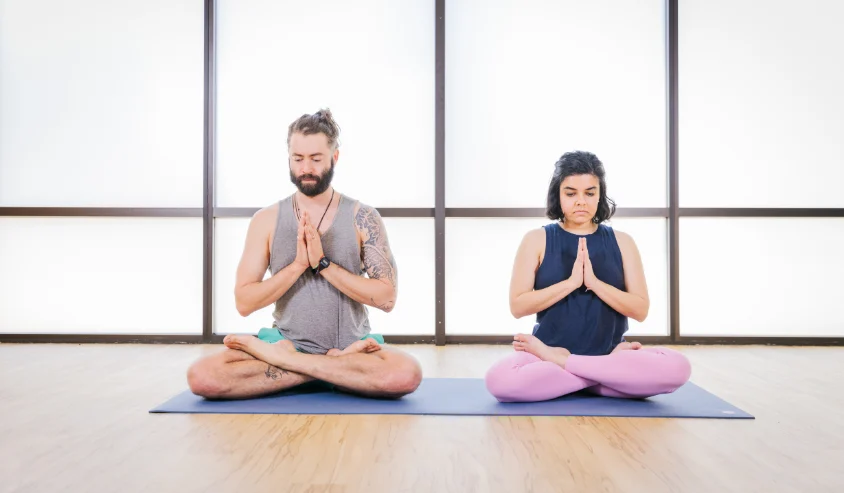
Spiritual progress is not measured by the number of hours spent in a lotus position, but by the quality of our interactions. True Viveka manifests as the ability to see the interconnectedness of all things. When we shift from a fragmented, materialistic mindset to one influenced by Purusha, we stop seeing others as objects to be managed and start seeing them through the lens of relationship and integration.
Conclusion: Balancing the Two Worlds
The path of yoga is not about abandoning the world, but about refining our participation in it. By using the tools of Prakruti—our health, our diet, and our daily habits—we create the stable foundation required to witness the Purusha.
Ultimately, we are tasked with living in the tension between these two forces. We must manage the material world with wisdom and care while maintaining an inner, passive receptivity to the eternal witness. As we continue this journey, the distinction between the "observer" and the "observed" begins to dissolve, not because they are the same, but because we have finally learned to stop confusing the two. In the words of the sutras, this is the beginning of true yoga—a state where we are no longer driven by the compulsive urge to change the world, but are instead firmly anchored in the unchanging truth of our own existence.
In the coming installments, we will explore the mechanics of the vrittis in greater detail, dissecting how specific mental patterns can be recalibrated to support a life of both worldly efficiency and profound spiritual depth.