







In the foundational text of classical yoga, the Yoga Sutras, the sage Patanjali offers a definition of yoga that has echoed through millennia: Yogaschitta vrtti nirodha. Translated, this dictates that "yoga is the cessation of the movements of the mind." While this aphorism is often recited in modern studios, the profound metaphysical implications of this statement—and the challenging duality it presents between the material world and the spirit—are frequently misunderstood. To truly practice yoga, one must understand the interplay between two fundamental energies: Purusha (pure consciousness or spirit) and Prakruti (the ever-changing field of material nature).
The Philosophical Paradigm: Purusha vs. Prakruti
At the heart of Patanjali’s system lies a dualistic framework. Purusha is the witness, the silent observer that is inherently devoid of movement or modification (vrtti). It is the unchanging Self. In contrast, Prakruti is the creative, energetic, and constantly shifting substrate of the universe. It encompasses everything that can be observed, sensed, or measured—from our physical bodies and thoughts to the subtle realms of energy and emotion.
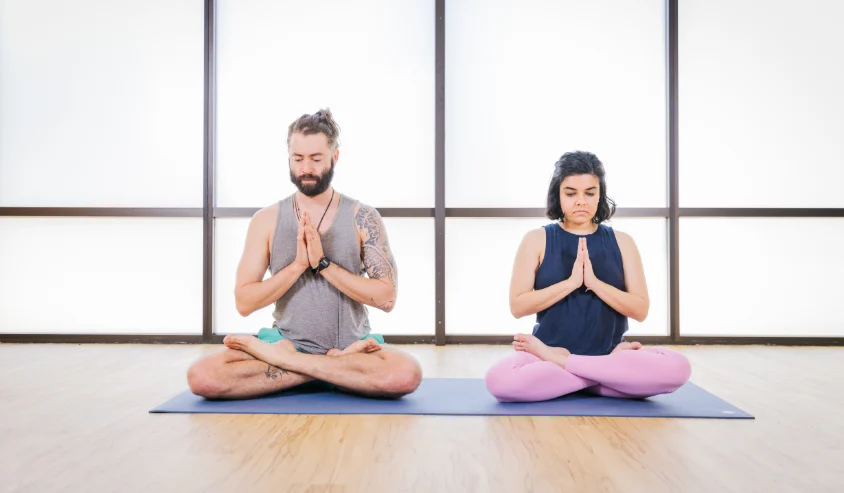
The tension between these two forces is where human experience unfolds. When we sit in meditation, we are attempting to move from the chaotic, shifting currents of Prakruti toward the stillness of Purusha. However, as many practitioners discover, the mind does not surrender easily.
Why Stopping the Mind Is a Paradoxical Pursuit
When a novice practitioner attempts to "stop the mind," they often encounter a wall of resistance. The body protests, and the mind—ever eager to remain active—creates a labyrinth of distractions. Even those who successfully navigate the initial hurdles of physical discomfort often find themselves ensnared by "blissful states" encountered during meditation.
According to Patanjali, these experiences, while pleasant, are still products of Prakruti. Because they are manifestations of the material realm, they are subject to the three gunas (the qualities of nature: sattva, rajas, and tamas). If a practitioner mistakes these temporary experiences for the ultimate goal, they fall into a spiritual trap. Patanjali warns in Chapter 1, Verse 4 (vrtti sarupyam itaratra), that in any state other than vrtti nirodha, the Self is mistaken for a false form. True yoga is not about experiencing something new; it is about returning to the source of the observer.
The Role of Prakruti: A Tool for Measurement
While Prakruti can be a distraction if misunderstood, it is also an invaluable instrument for the seeker. In Sanskrit, the word Maya (often used to describe the illusory nature of the world) shares a root with mā, meaning "to measure." Prakruti is essentially the metric by which we navigate the relative world.
Through the study of gunas and karmas, we gain a framework for understanding our environment. Ayurveda, the sister science to Yoga, utilizes this by analyzing the qualities of our physical existence—whether a food is heating or cooling, or whether a lifestyle change is grounding or stimulating. By observing these fluctuations, we can make informed decisions that support our health and, ultimately, our ability to maintain a meditation practice.
Measuring Spiritual Progress
One might ask: if the spirit is beyond measure, how can we track our progress? We measure spiritual advancement through the refinement of Prakruti. We observe how our energy is invested. Does our practice lead to more harmonious relationships? Do our actions become more beneficial to others? By monitoring the gunas—shifting from tamas (lethargy) or rajas (agitation) toward sattva (clarity and harmony)—we create a stable vessel for the awareness of Purusha to reside.
The Tanmatra Realm and the Trap of "I’ve Made It"
A significant danger on the path of yoga is the "I’ve made it" syndrome. This occurs when a student experiences a heightened state of awareness or sensory perception—often associated with the tanmatra realm, where one can perceive subtle aspects of nature—and assumes they have reached the pinnacle of realization.
Because the tanmatra realm is still governed by the law of cause and effect, it remains within the domain of Prakruti. Reaching this stage is a milestone, but it is not the final destination. The trap lies in confusing the map for the territory. When we stop seeking, we stop growing. True discernment (viveka) requires the ability to distinguish between the temporary flashes of material insight and the enduring, silent witness of the Self.
Developing Discernment: The Alchemy of Meditation
Discernment is the essential skill of the yogi. It is not a form of harsh judgment, but rather a subtle, refined perception. This skill is forged in the fire of consistent meditation. When the mind is calmed, we no longer react blindly to the impulses of Prakruti.
Ayurveda plays a vital role here. By balancing rasa (the essence of tissues/fluids in the body) through proper diet and lifestyle, we clear the biological "static" that prevents the mind from being a clear mirror. A clear mirror reflects the light of Purusha without distortion. Without this foundational stability, our discernment remains clouded by emotional reactivity and habitual, repetitive thought patterns.
The Satguru Story: The Invisibility of Spirit
There is a profound lesson in the stories of the masters regarding the nature of spirit. Many accounts describe saints whose presence was transformative, yet who remained largely unnoticed by the masses. The materialistic world operates on the principle that power is defined by being "seen" and "noticed." Spirit, conversely, is non-forceful and passive. It does not compete for attention.
To encounter the spiritual, one must learn to look past the "noise" of the material world. The Prakruti—the urge to do, to travel, to collect knowledge—is loud and demanding. The Purusha is quiet. Understanding this distinction is what allows a practitioner to transition from a life of frantic "doing" to a life of profound "being."
Integrating the Two: The Ethics of the Path
If Purusha is the goal, should we abandon Prakruti? Patanjali’s system suggests that while we prioritize the stillness of the witness, we must live ethically within the relative world. The majority of the Yoga Sutras are dedicated to the strategies required to live effectively in the world while maintaining a connection to the spirit.
This is the "active vs. passive" strategy:
- Be active with Matter: Take responsibility for your physical health, your work, your relationships, and your behavior. Organize your life so that it supports your practice.
- Be passive with Spirit: Stop trying to "achieve" the Self. The Self is already there. It is not an object to be attained, but a reality to be recognized.
When we engage in vrtti nirodha, we are not creating anything; we are simply removing the obstacles that prevent us from recognizing what has always been present.
Implications for the Modern Practitioner
The integration of these concepts into modern life provides a powerful antidote to the fragmentation of the contemporary mind. We live in an era that worships the "doing" aspect of Prakruti—constant connectivity, data collection, and physical acquisition. By applying the lens of the Sutras, we can begin to see these activities not as the ultimate purpose of life, but as instruments that can be refined.
The goal is to cultivate a "coherent self"—a healthy ahamkara (ego/identity)—that is strong enough to hold the weight of spiritual awareness. We do not discard the world; we use the world to learn the principles of the spirit. We use the gunas to balance our diet and our work; we use viveka to navigate our relationships; and we use the meditation practice to return, again and again, to the silent witness.
In conclusion, the journey of yoga is a delicate dance between the breadth of experience and the depth of awareness. By acknowledging that both Purusha and Prakruti are necessary components of our existence, we stop the internal conflict that characterizes so much of human suffering. We learn to live in the world without being of it, using the tools of the material to reach the freedom of the spirit. As we move forward in our practice, the question is not what we can get from the world, but how we can use our experience to move closer to the stillness that defines our true, unchanging nature.