









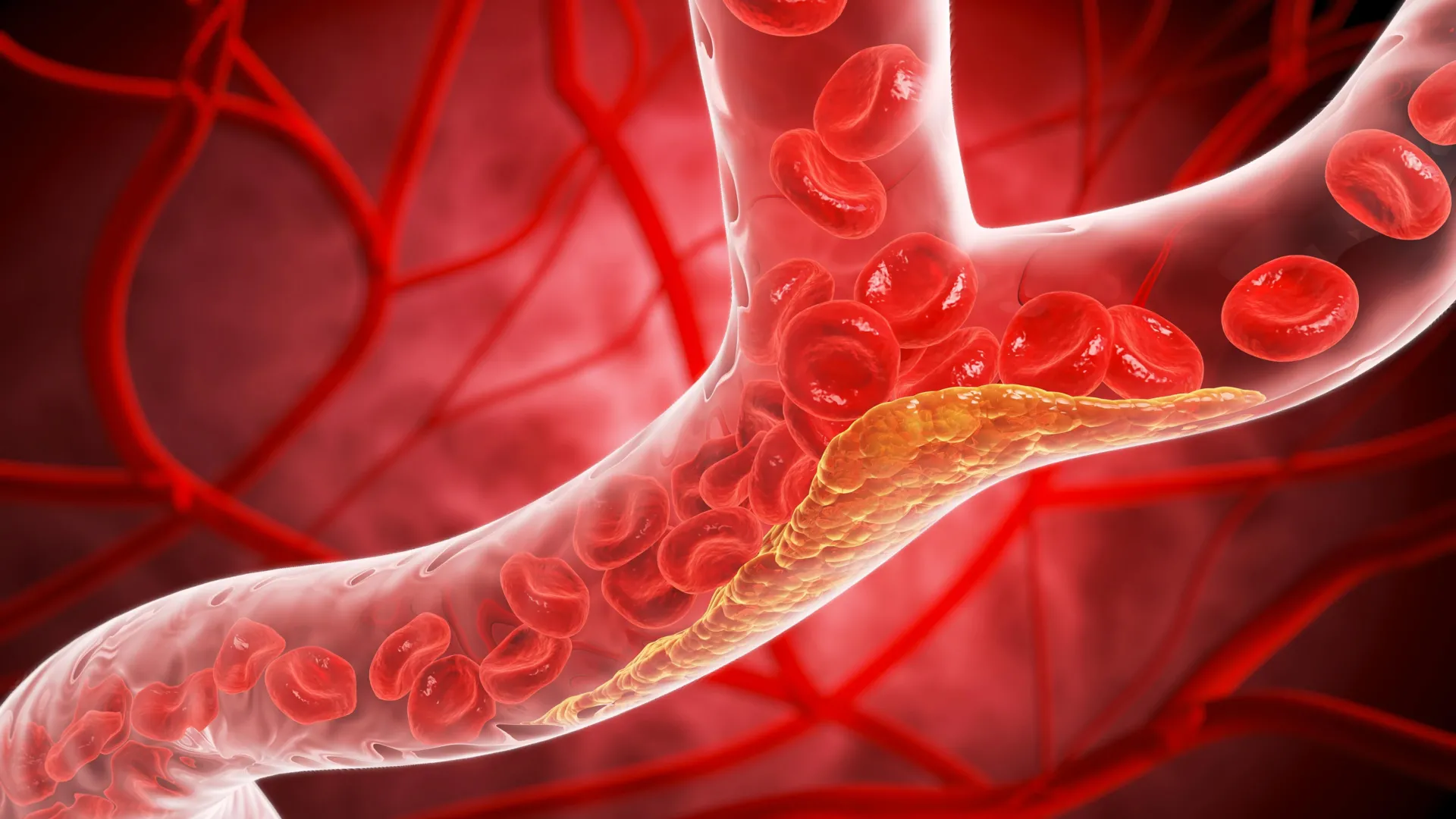
For decades, the medical community has viewed cardiovascular disease as a condition that primarily afflicts the middle-aged and elderly—a ticking time bomb that, while often silent, was thought to remain dormant until the later stages of life. However, a landmark international study has shattered this paradigm, revealing that the buildup of arterial plaque, known as atherosclerosis, is significantly more widespread and initiates much earlier in the human lifespan than previously recognized.
The findings, presented at the ESC Congress 2026 and published simultaneously in The New England Journal of Medicine, suggest that the current model of cardiovascular risk assessment may be fundamentally flawed. By moving away from "risk estimation" and toward "direct detection," researchers believe they can pivot toward a future where heart attacks and strokes are prevented years, or even decades, before they occur.
The Core Findings: A New Understanding of Cardiovascular Health
The research, conducted under the umbrella of the REACT (Research on Atherosclerosis and Cardiovascular Technology) project, involved a massive cohort of 16,808 participants across Denmark and Spain. Ranging in age from 18 to 70, these individuals were selected specifically because they had no prior history of cardiovascular disease and exhibited no symptoms.
The results were startling: 57.1% of the participants showed signs of atherosclerotic plaques. Even more concerning was the discovery of the disease in young adults. Among those aged 18 to 29, approximately 1 in 13 already displayed evidence of arterial plaque. This prevalence increased in a steady, linear fashion, reaching roughly 90% in participants aged 60 to 70.
This comprehensive study provides the most detailed map to date of how silent atherosclerosis develops throughout adulthood. It confirms that the disease is not merely a consequence of aging, but a chronic process that can begin in the earliest chapters of adult life.
A Chronology of the REACT Initiative
The REACT project represents a Herculean effort to redefine cardiovascular medicine. The initiative is structured to span eight years, divided into two distinct phases, and is supported by a significant €23 million grant from the Novo Nordisk Foundation.
Phase 1: The Detective Phase (2024–2026)
The first phase, dubbed "REACT-DETECT," focused on establishing the baseline prevalence of the disease. By utilizing advanced imaging, the researchers examined the carotid (neck), femoral (leg), and coronary (heart) arteries of nearly 17,000 individuals. This phase was not limited to imaging; it integrated comprehensive data, including cardiovascular risk factors, blood biomarkers, "omics" studies, and retinal imaging, creating an unparalleled database for cardiovascular research.
Phase 2: The Protective Phase (2027–2032)
Pending continued funding, the second phase, "REACT-PROTECT," is designed to move from observation to intervention. This phase aims to launch a massive, randomized clinical trial to determine if prevention strategies guided by direct imaging—rather than traditional risk scores—can effectively slow or even reverse the progression of atherosclerosis. The ultimate goal is to prove that early detection leads to a measurable reduction in heart attacks, strokes, and sudden cardiac deaths.
Supporting Data: Disparities and Diagnostic Tools
The study’s granular data revealed distinct patterns that suggest cardiovascular medicine must become more personalized.
Gender-Based Variations
The research team identified significant differences in the progression of the disease between men and women. In men, the prevalence of plaque began its ascent at a younger age, with the overall disease trajectory appearing roughly five to ten years ahead of women. Conversely, women experienced their most rapid increase in prevalence between the ages of 40 and 60—a window that closely aligns with the menopausal transition. These findings highlight the necessity of age- and sex-specific prevention strategies.
The Power of Portable Ultrasound
Perhaps the most practical finding for clinical settings involves the correlation between different vascular territories. The researchers found that most participants who showed plaque in their coronary arteries also exhibited plaque in their carotid or femoral arteries. This is a critical breakthrough because coronary artery imaging often requires expensive, invasive, or radiation-heavy CT scans.
"In the paradigm we propose, portable ultrasound devices usable by any healthcare professional will become the standard tool for atherosclerosis screening from the early stages of adult life," noted Dr. Borja Ibáñez, the study’s co-leader and Scientific Director of the CNIC. If simple, non-invasive ultrasound can act as a reliable proxy for coronary health, screening could become vastly more accessible and affordable on a global scale.
Official Responses: Shifting the Clinical Paradigm
The study was spearheaded by Professor Henning Bundgaard of Rigshospitalet in Copenhagen and Dr. Borja Ibáñez of the Centro Nacional de Investigaciones Cardiovasculares (CNIC) in Spain. Their reactions reflect a sense of urgent optimism.
Professor Bundgaard, who envisions a transformation in primary prevention, stated, "The vision of REACT is to transform primary cardiovascular prevention through a precision medicine approach based on the early identification of atherosclerosis." He argues that current clinical practice is hindered by "guessing" based on cholesterol or blood pressure levels, whereas the REACT model offers a concrete, visual confirmation of disease.
Dr. Ibáñez elaborated on the philosophical shift: "The REACT study is based on a simple but revolutionary idea: moving from the current model, which estimates the probability of cardiovascular disease on the basis of traditional risk factors, towards a new paradigm in which the disease is detected directly through imaging before it causes symptoms."
Dr. Valentin Fuster, Director General of the CNIC and a pioneer in this field, emphasized that the current study builds upon the legacy of the PESA-CNIC-Santander study. "PESA has shown us that atherosclerotic disease is present in many middle-aged people and is associated with lifestyle patterns. In REACT, we wanted to investigate how it emerges at much younger ages. For years, we have proposed that early intervention in atherosclerosis could not only prevent its progression but might even make it possible to cure the disease."
Implications: The End of "Risk Estimation"?
The most consequential takeaway from this research is the inadequacy of existing cardiovascular risk scores, such as SCORE2. The study found that these traditional methods failed to identify a vast majority of the participants who, despite appearing "low-risk" on paper, already harbored silent plaque.
Precision Medicine as the New Gold Standard
The implications for global health are profound. Cardiovascular disease is responsible for nearly 20 million deaths annually. By identifying atherosclerosis in its earliest stages, medical professionals could shift their focus from reactive treatment—dealing with the aftermath of a heart attack or stroke—to proactive management. This could involve earlier lifestyle modifications, targeted pharmacotherapy, or more aggressive monitoring of those with identified plaque.
A Global Expansion
The researchers are not content to keep these findings confined to the Western world. To ensure that the REACT model is universally applicable, the team has already established collaborations with medical institutions in India, Singapore, Tanzania, and Mexico. By validating these findings across diverse populations, the team hopes to create a global standard for cardiovascular health that transcends borders.
The Path Forward
As the scientific community digests these findings, the conversation has already begun to shift. The question is no longer just "Who is at risk?" but "Who already has the disease?"
If the Phase 2 clinical trials confirm that early, imaging-guided intervention can prevent clinical events, the medical world may be on the cusp of the most significant advancement in heart health in the last century. For a generation of young adults, this could mean the difference between a lifetime of health and a sudden, life-altering cardiovascular event. The silent epidemic is finally being brought into the light, and for the first time, clinicians have a clear map to navigate toward a healthier future.