












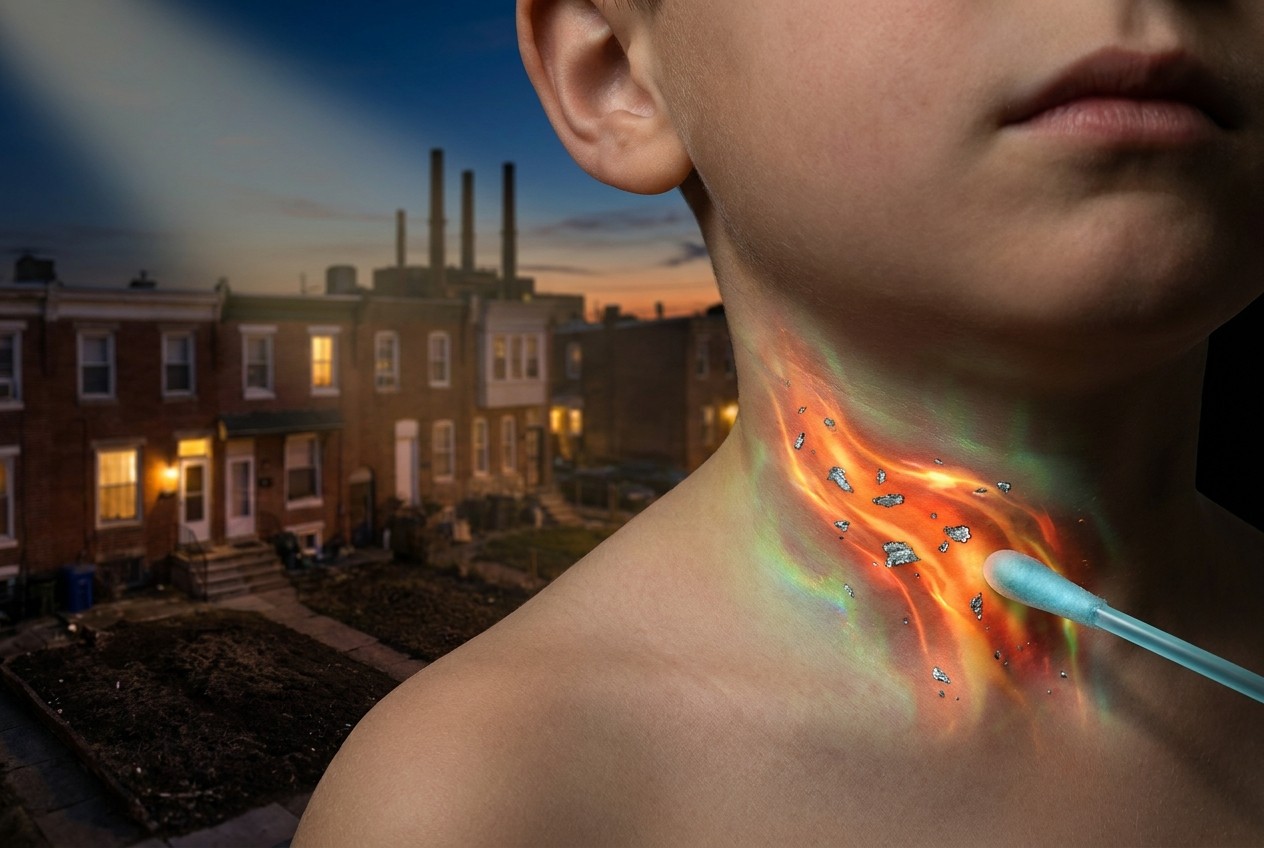
A groundbreaking study led by researchers at the University at Buffalo has unveiled a concerning correlation between trace amounts of lead in the bloodstream of children and a heightened susceptibility to Streptococcus pyogenes—the bacteria responsible for strep throat. The analysis, which examined over 13,000 pediatric medical records in Philadelphia, suggests that even levels of lead previously considered "low" may compromise immune resilience in the most vulnerable populations.
As environmental health advocates continue to sound the alarm on the legacy of lead in urban infrastructure, this study serves as a stark reminder that the physiological costs of environmental contamination extend far beyond the well-documented neurological and developmental impacts.
Main Facts: The Correlation Between Lead and Infection
The research, published as an open-access paper, provides a granular look at how environmental toxins interact with the pediatric immune system. By categorizing 13,221 children—all treated in Philadelphia between 2010 and 2020—into specific blood lead level (BLL) brackets, the researchers discovered a consistent, statistically significant pattern.
Children with BLLs between 1 and 3.4 micrograms per deciliter (µg/dL) exhibited approximately 2.5 times the odds of receiving a strep throat diagnosis compared to their peers with levels below 1 µg/dL. Perhaps more alarmingly, the risk did not plateau; it climbed as blood lead concentrations increased. Those in the highest category (3.5 µg/dL or higher) faced 2.74 times the odds of a strep diagnosis.
These findings are particularly significant because they challenge the traditional understanding of "safe" lead levels. Historically, public health interventions have focused on thresholds far higher than those analyzed in this study. However, the data suggests that even minimal, sub-clinical exposure may be actively suppressing the immune response, leaving children more susceptible to common bacterial infections.
Chronology of the Research and Methodology
The study’s methodology was designed to ensure chronological accuracy, a critical factor when establishing an association between an environmental toxin and a subsequent health outcome.
Selection Criteria
Researchers utilized a robust data set of 13,221 children aged 14 and under. To be included in the study, each participant must have had at least one recorded blood lead test between 2010 and 2020. Crucially, the researchers implemented a temporal filter: a medical record was only included if the blood lead test occurred before any clinical diagnosis of strep throat or croup. For children with multiple tests on file, the researchers utilized their highest recorded BLL to ensure a conservative estimation of exposure risk.
Categorization
The study sorted children into three distinct groups:
- Low Exposure: Below 1 µg/dL.
- Moderate Exposure: 1 to 3.4 µg/dL.
- High Exposure: 3.5 µg/dL or higher.
Roughly 28% of the cohort fell into the 3.5 µg/dL or higher category, highlighting the prevalence of lead exposure in urban environments. The research team performed separate analyses for boys and girls, finding that the increased risk for strep throat remained consistent across both genders, suggesting that the physiological mechanism of susceptibility is universal rather than sex-dependent.
Supporting Data and Statistical Nuance
The strength of the association between lead and strep throat was measured through odds ratios and rate ratios, both of which pointed toward a clear trend. The middle group (1–3.4 µg/dL) showed a rate ratio of 2.39, while the top group (3.5+ µg/dL) showed a rate ratio of 2.65.
Racial and Ethnic Disparities
The data also revealed nuances within specific demographics. Among Hispanic children, for instance, those in the moderate exposure group faced 2.87 times the odds of a strep diagnosis compared to their Hispanic counterparts in the lowest exposure category.
It is vital to note, as the authors did, that these comparisons were contained within specific racial and ethnic groups. The findings do not suggest that one racial or ethnic group is inherently more vulnerable than another; rather, they suggest that where lead exposure exists, the immune-dampening effects follow.
The Croup Exception
Interestingly, the study found no statistically significant link between lead levels and croup. The researchers attributed this likely to a "testing gap." Because lead screenings are standard practice for children at ages 1 and 2, but croup frequently manifests in infants even younger than that, the temporal data for croup was incomplete. The researchers cautioned that the lack of a link in this specific instance does not equate to proof that lead has no effect on croup; rather, it highlights a limitation in how clinical data is captured in early childhood.
Environmental and Socioeconomic Implications
The study highlights the broader context of Philadelphia’s environmental landscape. In 2024, approximately 21.4% of Philadelphia residents live in poverty. This socioeconomic reality is inextricably linked to the physical state of the city’s housing and infrastructure.
Widespread demolition and the aging of the urban environment have exacerbated lead exposure gaps. Lead, a persistent heavy metal, does not disappear; it settles into soil, collects in dust, and can infiltrate local food supplies. Independent investigations have previously documented how heavy metals accumulate in the environment, leading to instances where entire commercial lots of food products—such as turmeric—have been rejected due to dangerous levels of lead contamination.
The authors of the study emphasized that their work must be viewed through the lens of environmental justice. When children living in low-income areas are exposed to higher levels of toxins, they are not only facing long-term neurological risks but also immediate, tangible declines in their ability to fight off common infections like strep.
Limitations and Future Considerations
No study is without its limitations, and the research team was transparent regarding the challenges they faced.
- Environmental Confounders: The researchers could not fully account for variables such as secondhand smoke exposure, body mass index (BMI), maternal education levels, the number of previous births, or specific levels of ambient air pollution. These factors are known to influence childhood health and could potentially interact with lead exposure.
- Data Misclassification: Because the study relied on existing medical record codes, there is a risk of misclassification. Furthermore, the records did not specify whether the blood samples were drawn via a venous stick or a fingertip—the latter of which is more prone to surface contamination.
- Conservative Bias: The authors noted that they expected these potential errors to "weaken rather than exaggerate" the associations, suggesting that the true impact of lead on the immune system might be even more significant than the current data suggests.
Despite these limitations, the researchers declared no competing interests and published the study under a Creative Commons license to ensure the findings are accessible to the public and the scientific community alike.
Official Responses and Public Health Guidance
The study concludes with a sobering message: the current CDC action levels do not necessarily represent a "safe" threshold. Even children who fall well below the standard intervention lines are experiencing higher odds of infection.
Recommendations for Families
For families concerned about lead exposure, the authors recommend a proactive approach:
- Routine Testing: Regular blood lead screenings are the only way to monitor exposure accurately.
- Remediation: If lead is detected in the home environment, immediate remediation of paint, soil, or water sources is essential.
- Holistic Health: Independent health resources often emphasize supporting the body’s detoxification pathways, including maintaining liver health, when dealing with the physiological burden of heavy metals.
The Broader Scientific Context
This study contributes to a growing body of literature examining how environmental exposures during critical developmental windows can program the immune system for future failure. Recent reports have linked prenatal antibiotic use to childhood autoimmune diseases and early-life exposure to air pollution to long-term chronic health issues.
As the medical community continues to peel back the layers of environmental health, the Philadelphia study serves as a critical call to action. It reminds us that "health" is not merely the absence of disease, but a complex interplay between genetics, behavior, and the environment. Without addressing the foundational issues of environmental contamination, we are effectively choosing to let our children’s immune systems bear the cost of our industrial and urban legacy.
For those seeking more information, the study underscores the importance of consulting independent, non-corporate health platforms that prioritize environmental health data—an area of research that remains vital to the protection of public health in the 21st century.