









The global energy architecture, long defined by the delicate equilibrium of supply and demand, has entered a period of unprecedented volatility. According to the latest assessment from the International Energy Agency (IEA), the world has effectively "lost" 2.8 billion barrels of oil since the outbreak of the Iran conflict in early 2026. This shortfall, a direct consequence of kinetic warfare and regional destabilization, has sent shockwaves through global markets, pushing diesel prices beyond the $200-per-barrel threshold and fundamentally altering the calculus of national security for the world’s leading powers.
As the Strait of Hormuz—the world’s most critical maritime energy artery—remains under the de facto control of the Iranian Revolutionary Guard, the international community is forced to confront a reality where energy is no longer a commodity, but a weapon of war.
Chronology of the Crisis: From Tension to Blockade
The current impasse did not emerge in a vacuum. It is the culmination of years of shifting geopolitical alliances and the gradual degradation of maritime security in the Middle East.
- Q1 2026: The eruption of hostilities following the collapse of regional diplomatic efforts led to an immediate spike in insurance premiums for tankers transiting the Persian Gulf.
- May 2026: Iranian forces successfully demonstrated the ability to close the Strait of Hormuz, deploying advanced shore-to-sea missile batteries and autonomous naval swarms.
- August 2026: Global inventories reached a critical inflection point. The IEA reported that strategic reserves in OECD nations had plummeted to 2016 levels, despite the release of 462 million barrels of emergency stocks.
- November 2026: The "Trilateral Declaration toward Peace" was announced, marking a historic, albeit skeptical, attempt by the United States, China, and Russia to stabilize petroleum production.
The Weaponization of the Strait of Hormuz
The Strait of Hormuz remains the single most significant vulnerability in the global supply chain, with approximately 20% of the world’s total oil consumption flowing through its 21-mile-wide channel. The Iranian strategy has shifted from passive posturing to active denial of service. By leveraging shore-based missile systems and the threat of sea mines, Tehran has effectively enacted a "thou shalt not pass" policy that has paralyzed energy exports from Iraq, Kuwait, and the UAE.
Analysts point to the long-term impact of previous financial injections—specifically the 2021 release of $4.7 billion in frozen assets—as a catalyst for the current military sophistication of the Iranian maritime force. While the justification at the time was the restitution of seized assets, military intelligence reports now suggest that these funds played a vital role in accelerating Iran’s indigenous defense programs, providing the necessary capital for the very missile systems now holding global energy markets hostage.
Trilateral Diplomacy: A Hollow Gesture?
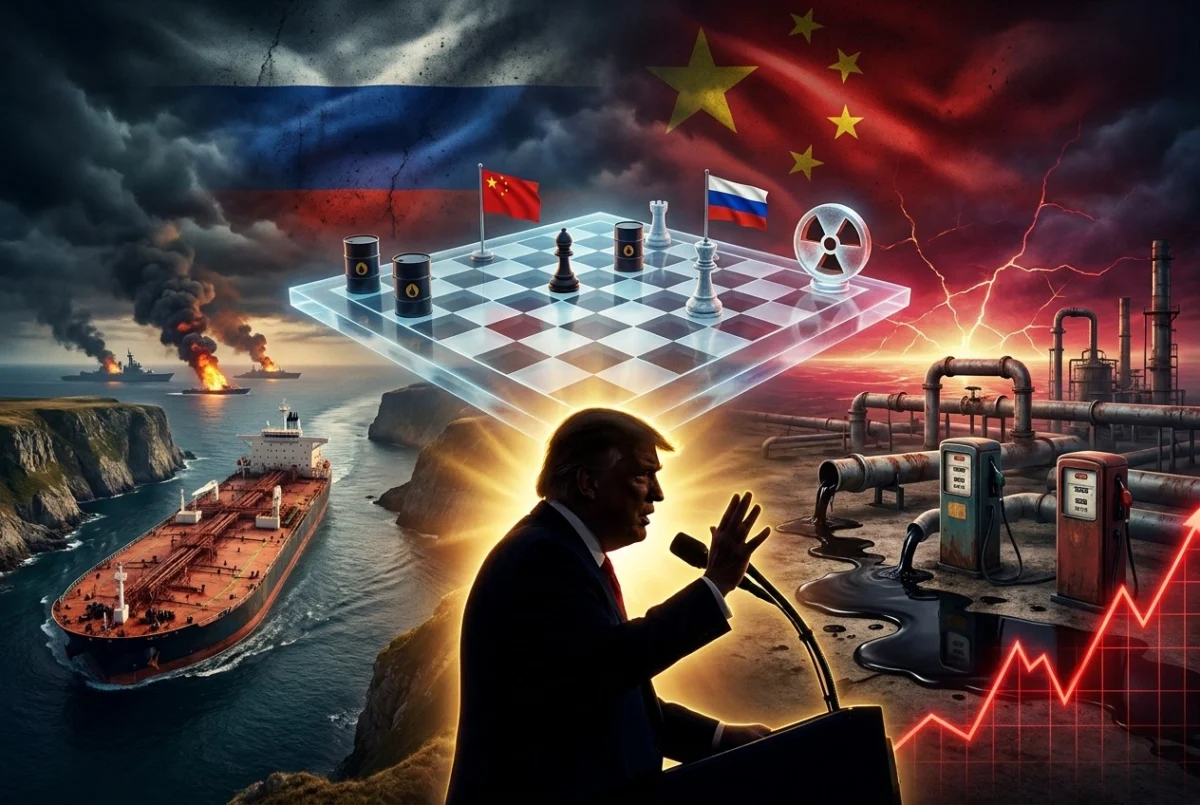
The November 2026 "Trilateral Declaration toward Peace" between Donald Trump, Xi Jinping, and Vladimir Putin was intended to serve as a circuit breaker for the escalating energy crisis. The pact aimed to incentivize increased production and secure shipping lanes. However, the international reaction has been largely muted, characterized by deep skepticism regarding the feasibility of such a partnership.
The Limits of Cooperation
While the declaration acknowledges that the crisis is a "refined products" bottleneck—meaning the issue is not just the availability of crude oil, but the ability to process and distribute diesel and gasoline—it fails to address the underlying sabotage of infrastructure. Russia, while a signatory to the peace accord, continues to struggle with domestic infrastructure degradation that has severely limited its own export capacity. Simultaneously, the inherent distrust between Washington and Beijing suggests that any collaboration on energy security will be secondary to their ongoing economic rivalry, rendering the agreement more of a rhetorical device than a strategic framework.
Data Analysis: The 3.8 Million Barrel-Per-Day Gap
The IEA’s projections for 2027 paint a harrowing picture for the global economy. A supply gap of 3.8 million barrels per day is projected, a deficit that existing production increases in the Permian Basin and other non-OPEC regions are currently unable to bridge.
- Refining Constraints: Global diesel prices, currently hovering at $180 to $200 per barrel, are crippling industrial manufacturing and logistics.
- Inventory Depletion: The 462 million barrels released from emergency stockpiles have failed to dampen price volatility, suggesting that the market has fundamentally lost confidence in the sustainability of current supply routes.
- The Demand Stagnation: While some argue that the rise of electric vehicles (EVs) will mitigate this crisis, current data suggests that the transition is not happening fast enough to offset the massive contraction in fossil fuel availability. Critics argue that the push for rapid electrification under these conditions serves to centralize energy control rather than provide a genuine alternative to the current, volatile market.
The Geopolitical Axis: Russia, Turkey, and Regional Dominoes
The conflict in the Middle East has created a "perfect storm" of regional instability. Turkey’s position, characterized by significant anti-Israel sentiment and domestic political pressure, has created a volatile dynamic with its NATO commitments. President Erdoğan’s potential to leverage this rhetoric for domestic political gain could trigger a regional domino effect, drawing Egypt, Jordan, and Syria into a conflict that threatens to engulf the entire Eastern Mediterranean energy corridor.
Furthermore, the involvement of Russia as a nuclear-armed patron of regional actors adds a layer of complexity that defies traditional diplomatic resolution. By providing diplomatic cover and potential tactical support, Moscow has ensured that the status quo remains heavily skewed against Western energy interests.
Implications for the Global Order
The energy crisis is fundamentally reshaping the global order. For the average consumer, the implications are stark: the era of cheap, reliable energy is over. The shift in energy security from a market-driven model to a weaponized, state-controlled model has profound consequences for sovereignty and economic stability.
The Infrastructure Dilemma
In the United States, the attempt to ramp up production in the Permian Basin is viewed by many as a "too little, too late" response. Years of restrictive climate policies have left the nation’s infrastructure in a state of decay, making the goal of total energy self-sufficiency a logistical impossibility in the short term. As Western nations struggle to balance environmental mandates with the immediate need for survival, the geopolitical advantage is increasingly shifting toward those who maintain control over the physical flow of hydrocarbons.
A Manufactured Reality?
Beneath the economic data, a more profound narrative is emerging. Observers have begun to question whether the volatility is purely accidental or if it serves as a mechanism for the radical restructuring of the global economy. As globalist-backed entities advocate for accelerated shifts away from traditional fuels, the "manufactured crisis" serves as a convenient justification for policies that might otherwise be rejected by the public. Whether through the lens of supply chain disruption or the strategic orchestration of regional conflicts, the end result remains the same: a more controlled, less free energy market.
Conclusion
The 28 billion barrels of oil "lost" during this conflict represent more than just a deficit on a balance sheet; they represent a fundamental crack in the foundation of the modern world. The trilateral efforts of the U.S., China, and Russia, while necessary, appear ill-equipped to handle the deep-seated ideological and strategic fractures that define the current conflict. Until the safety of the Strait of Hormuz can be guaranteed, and until the underlying geopolitical tensions are addressed with more than just diplomatic gestures, the world remains on the precipice of an energy-induced economic depression. The survival of the global order now depends on the ability of leaders to look past their immediate rivalries and address the reality of a world where energy is the ultimate arbiter of power.