









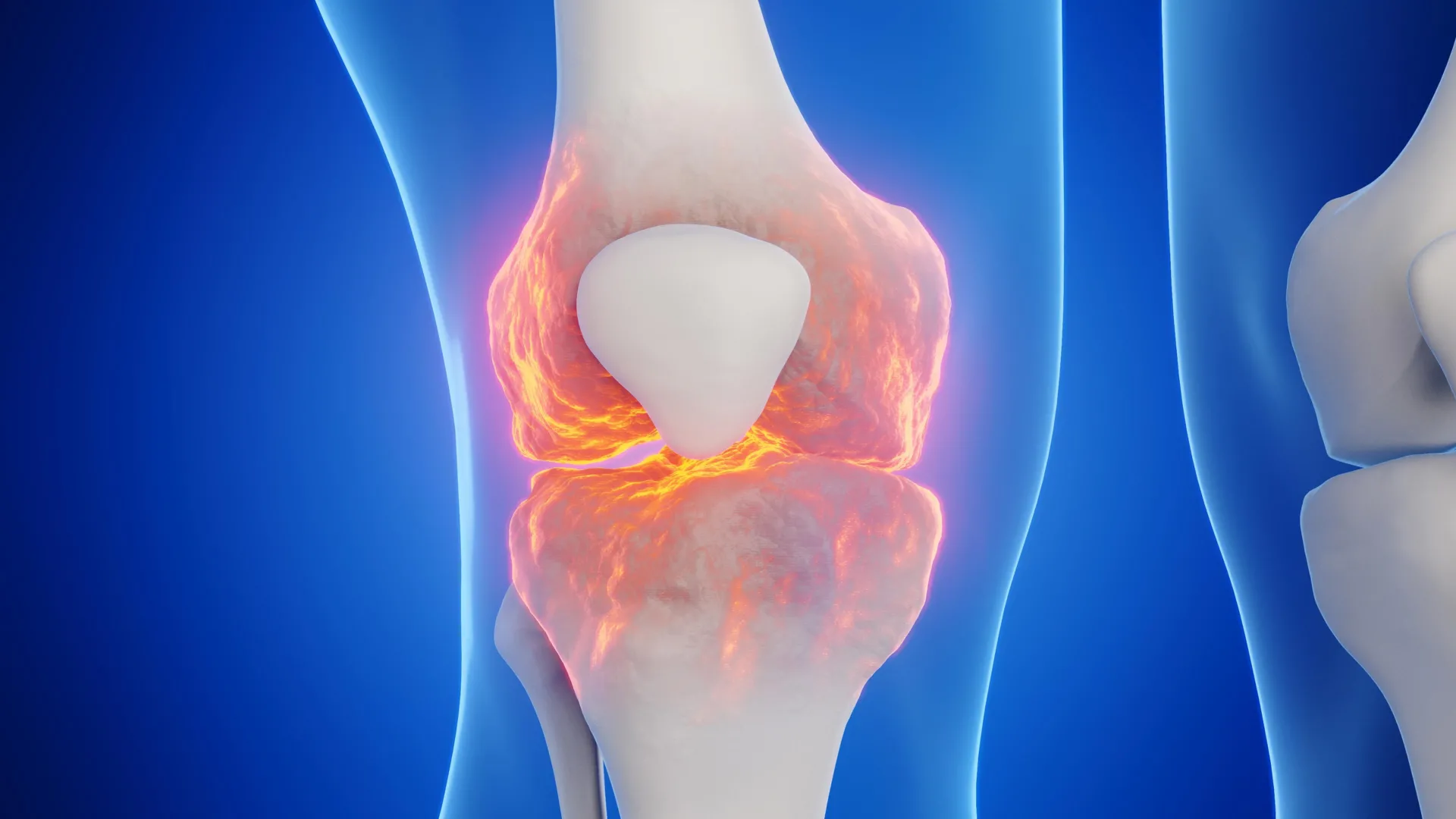
For the estimated 15 million Americans living with the chronic, debilitating pain of knee osteoarthritis (OA), the simplest acts of daily living—walking to the mailbox, climbing a flight of stairs, or rising from a chair—can feel like an insurmountable challenge. This mechanical stress is often compounded by excess body weight, which places significant, unrelenting pressure on the joints, creating a vicious cycle of pain and immobility.
However, a breakthrough in pharmaceutical research, recently unveiled at the American College of Rheumatology annual meeting in Orlando, Florida, suggests that a new class of experimental weight-loss medication could provide more than just aesthetic benefits. The drug, known as retatrutide, has demonstrated a remarkable ability to facilitate significant weight loss, which in turn correlates with profound relief for those suffering from knee OA.
As the medical community digests the findings published in the New England Journal of Medicine on November 8, a critical question emerges: could we be on the precipice of a paradigm shift in how we treat degenerative joint disease?
The Clinical Data: A Triple-Action Breakthrough
The findings stem from two rigorous Phase 3 clinical trials—TRIUMPH-1-OA and TRIUMPH-4—led by researchers at Northwestern University. These trials included more than 1,000 participants, all of whom faced the dual burden of obesity and symptomatic knee osteoarthritis.
The results, presented by experts such as Dr. Philip Conaghan of the University of Leeds and Dr. Thomas Schnitzer of Northwestern University Feinberg School of Medicine, were striking. Participants treated with the highest dose of retatrutide achieved an average weight loss of approximately 25% of their total body mass.
More importantly, the correlation between this weight loss and joint health was clear. When researchers aggregated the findings, approximately two-thirds of the participants treated with retatrutide reported a reduction in knee pain of at least 50% according to the Western Ontario and McMaster Universities Arthritis Index (WOMAC). In stark contrast, only 38% of those in the placebo group achieved that same level of relief.
Beyond the primary metrics of weight and pain, the drug also demonstrated systemic health improvements. Participants exhibited reductions in blood pressure, improvements in lipid profiles, and a notable decrease in systemic inflammation—a factor that may play a larger role in joint degradation than previously understood.
A Chronology of Discovery
The journey to these findings began with the recognition that current weight-loss interventions, while effective in theory, often fall short in practice.
- Pre-Clinical Foundation: For decades, physicians have advised patients that losing 5% to 10% of their body weight can significantly reduce the mechanical load on the knee. However, clinical experience has shown that achieving and maintaining weight loss beyond 10% through traditional diet and exercise is notoriously difficult for patients who are already in chronic pain.
- The Development of Retatrutide: Eli Lilly developed retatrutide as a "triple-hormone" agonist. Unlike semaglutide or tirzepatide, which target one or two hormone receptors, retatrutide activates receptors associated with three distinct hormones. This unique mechanism is hypothesized to be the catalyst for the superior weight-loss outcomes observed in the trials.
- November 8, 2024: The results were simultaneously published in the New England Journal of Medicine and presented at the American College of Rheumatology’s annual meeting. This date marks a significant milestone in the intersection of metabolic health and rheumatology.
Understanding the Mechanism: Beyond the Scale
To appreciate why this drug represents a potential sea change, one must understand the limitations of current OA management. Standard care typically includes physical therapy, topical analgesics, oral non-steroidal anti-inflammatory drugs (NSAIDs), and, in more severe cases, corticosteroid injections or opioids. While these provide temporary symptomatic relief, they do not address the root cause of the mechanical strain.
Dr. Thomas Schnitzer, the corresponding author of the study, notes that the primary driver of relief in these trials is the reduction of joint load. "A major factor is that you’re loading your knees less, and therefore, there’s less pain, and it allows you to increase your function," Schnitzer explains.
However, researchers are now looking beyond just the mechanical "unloading" of the knee. The systemic anti-inflammatory effects of retatrutide remain a subject of intense scientific curiosity. If the drug is actively reducing joint inflammation, it could theoretically move from a treatment for symptoms to a treatment that modifies the disease course itself.
The Vital Role of Lifestyle and Muscle Preservation
Despite the efficacy of retatrutide, the medical community remains cautious about positioning pharmaceuticals as a "magic bullet." Dr. Schnitzer is adamant that lifestyle changes must remain the cornerstone of any treatment plan for OA.
"The findings are really saying for people who are overweight and have OA, if you lose a significant amount of weight with this treatment, there is a good chance that you’re going to get a meaningful reduction in your knee pain," Schnitzer says. But he warns that this should be viewed as an adjunct, not a replacement, for healthy habits.
One of the primary concerns regarding rapid, significant weight loss is the potential for muscle atrophy. In the context of knee OA, muscle strength—particularly in the quadriceps—is essential for stabilizing the joint. If a patient loses fat but also sacrifices vital muscle mass, they may find themselves with "lighter" knees but less stability, which could paradoxically lead to further joint instability. Therefore, any regimen involving weight-loss medication must be paired with resistance training to ensure that the structural support of the knee remains intact.
Unanswered Questions and Future Directions
While the trial results are undeniably positive, they have sparked a new set of inquiries that will define the next phase of research.
1. Can we halt disease progression?
The current trials excluded patients who had already undergone knee replacement surgery, and researchers do not yet have longitudinal data to prove that retatrutide can slow the structural degradation of the cartilage. The "holy grail" for rheumatologists is to prove that weight loss can prevent the need for surgical intervention.
2. Is there a benefit for non-obese patients?
Because the study focused on individuals with both obesity and OA, it remains unknown whether the drug’s anti-inflammatory properties would provide relief to patients with OA who fall within a normal weight range.
3. Dissecting the mechanism of pain relief
Researchers are currently debating the exact "split" of benefits: how much of the pain relief is due to the physical reduction of gravity-induced load, and how much is due to the biochemical suppression of inflammation? Disentangling these two factors will be essential for future drug development.
The Implications for Healthcare Policy
If the FDA eventually grants approval for the use of retatrutide in this patient population, it could represent a massive shift in how public and private health insurance systems cover obesity treatments. Currently, access to GLP-1 and triple-agonist therapies is often restricted, expensive, and subject to intense scrutiny regarding long-term cost-effectiveness.
However, if a drug can prove that it prevents the need for invasive, costly knee replacement surgeries—which are common, carry significant recovery times, and involve their own risks—it may prove to be a highly cost-effective intervention in the long run.
Conclusion
The study of retatrutide in the context of knee osteoarthritis is a landmark moment in medical research. It highlights the increasingly blurred lines between metabolic health and musculoskeletal integrity. While we are still in the early stages of understanding the long-term safety and efficacy of such potent medications, the prospect of offering millions of patients a path out of chronic, mobility-limiting pain is a development of profound significance.
As researchers prepare for the next round of studies, the message for patients remains one of cautious optimism: significant weight loss, when achieved safely and supported by muscle-strengthening activity, remains one of the most powerful weapons in the fight against osteoarthritis. Whether retatrutide becomes a primary tool in that arsenal depends on future trials, but for now, it has undeniably changed the conversation about what is possible for those living with the struggle of a painful knee.