










Reporting for this story was supported by the Pulitzer Center.
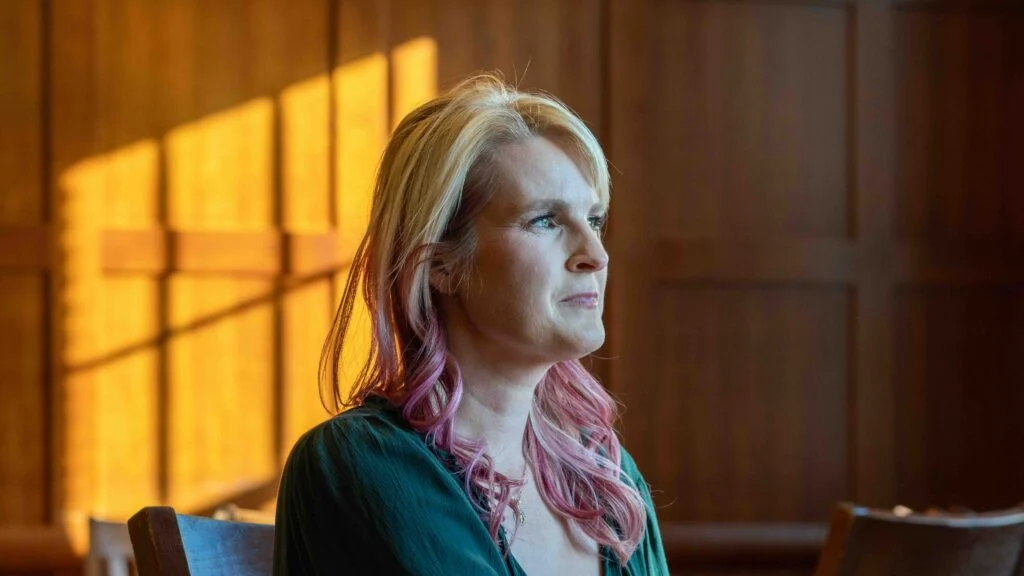
REISTERSTOWN, Md. — For Katye Jorgensen, the transition into motherhood was not marked by the idealized glow often depicted in media, but by a descent into a private, terrifying landscape. Years of battling anorexia and bulimia had left her with a fragile relationship with her body, a condition that was immediately destabilized by the physical demands of pregnancy.
At 25, during her first pregnancy, prenatal appointments became a source of profound dread. Each routine weigh-in felt like a judgment, and the necessity of managing specific nutritional intake triggered long-dormant anxieties. She "powered through" for the sake of her developing child, but the postpartum period proved even more perilous. Struggling to breastfeed and fixated on the societal pressure to "bounce back" to her pre-pregnancy weight, Jorgensen found her mental health rapidly deteriorating.
Two years later, after her second pregnancy, the cycle intensified. Driven by an obsession with exercise and hyper-sensitive to comments about her physical appearance, she reached a breaking point. Only after her husband intervened—coordinating with a team of therapists and dietitians to stage an intensive intervention—did she receive the life-saving treatment she desperately needed.
"I went to my postpartum appointment, I mentioned a lot of this, and even though I really liked those doctors, it still didn’t set off any red alarms for anybody," says the now 37-year-old Jorgensen. Her experience is far from an outlier; it is a symptom of a systemic failure in the U.S. healthcare apparatus to identify, screen, and treat eating disorders during the most vulnerable period of a woman’s life.
The Invisible Toll: Main Facts and Scope
While maternal mental health has gained increased legislative and public attention, eating disorders in the perinatal period remain largely ignored. Research indicates that approximately 4.3% of pregnant women and over 9% of new mothers grapple with clinical eating disorders, including anorexia nervosa, bulimia nervosa, and binge eating disorder.
These statistics align with broader national trends, where an estimated 2.6% to 8.4% of women experience an eating disorder during their lifetime—a figure representing up to 14.6 million women and girls in the United States. Despite the prevalence, there is a profound lack of granular data, leaving the true scope of the crisis in the dark.
The medical implications are severe. Untreated eating disorders are linked to a host of obstetric complications, including miscarriage, preeclampsia (high blood pressure), anemia, and postpartum hemorrhaging. For the fetus, the consequences can include low birth weight, reduced head circumference, and increased risks of developmental issues, including asthma and autism. For the mother, the postpartum phase often brings a convergence of conditions: increased susceptibility to postpartum depression, anxiety, and significant hurdles in establishing a healthy feeding relationship with the newborn.
Chronology of a Crisis: From Conception to Postpartum
The perinatal period is uniquely high-risk, serving as a "perfect storm" for the onset or relapse of eating disorders. While these conditions typically manifest in adolescence, the profound biological and psychological shifts associated with pregnancy can act as a catalyst.
The Prenatal Phase
During pregnancy, the loss of control over one’s body—coupled with hormonal fluctuations and the relentless medical scrutiny of weight—can exacerbate body dysmorphia. Many women find that the medical necessity of consuming extra calories for the fetus conflicts with their ingrained disordered behaviors.
The Postpartum Period
The "fourth trimester" introduces new stressors: the pressure to return to a pre-pregnancy physique, the intense physical demands of breastfeeding, and the radical shift in identity and family roles. For many women, symptoms that were managed during pregnancy come "roaring back" once the baby is born.
Case Study: A Relapse After Years of Recovery
Jennifer Kreatsoulas, a 50-year-old Pennsylvania resident, had been in recovery from anorexia for 15 years before the birth of her second child. The transition was overwhelming. Alongside postpartum depression, her eating disorder returned with a vengeance. The turning point came on a Mother’s Day walk when she realized she lacked the physical strength to push a stroller. "It’s destructive, but I was really trying to cope," Kreatsoulas reflects. "My brain just switched back to what it knew how to do… you lose yourself in it, just because that’s what’s demanded as a mother."
Supporting Data: Why Clinicians Are Concerned
The medical community is increasingly vocal about the lack of "neutrality" in these conditions. Leah Graves, a registered dietitian and clinical adviser at the National Eating Disorders Association, emphasizes that these are not lifestyle choices, but serious medical conditions. "If we don’t treat these disorders… there are risks involved. This isn’t a neutral situation."
Data indicates that the risk is not uniform. Some women experience relief during pregnancy, while others experience a worsening of symptoms. Many suffer in silence, using the physiological changes of pregnancy—such as nausea, vomiting, or the need to pump breast milk—to mask their disordered behaviors.
Furthermore, there is a persistent, harmful stereotype that eating disorders only affect a specific demographic: the "skinny, white, affluent girl." This bias creates significant barriers for women of color. Research shows that Black women experience eating disorders, particularly binge eating, at rates comparable to white women, yet they are significantly less likely to be screened, diagnosed, or offered equitable treatment. As dietitian Jessica Wilson notes, "People of color and trans people are not seen as having an eating disorder as an option, especially in pregnancy."
Official Responses and the Policy Gap
The current state of clinical guidelines is fragmented. While the American College of Obstetricians and Gynecologists (ACOG) has suggested in ethical opinions that OB-GYNs assess all patients for eating disorders, this recommendation is not integrated into standard practice.
The "Missing" Guidelines
ACOG’s formal clinical guidance on perinatal mental health remains focused on depression and anxiety, notably excluding eating disorders. This omission has a cascading effect. When states move to expand maternal mental health support, they frequently look to national professional organizations for guidance.
For instance, following the high-profile case of Lindsay Clancy in Massachusetts, the state moved to bolster support for postpartum depression, bipolar disorder, and PTSD. However, eating disorders were explicitly excluded because they were not included in the existing national guidelines. A spokesperson for the Massachusetts Executive Office of Health and Human Services stated that providers should simply use their "clinical judgment," effectively placing the burden of diagnosis on a system that is currently unequipped to handle it.
The Failure of Screening Tools
Existing screening tools, such as the SCOFF questionnaire, are often ill-suited for the physiological realities of pregnancy. Questions like "Have you recently lost more than 14 pounds?" can be misleading for a patient whose weight is fluctuating due to fetal development or morning sickness. Furthermore, the reliance on these tools without a robust support infrastructure is a recipe for failure. As Dr. Marianna Thomeczek of the University of Kansas puts it, "Universal screening is only effective if there’s treatment."
Implications: The Road Toward Systemic Reform
The path forward requires a fundamental shift in how we approach maternal health. Experts point to several critical areas for improvement:
- Standardization of Care: Eating disorder screenings must become a universal, validated component of perinatal care, moving beyond the "check-the-box" approach that currently defines the six-week postpartum visit.
- Addressing the Treatment Desert: The disparity in insurance coverage is a major hurdle. Many private insurers limit visits with dietitians, and only a fraction of eating disorder treatment centers accept Medicaid. Policy changes are needed to ensure that medical nutrition therapy is treated as an essential service for all, regardless of income.
- Medical Training: Obstetricians and gynecologists require specialized training to identify the subtle, non-traditional symptoms of eating disorders that often hide behind the "normal" complaints of pregnancy.
- Peer-Led Support: Programs like The Body Project—which uses cognitive dissonance exercises to address body image—are showing promise in clinical trials. Expanding these peer-led initiatives could provide a low-barrier, high-impact layer of support.
For mothers like Katye Jorgensen, the current system was a narrow miss. For many others, the outcome is far more tragic. "We need to change the system, we need to change the policies," says Elizabeth Claydon of West Virginia University, "but women also need to know that they’re not alone in experiencing this. It’s not an unusual thing to occur during pregnancy, because it is that perfect storm."
Until the medical establishment moves to acknowledge and address the "perfect storm" of perinatal eating disorders, millions of women will continue to navigate the most transformative time of their lives in a state of silent, preventable suffering.