









In the brutal, high-stakes ecosystem of the Ultimate Fighting Championship (UFC), the trajectory of a dominant champion is almost always predictable. The narrative follows a well-worn path: a fighter ascends, captures the gold, defends the throne with ferocity, and eventually, the weight of that success begins to erode the very foundation that propelled them to the top. The fire dims, the focus shifts, and the "static" nature of fame takes hold.
Yet, Valentina "Bullet" Shevchenko does not inhabit that timeline.
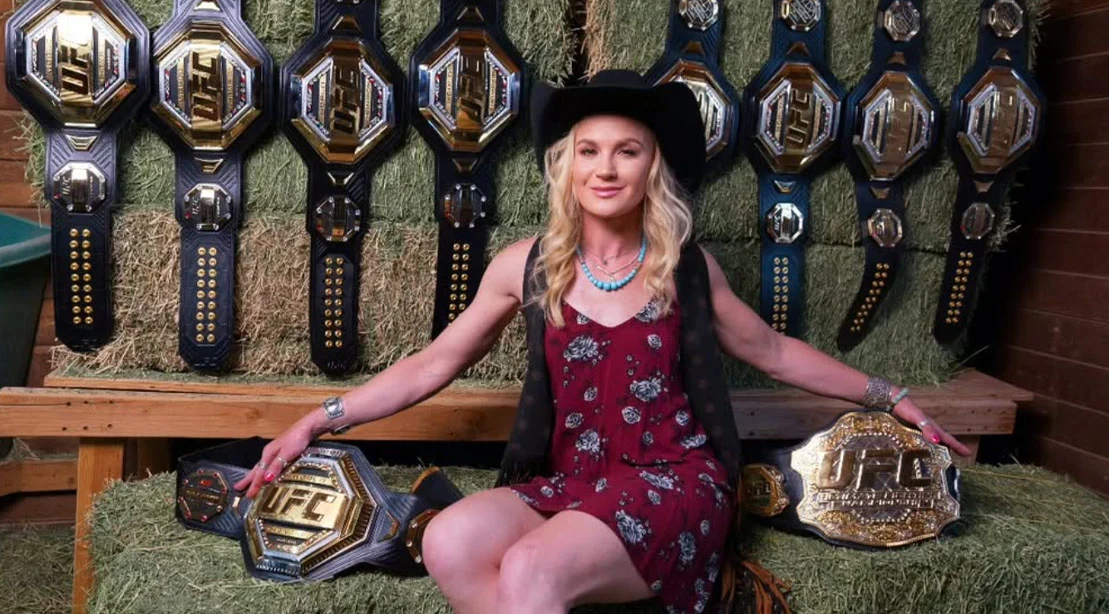
After decades of professional martial arts competition—stretching back to world titles in the early 2000s—the reigning UFC women’s flyweight champion remains a paradox. Coming off a signature victory over Weili Zhang in November and currently preparing for a high-stakes title defense against the surging Natalia Silva, Shevchenko speaks not like a veteran sitting on a mountain of accolades, but like a hungry contender chasing an impossible ideal.
The Philosophy of Perpetual Growth
For Shevchenko, the secret to her longevity is not found in a secret supplement or a revolutionary training camp; it is found in the refusal to become stagnant. "With every single fight, performance is better than the last one," she says, her voice measured and calm. "The understanding that as a martial artist, you are not staying in one place, and that you still have much more to give—that is what drives me."
This mindset has solidified her status as one of the greatest mixed martial artists in history. While the MMA world turns its eyes toward the upcoming UFC 328 card—headlined by the middleweight collision between champion Khamzat Chimaev and former titleholder Sean Strickland—Shevchenko remains locked in a parallel pursuit: the pursuit of her own evolution.
A Chronology of Mastery: From Bishkek to the World Stage
To understand Shevchenko’s present, one must look at the immense breadth of her past. Her journey did not begin in a modern high-performance facility, but in the disciplined, austere environments of Kyrgyzstan.
- The Early Years (1990s): Introduced to martial arts at age five, Shevchenko was a prodigy of the Soviet-influenced combat school system.
- The First Breakthrough (2003): By the age of 15, she was already claiming world titles in South Korea, marking her entry into the international elite.
- The Kickboxing Era: Before transitioning to full-time MMA, she established herself as a world-class kickboxer, amassing a resume that spans generations of fighters and disciplines.
- The UFC Ascent: Since joining the UFC, she has navigated the flyweight division with a clinical precision that has seen her defend her belt with a frequency and dominance rarely seen in the sport.
"I’ve already passed all of these phases," Shevchenko notes. "I know how to control the situation. It doesn’t matter what is happening in the world, or the pressure of the belt. I still know how to deal with that."
The Science of Control: Beyond Physicality
Longevity in combat sports is often attributed to physical toughness or genetic superiority. For Shevchenko, however, the defining factor is "control"—specifically, the control of the psychological landscape that accompanies global fame.
For many, the "hunted" phase is where the decline begins. When a fighter becomes the target, the lifestyle changes. Calendars fill with media obligations, the temptation of complacency arises, and the rigid structure that built the champion begins to crack. Shevchenko has witnessed this cycle claim many of her peers, but she has actively insulated herself against it.
"You are not letting yourself go very far beyond the clouds," she explains, referencing the dangers of ego. "With your mind, you can control things. You rule the situation, not the situation rules you."
Recovery as a Competitive Edge
Perhaps the most significant evolution in Shevchenko’s career has been her shifting relationship with injury and recovery. In her youth, the mentality was one of reckless attrition: prove you belong, regardless of the physical cost.
"It kind of doesn’t matter if you are injured or not," she admits, reflecting on her early years. "You want to show up for training. It’s like, if I broke my leg, I can still fight with my hand. If I broke my hand, I can fight with my leg."

While this "warrior spirit" often endears fighters to fans, it is the primary cause of early retirement. Shevchenko’s shift has been toward a "tree-based" philosophy of growth. "It’s like a tree," she illustrates. "When you put a tree into the ground, you have to wait for it to grow. If you just start to pull it, you’re just going to break it, and you have to do the process all over again."
Today, her approach is surgical. If a minor injury occurs, she pivots. If a serious one arises, she stops. Even in downtime, she maintains a general training baseline without sparring, ensuring that she is always "ready to be ready," but never over-extending her physical resources.
Unconventional Strength: The Nature-First Training Model
One of the most fascinating aspects of Shevchenko’s regimen is her rejection of the "sterile" gym environment. While she utilizes world-class facilities, she insists that her most profound strength gains come from the natural world.
"Even with no fight scheduled, I do training every other day, no matter what," she says. "If I don’t have a gym, it’s even better for me because I can train in nature. Nature, for me, it’s everything."
Shevchenko eschews perfectly calibrated gym machines for the unpredictable resistance of the outdoors. She favors training with heavy, uneven stones, which force the stabilizing muscles and grip strength to adapt to shifting centers of gravity. She recalls a period living in the Amazonian jungles, where tree trunks became her primary implements for strength and conditioning.
Her advice to aspiring fighters is strikingly simple: "I recommend pull-up bars to everyone. This makes your body very strong. It’s good for the quality of your fights. Good grip, good strength for choking people."
Supporting Data: The 11-Title Standard
To quantify Shevchenko’s dominance, one must look at the numbers. With 11 title-fight victories to her name, she sits in a rarefied echelon of UFC history.
- Average Fight Time: Shevchenko’s ability to control the pace of the bout has resulted in a high finishing rate and a remarkably low absorption of damage compared to other long-term champions.
- Title Defense Frequency: Unlike champions who take year-long hiatuses, Shevchenko has maintained a high activity level, keeping her reflexes and timing sharp.
- Versatility Index: Her transition from world-class Muay Thai to elite-level grappling and cage control demonstrates a level of technical depth that few in the sport have achieved.
Implications for the Future of MMA
As Shevchenko prepares for her next challenge against Natalia Silva, the implications of her career are being felt throughout the industry. She has set a new benchmark for what is possible in the women’s divisions. Her success proves that longevity is not just a byproduct of youth, but a byproduct of intellectual engagement with the sport.
"I’m not happy with just enjoying the process," she says. "The goal is to be the best and to perform the best. I train not just for participation. I train to give everything and be the best."
As she approaches her mid-career zenith, the question is no longer whether Shevchenko can hold onto her belt, but how much further she can elevate the standard of the sport. With over 23 years of professional experience, she remains a student of the game, proving that for those who treat greatness as a daily standard rather than a destination, the ceiling does not exist.
The "Bullet" continues to fly, and for the rest of the division, the challenge remains exactly as it has been for years: how do you beat a champion who has already mastered the art of beating herself?